16 Kids Bedroom Decor Ideas From Homes We Absolutely Love
- A Playful Accent Wall That Isn’t Just Paint
- Bunk Beds With Built-In Personality
- Open Shelving for Books and Treasures
- A Reading Nook Tucked Into a Corner
- Layered Lighting Instead of One Overhead Fixture
- Color-Coded Storage Bins for Easy Cleanup
- A Statement Rug That Anchors the Room
- Growth Chart Wall Art
- A Canopy Bed Without the Fuss
- Chalkboard or Whiteboard Paint on One Wall
- A Gallery Wall of Kid-Made Art
- Hidden Storage Under the Bed
- A Neutral Base With Colorful Accents
- A Dedicated Craft or Art Station
- Nature-Inspired Decor With Wood and Greenery
- A Name or Initial as Wall Decor
16 Kids Bedroom Decor Ideas From Homes We Absolutely Love
Decorating a kid’s room is one of those projects that feels small until you’re standing in the paint aisle debating fourteen shades of blue. The good news is that some of the best kids’ rooms we’ve seen didn’t come from a big budget or a full renovation. They came from a few smart choices that grew with the child instead of against them. Here are sixteen ideas pulled from real homes that got it right.
A Playful Accent Wall That Isn’t Just Paint
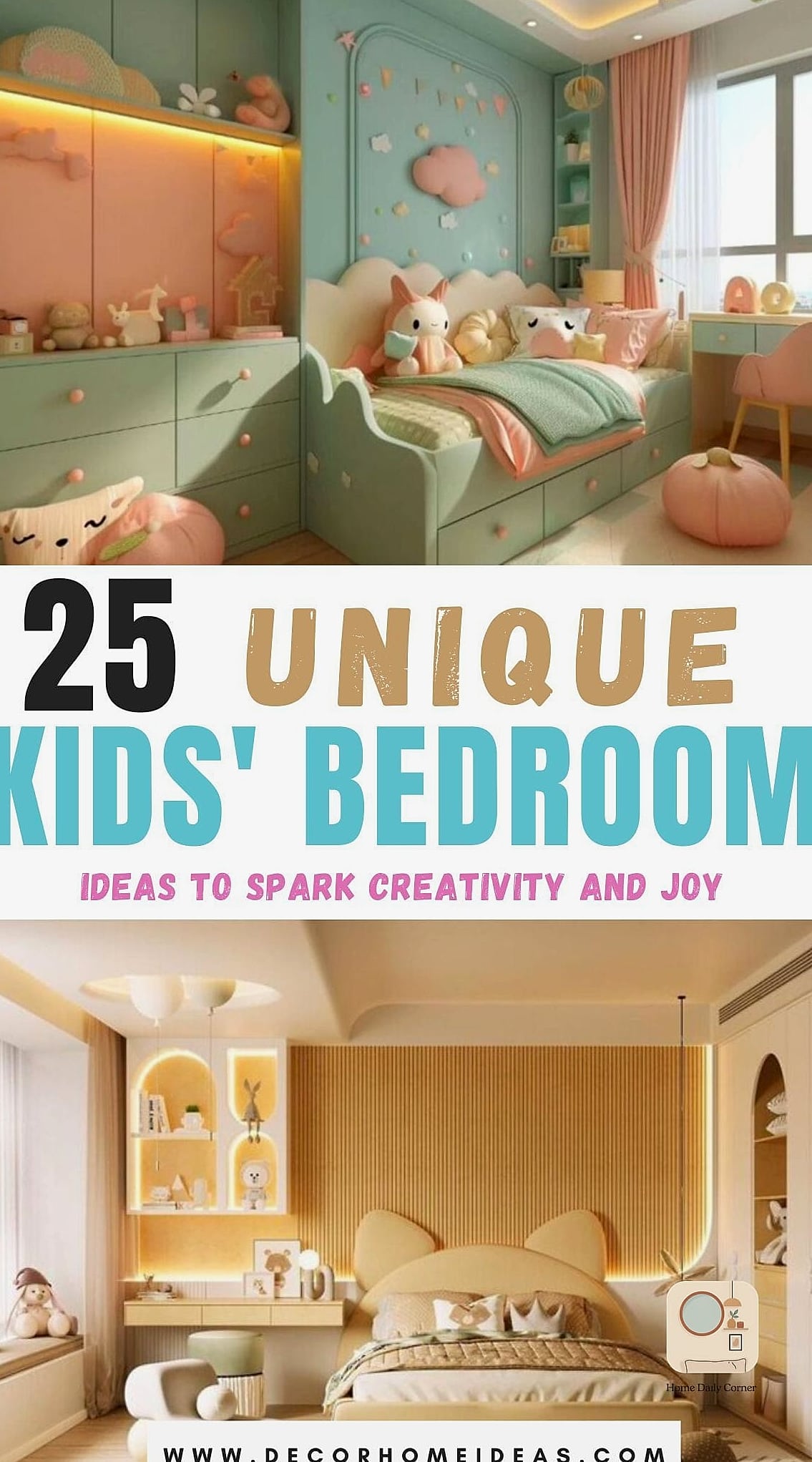
Forget the plain painted stripe. Homeowners are leaning into wallpaper, wall decals, and even paneling to give one wall real personality. Think scalloped shapes, soft rainbow arches, or a mural of clouds and stars. It’s a focal point that doesn’t require touching the rest of the room, which makes it renter-friendly if you go the peel-and-stick route. Kids also tend to gravitate toward that wall for reading nooks or pillow forts, so it becomes functional as much as decorative.
Bunk Beds With Built-In Personality
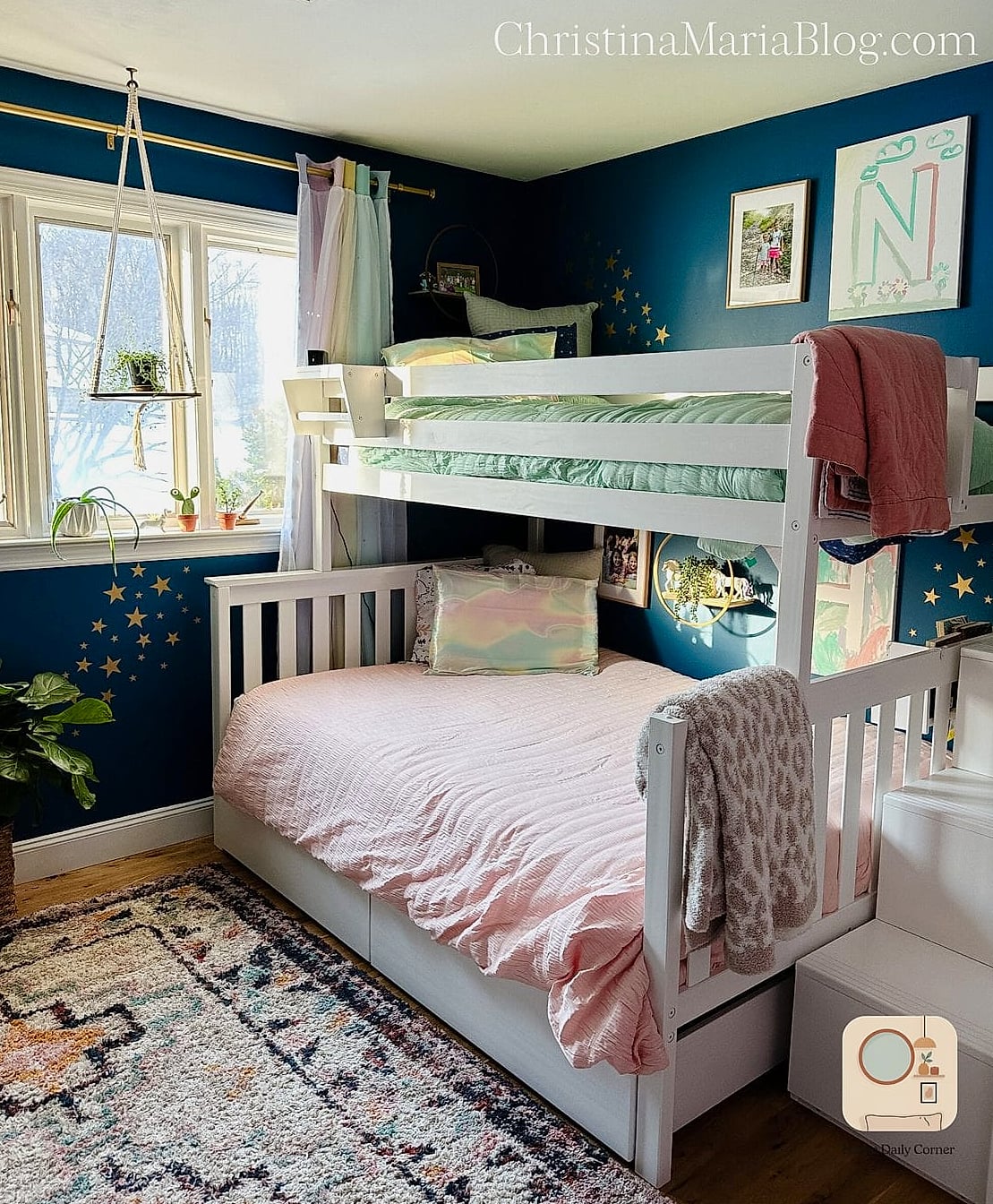
Bunk beds have come a long way from the metal frames you might remember from summer camp. Now they show up in warm wood tones, matte black finishes, or even house-shaped frames with little windows cut into the sides. They’re a smart pick for shared rooms or small spaces since they free up floor space for play. Some families add curtains to each bunk for privacy, which kids treat like their own little fort.
Open Shelving for Books and Treasures
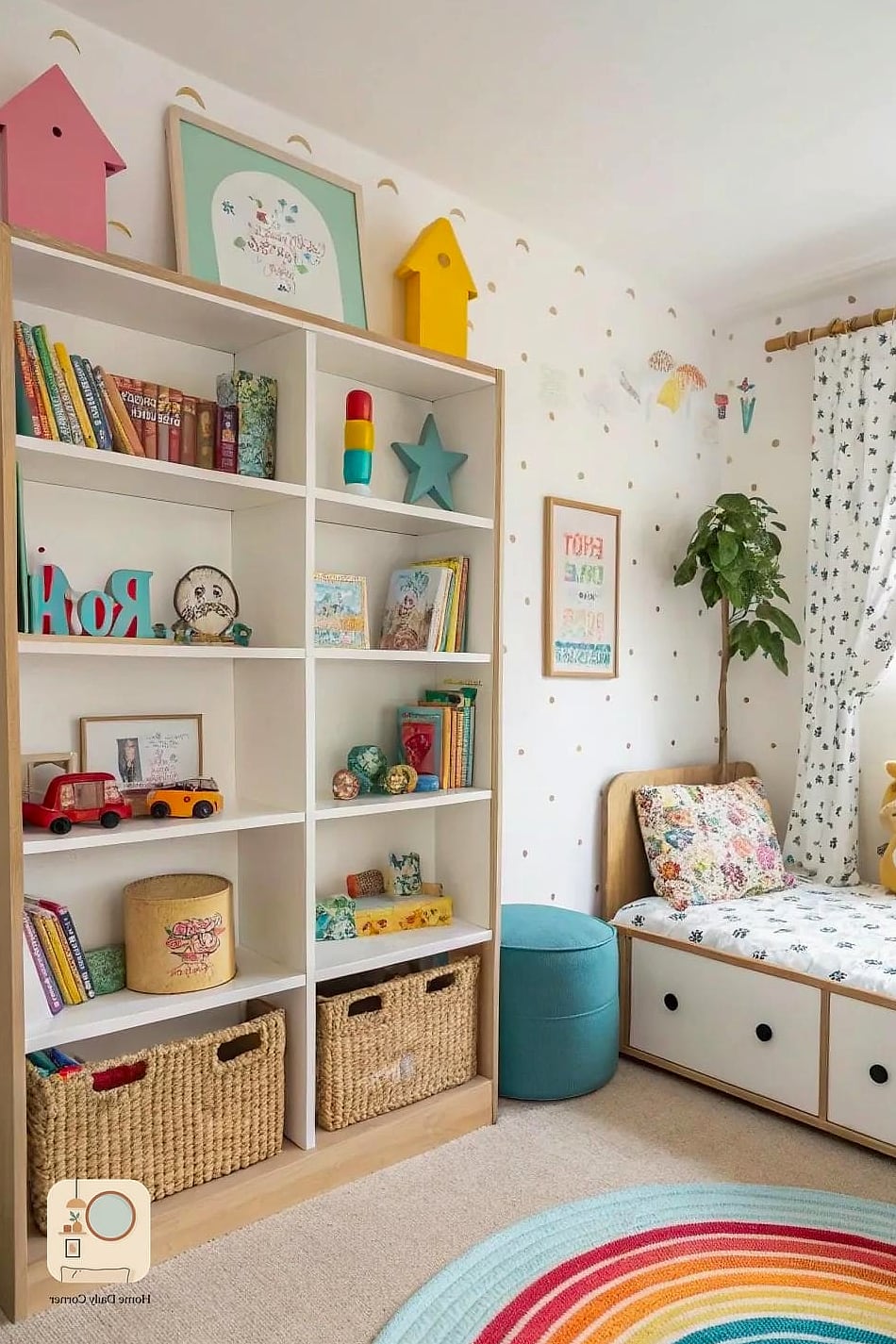
Open shelving does double duty in a kid’s room. It displays favorite books face-out so little ones can actually see the covers and pick their own, and it gives stuffed animals and trinkets a proper home instead of a pile on the floor. Floating shelves in varying lengths look great above a reading corner. Just keep heavier items lower down, both for safety and so toddlers can reach their own things.
A Reading Nook Tucked Into a Corner
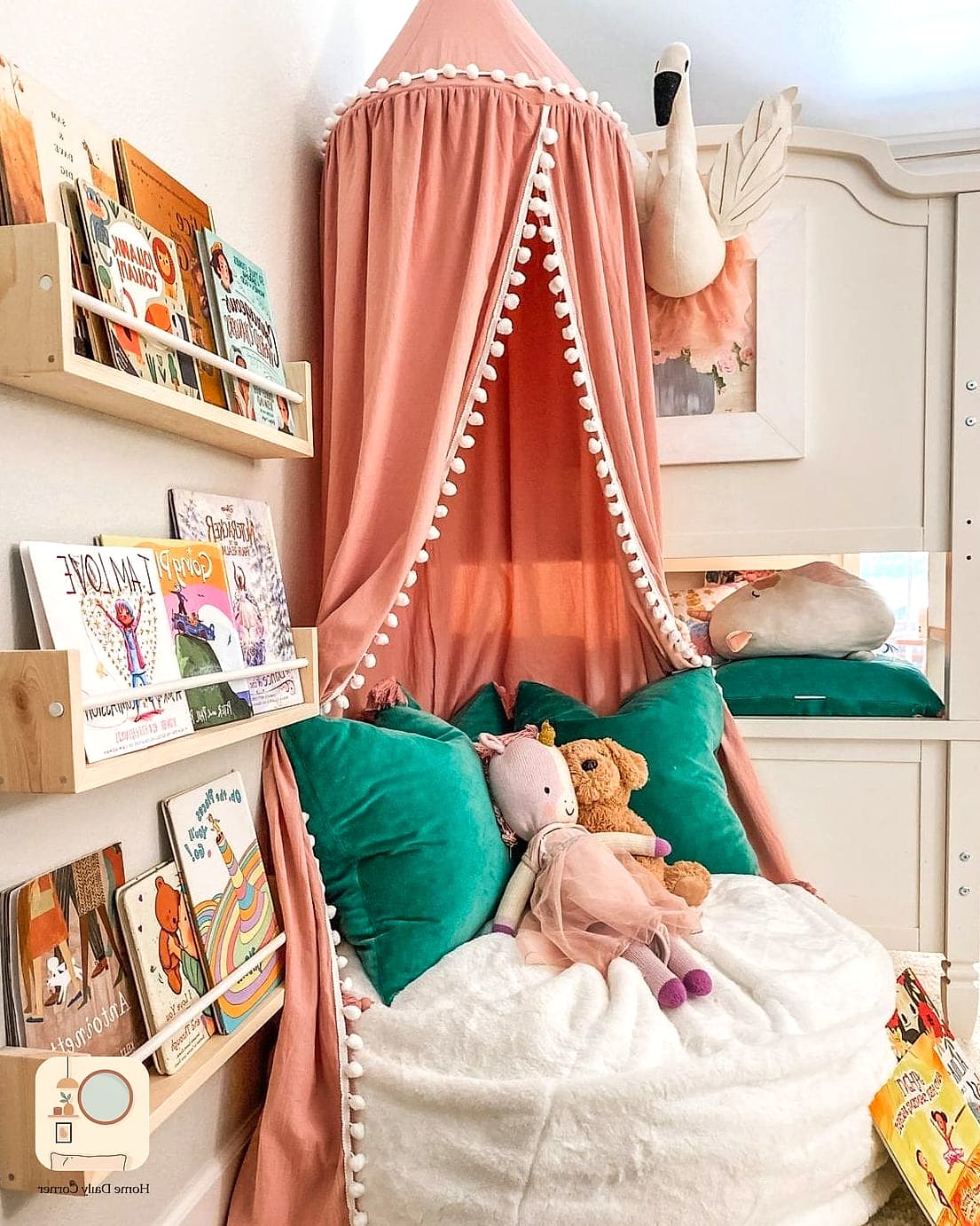
Even a small unused corner can become a reading nook with a floor cushion, a soft rug, and a small canopy or tent. Add a string of warm fairy lights and a basket of books within reach. This idea works in almost any size room, and it gives kids a cozy spot that feels like it’s just for them. Parents love it because it’s an easy way to encourage quiet time without much effort.
Layered Lighting Instead of One Overhead Fixture
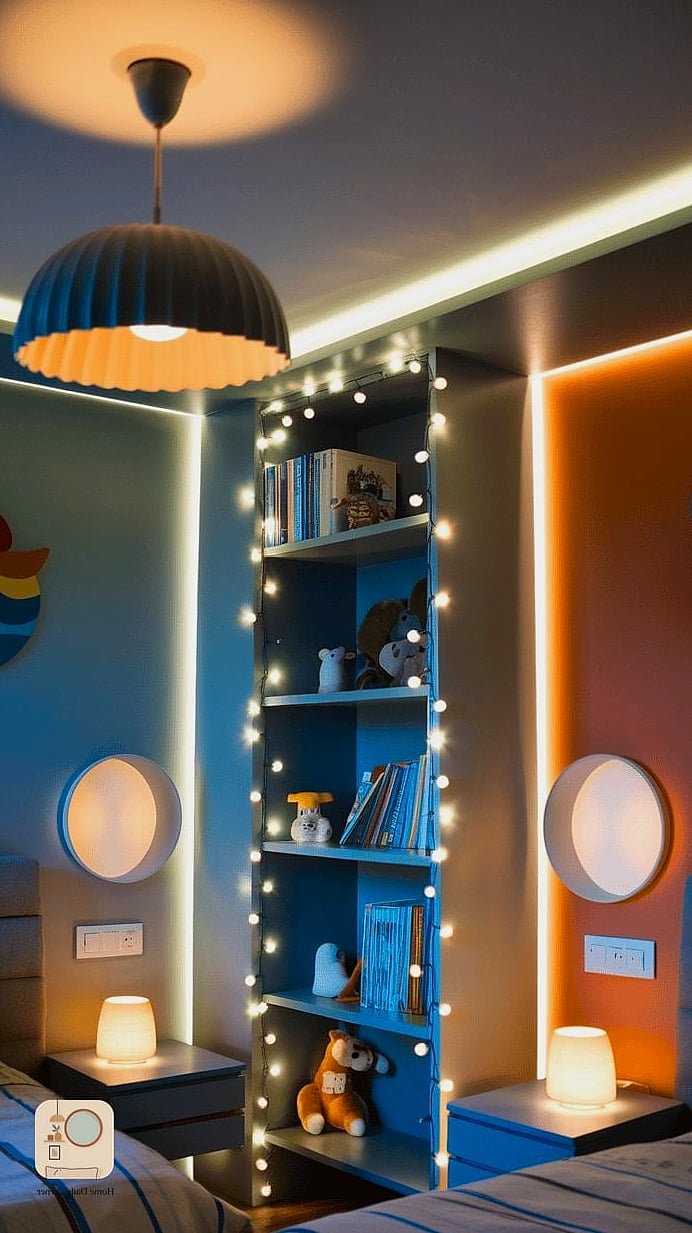
A single ceiling light can make a room feel flat and a little institutional. Layering in a table lamp, a nightlight, and maybe a string of fairy lights gives the room warmth and flexibility. It also helps with bedtime routines since dimmer, softer lighting signals it’s time to wind down. Star or cloud-shaped nightlights are a sweet touch that kids genuinely love, not just something parents pick for looks.
Color-Coded Storage Bins for Easy Cleanup
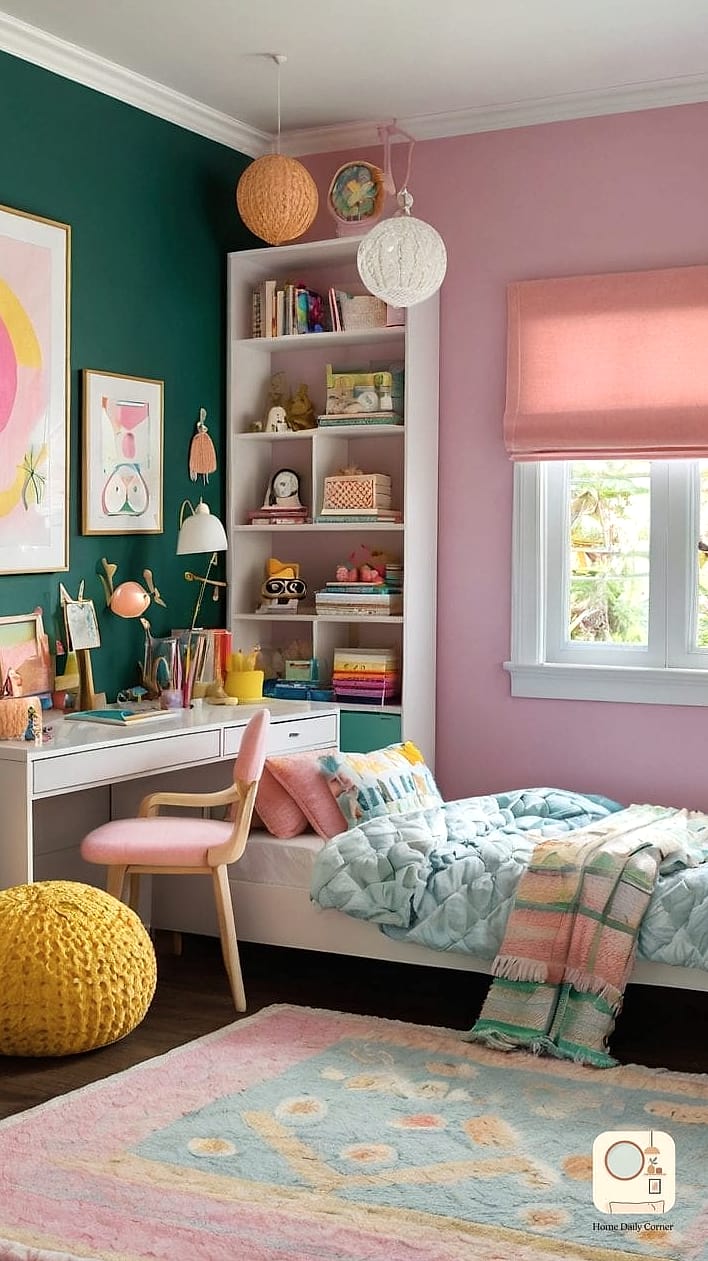
This one is more practical than pretty, but it works beautifully in the right room. Assign a color to each type of toy, like blue bins for cars and green for building blocks, and label them with pictures for kids who can’t read yet. It turns cleanup into a matching game instead of a chore. Woven baskets or fabric bins also soften the look if you don’t want everything to feel too plastic and primary-colored.
A Statement Rug That Anchors the Room
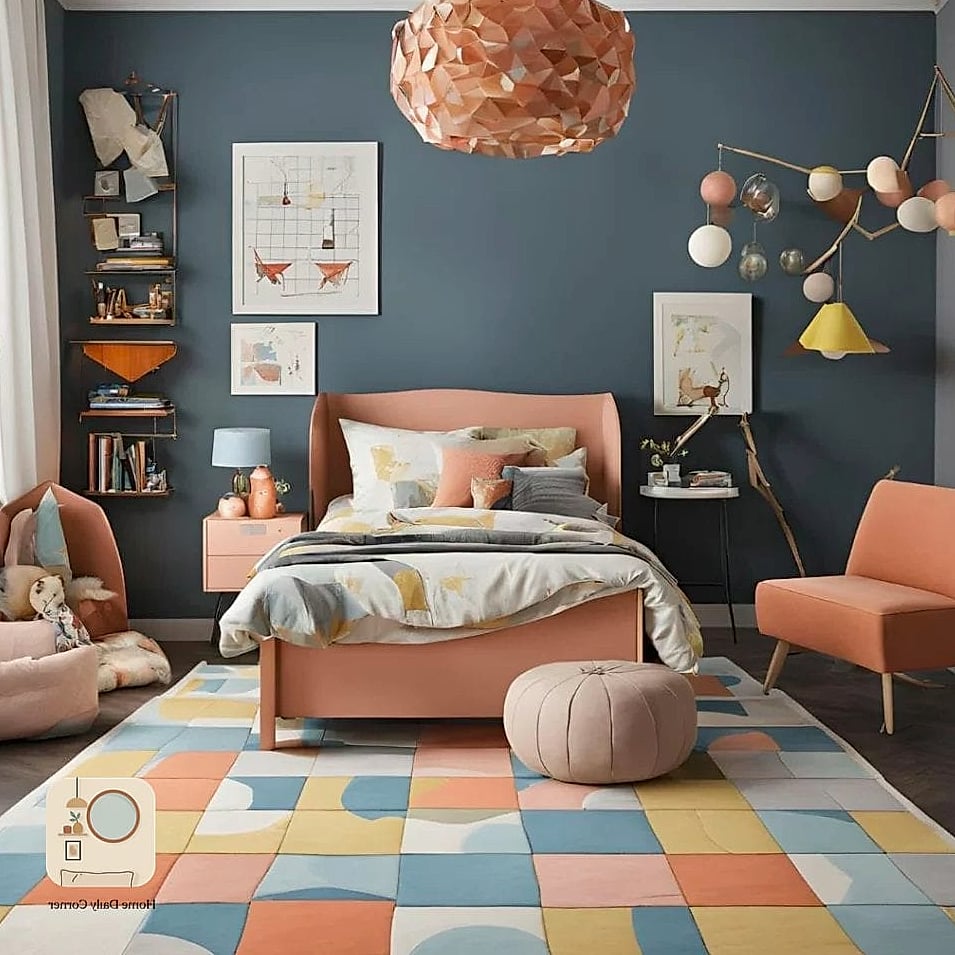
A patterned rug can pull together mismatched furniture and toys in a way paint alone can’t. Round rugs work well for play areas since there are no corners to trip over, while a striped or geometric rug can add structure to a room with a lot going on visually. Wool and cotton blends tend to hold up better to spills than pure synthetic options, and most are easy enough to spot clean.
Growth Chart Wall Art
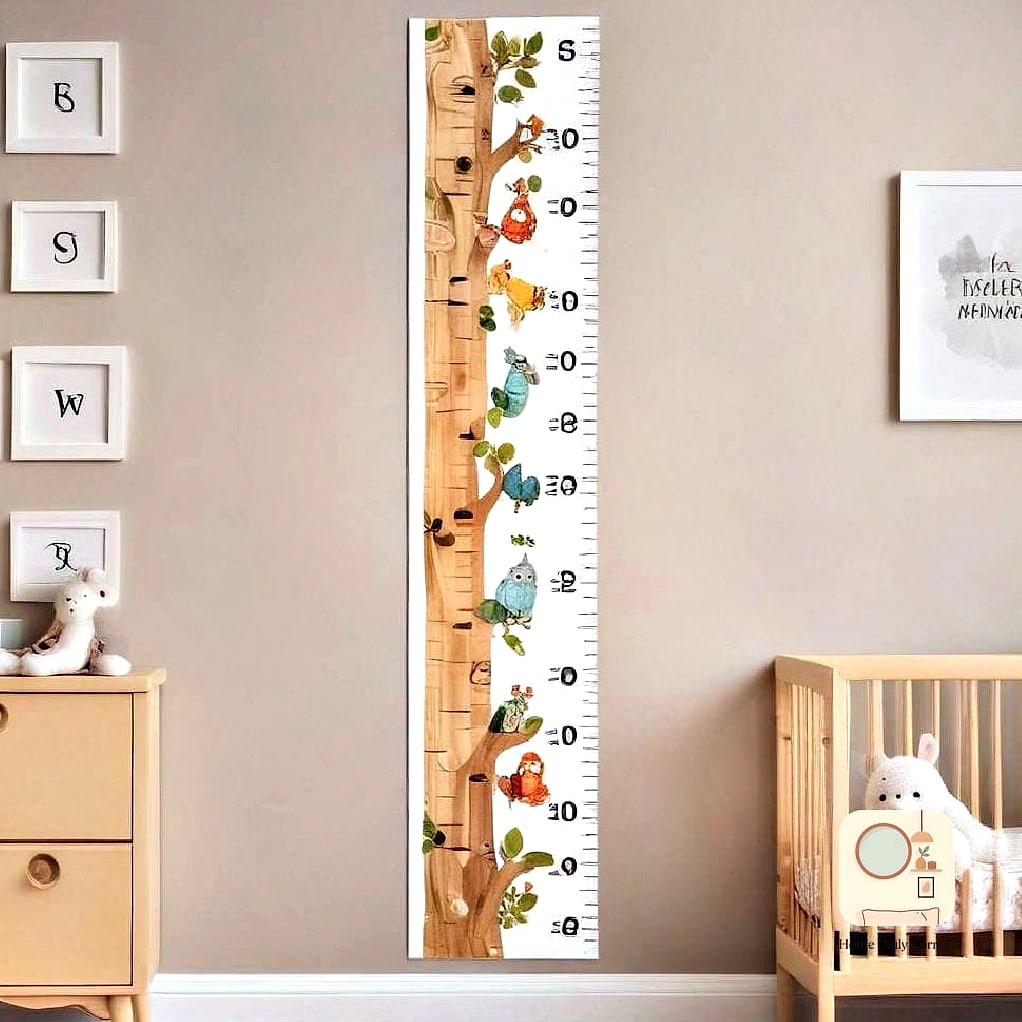
A growth chart doubles as decor and as a sentimental keepsake. Some families use a simple wood ruler-style chart that hangs on the wall, while others paint a chart directly onto the wall itself. It’s a small detail, but it turns an ordinary wall into something with real meaning over time. Wood versions are nice because they can move with the family if you ever change homes.
A Canopy Bed Without the Fuss
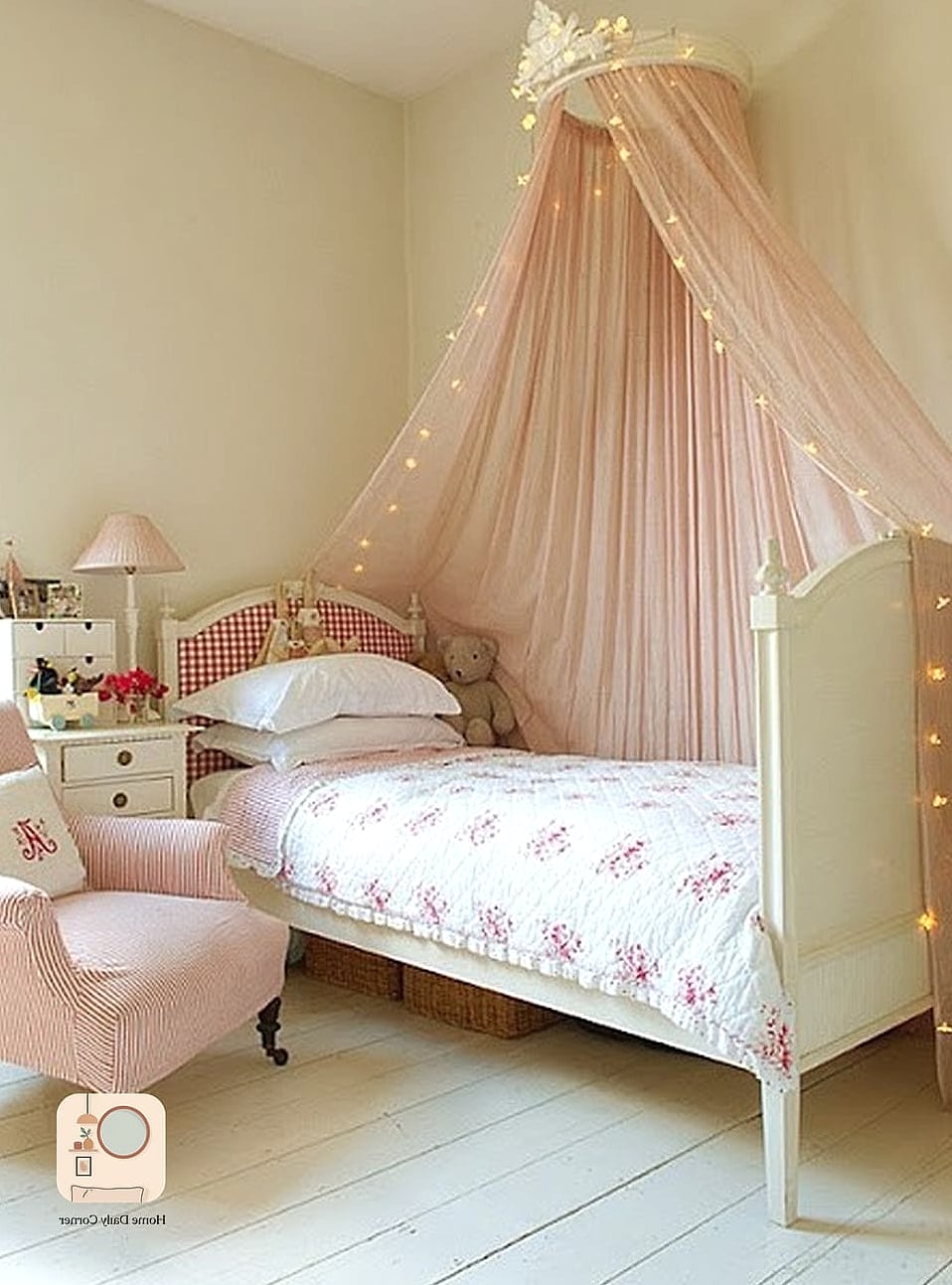
A canopy doesn’t have to mean an elaborate four-poster frame. A simple hoop or fabric drape attached to the ceiling above the bed creates that same magical, tucked-in feeling. Sheer white or soft pastel fabric keeps it airy rather than heavy. It’s an easy upgrade for a plain bed frame and photographs beautifully, which is probably why it shows up so often in room tours.
Chalkboard or Whiteboard Paint on One Wall
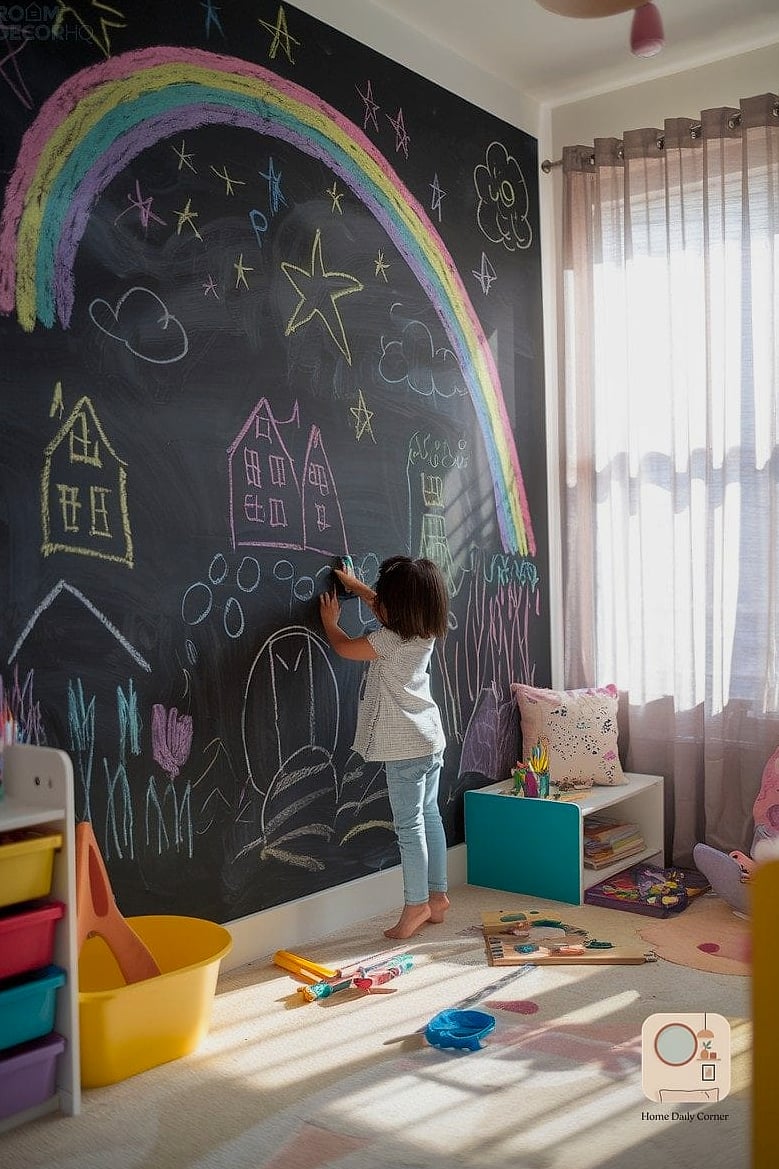
Kids like to draw. A wall that’s actually meant for drawing on saves the rest of the house from crayon marks in unexpected places. Chalkboard paint gives an easy-to-wipe surface for doodles, tic-tac-toe games, or spelling practice, and it holds up well over years of use. Whiteboard paint is another option if you’d rather avoid chalk dust. Either way, keep a small caddy of markers or chalk nearby so cleanup stays simple.
A Gallery Wall of Kid-Made Art
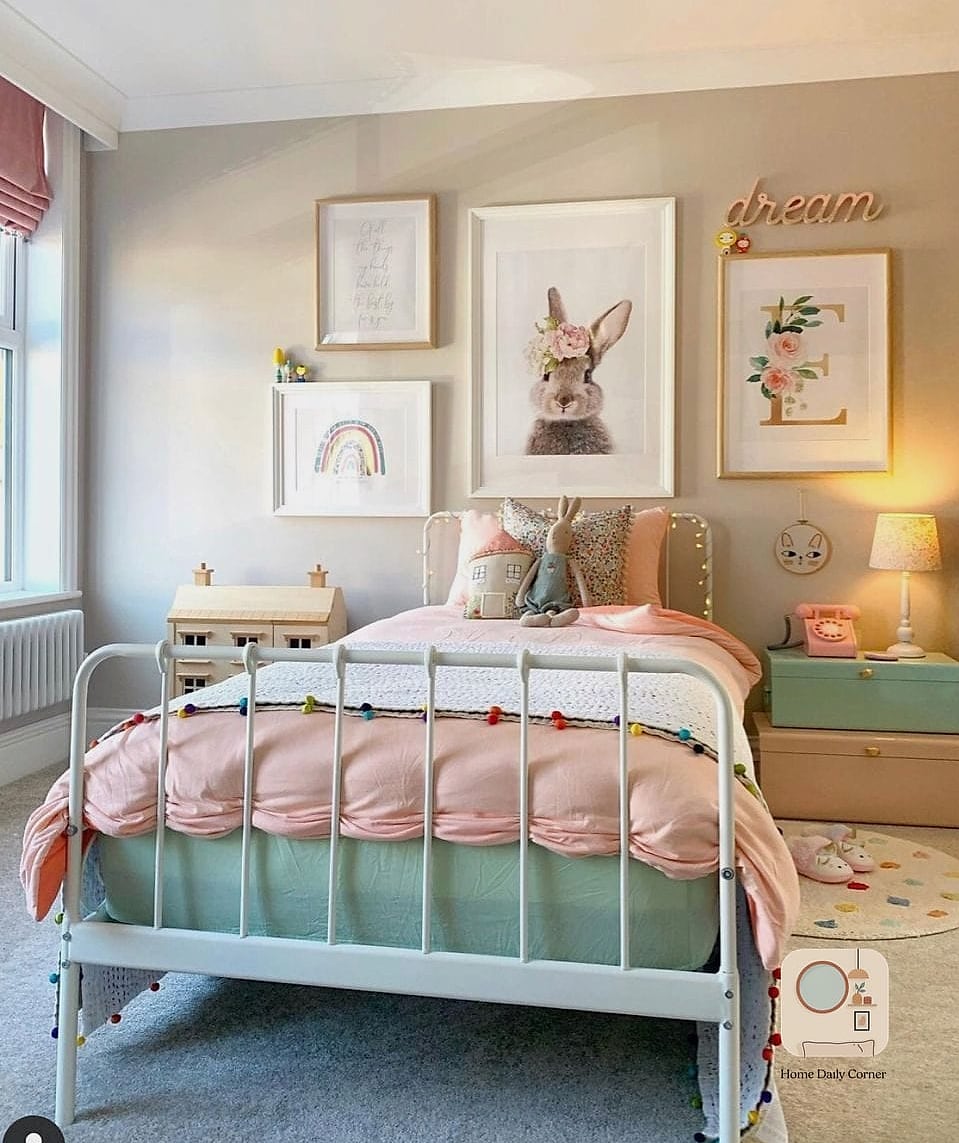
Instead of store-bought prints, some of the warmest kids’ rooms we’ve seen feature the child’s own artwork in real frames. Simple black or wood frames in matching sizes give a cohesive gallery look even though the art itself changes constantly. It’s a low-cost way to fill wall space, and kids feel genuinely proud seeing their work displayed like it matters, because it does.
Hidden Storage Under the Bed
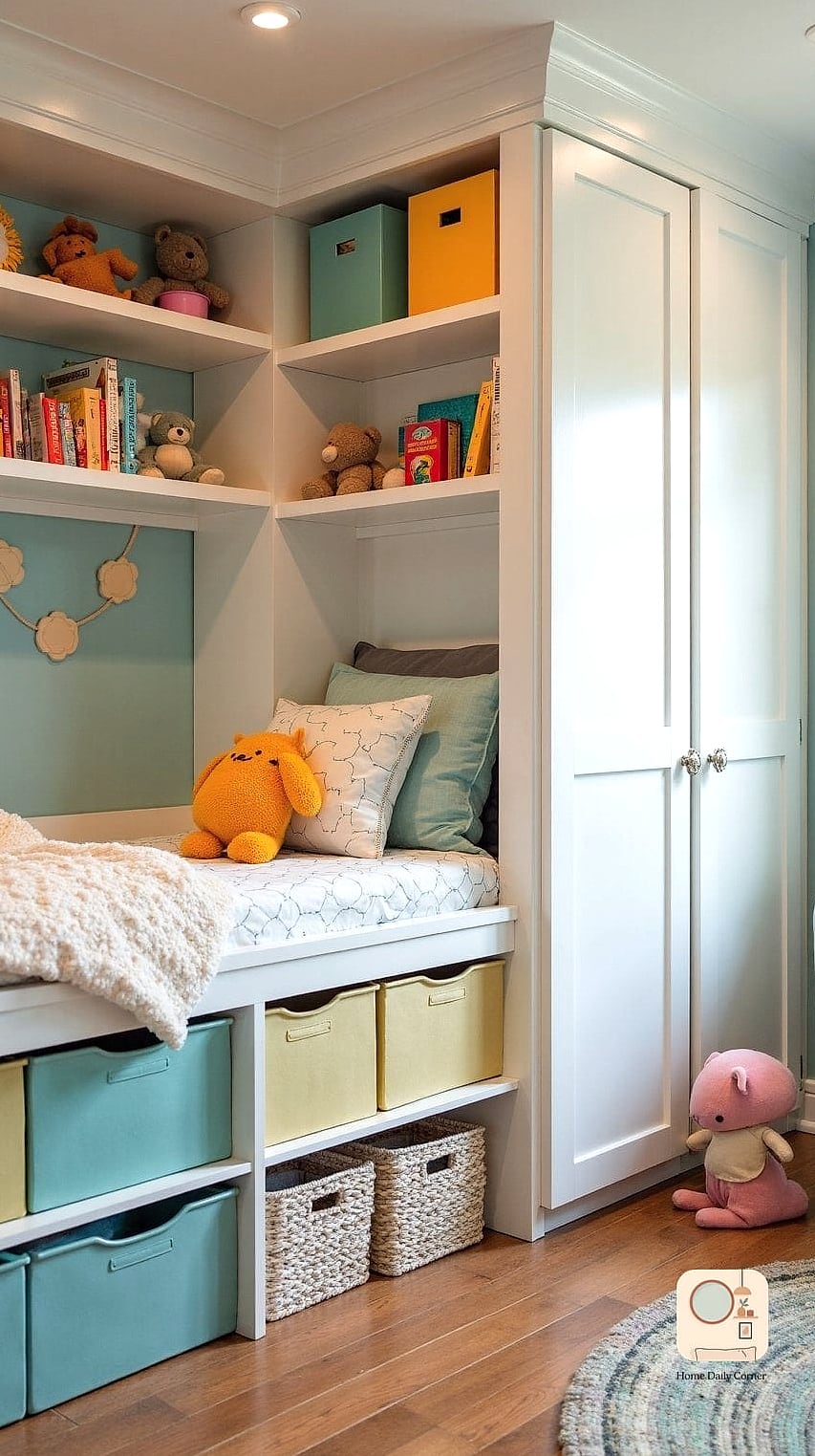
Under-bed storage is one of those solutions that looks invisible but does a lot of heavy lifting. Rolling bins or drawers built into a platform bed frame keep off-season clothes, extra bedding, or overflow toys out of sight. It’s especially useful in smaller rooms where every inch of floor space counts. Look for bins with lids to keep dust out and make sliding them in and out easier.
A Neutral Base With Colorful Accents
Rather than painting the whole room in a bold color a child might outgrow, many parents are choosing a neutral wall color and layering in personality through bedding, art, and accessories. It’s an approach that ages well since swapping out a comforter or a few pillows is much easier than repainting. It also tends to feel calmer, which can help with sleep, especially for kids who get overstimulated easily.
A Dedicated Craft or Art Station
A small table with a couple of chairs, a caddy of art supplies, and a washable rug underneath turns a corner into a real creative space. Look for a table at kid height so they’re not standing at an adult desk, and keep supplies in labeled bins they can reach on their own. This setup encourages independent play and keeps art supplies from taking over the kitchen table instead.
Nature-Inspired Decor With Wood and Greenery
A softer, earthier take on kids’ decor is showing up more often, with wood furniture, rattan baskets, and a few faux plants replacing the primary-color plastic look. It creates a calmer, more grown-up feel that still works for a child’s room. Faux greenery is the practical choice here since real plants and curious toddlers don’t always mix well, but a low-maintenance option like a pothos can work if the room gets decent light.
A Name or Initial as Wall Decor
A large wooden or metal initial, or the child’s full name spelled out in letters above the bed, is a simple way to personalize a room without much commitment. It works in nearly any style, from a rustic wood cutout to a sleek painted metal version. It’s also an easy detail to swap out if the room gets passed down to a sibling later on, since names and initials aren’t tied to a specific age or trend.
Every one of these ideas can stand alone, but the rooms that feel the most put-together usually mix two or three together, like a reading nook under a canopy bed, or open shelving paired with color-coded bins. Start with whatever solves your biggest daily headache, whether that’s storage, lighting, or just giving your kid a space that feels like their own, and build out from there.