
9 Grey Bedroom Ideas Ideas That Are Both Stylish and Practical
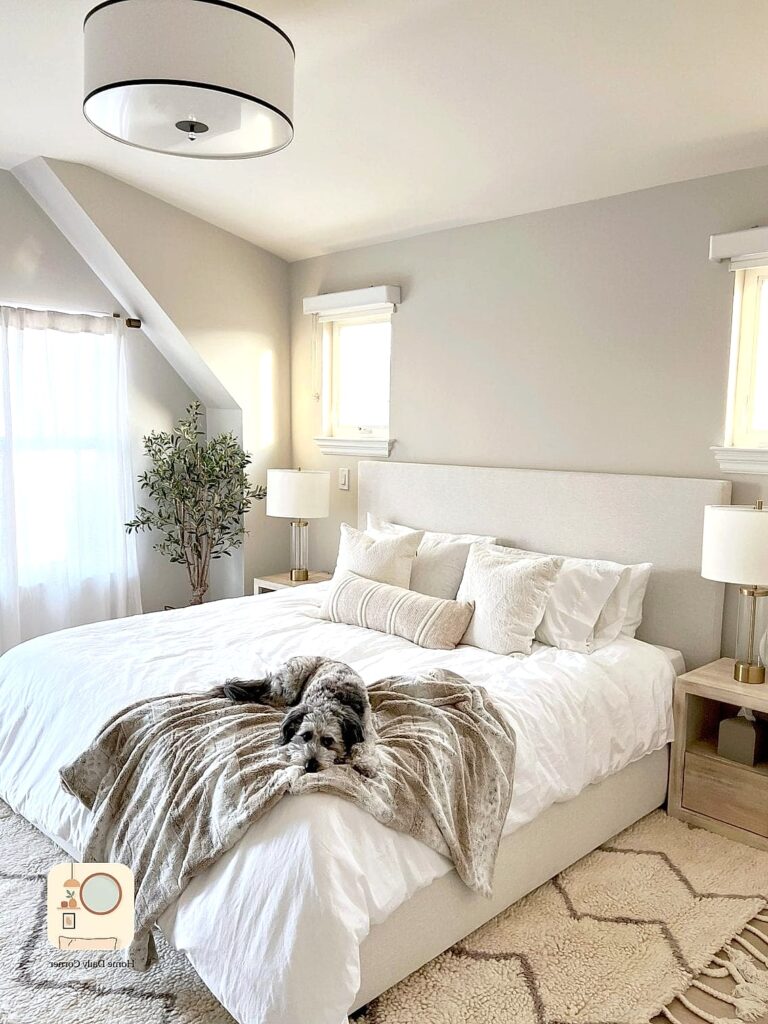
- Warm Greige Walls for a Softer Feel
- Charcoal Accent Wall Behind the Bed
- Layered Grey Bedding in Different Textures
- Grey and Wood Nightstands for Warmth
- Moody Grey Ceiling for Unexpected Drama
- Grey Herringbone Accent Behind the Headboard
- Layered Lighting in Warm Tones
- Built-In Storage with Grey Cabinetry
- Grey Area Rug to Anchor the Room
9 Grey Bedroom Ideas Ideas That Are Both Stylish and Practical
Grey gets a bad reputation for being boring, but honestly? That’s only true if you’re doing it wrong. A well-planned grey bedroom is calming, sophisticated, and way more versatile than people give it credit for. It plays nice with warm woods, bold accents, and just about any style you’re into, from moody and dramatic to soft and airy.
The trick is knowing which shade of grey to use where, and how to keep the room from feeling flat or cold. That’s exactly what we’re covering here. These nine ideas mix practicality with real style, so your grey bedroom looks intentional instead of like an afterthought.
Warm Greige Walls for a Softer Feel
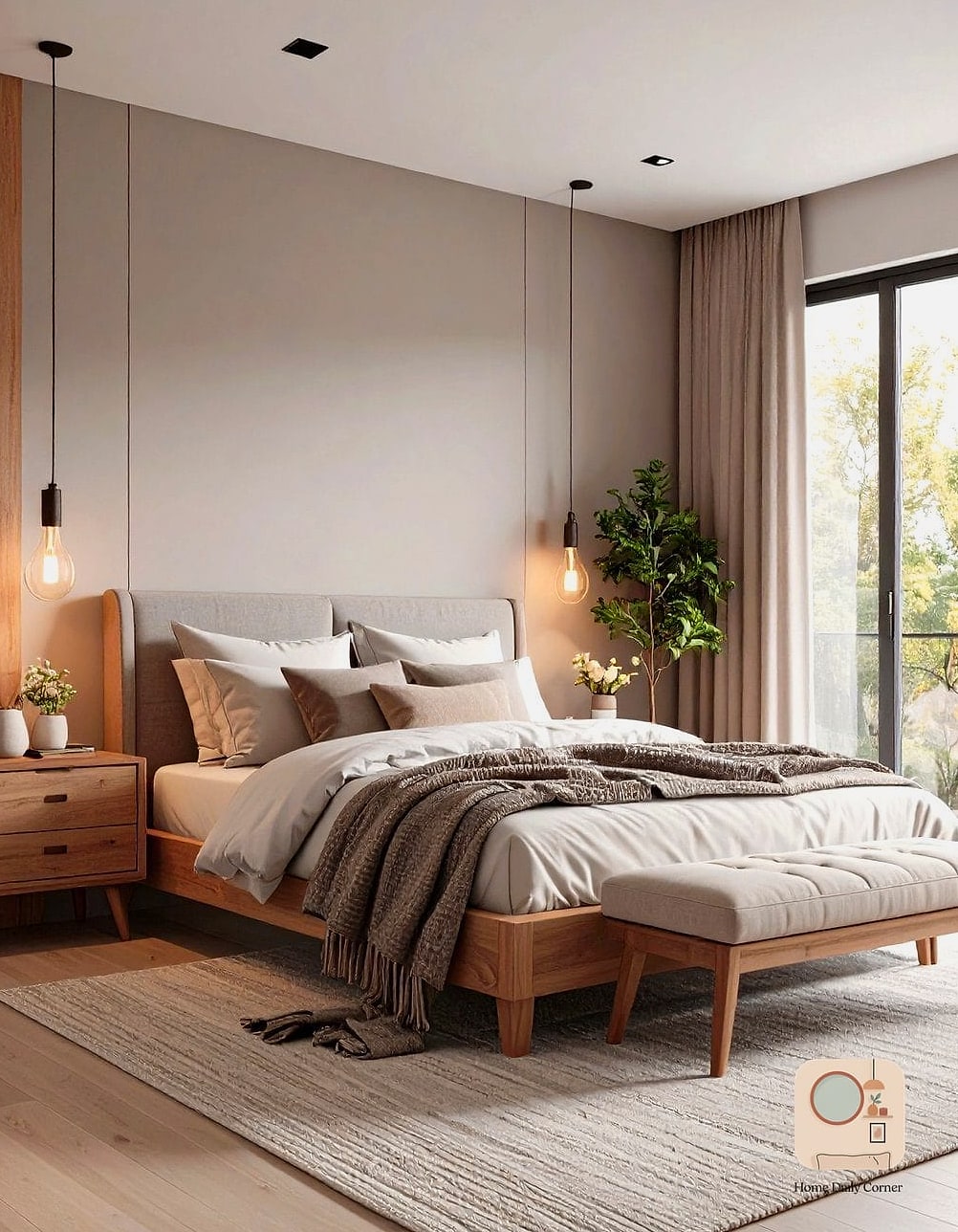
If you love the idea of grey but worry it’ll feel cold, greige is your answer. This warm blend of grey and beige has that same calming quality without the chill.
It works especially well in bedrooms that don’t get a ton of natural light, since the warmer undertones keep the space feeling inviting rather than gloomy. Pair it with warm wood furniture and brass hardware for a look that feels collected, not sterile.
Greige is also incredibly forgiving when it comes to matching existing furniture. You won’t need to repaint or replace much of anything, which makes it a smart pick if you’re redecorating on a budget. Most major paint brands carry a greige shade, so testing samples on your wall before committing is easy and cheap.
Charcoal Accent Wall Behind the Bed
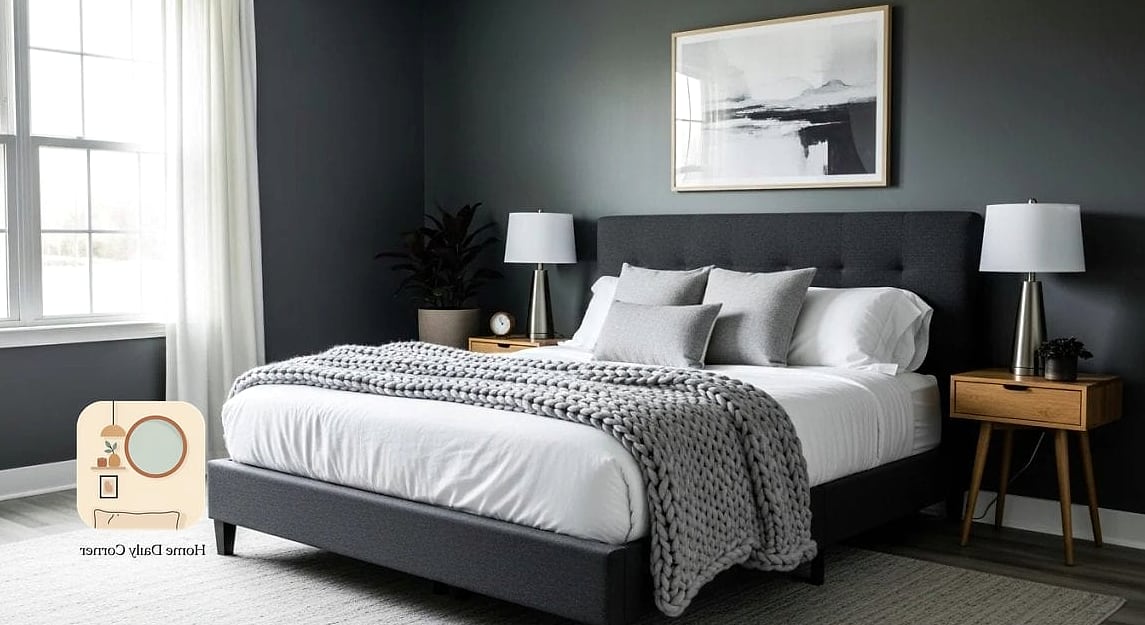
Sometimes one bold wall says more than four matching ones ever could. A charcoal accent wall behind the headboard adds instant drama and gives the eye somewhere to land.
This works particularly well in bedrooms with higher ceilings, where a deep color can actually make the space feel more intimate and cozy rather than overwhelming. Keep the surrounding walls a lighter neutral so the room still feels balanced.
Renters can get this look too, without committing to paint. Peel-and-stick wallpaper in a textured charcoal finish gives you the same visual punch and comes off cleanly when you move out. It’s a weekend project at most, and the payoff is huge.
Layered Grey Bedding in Different Textures
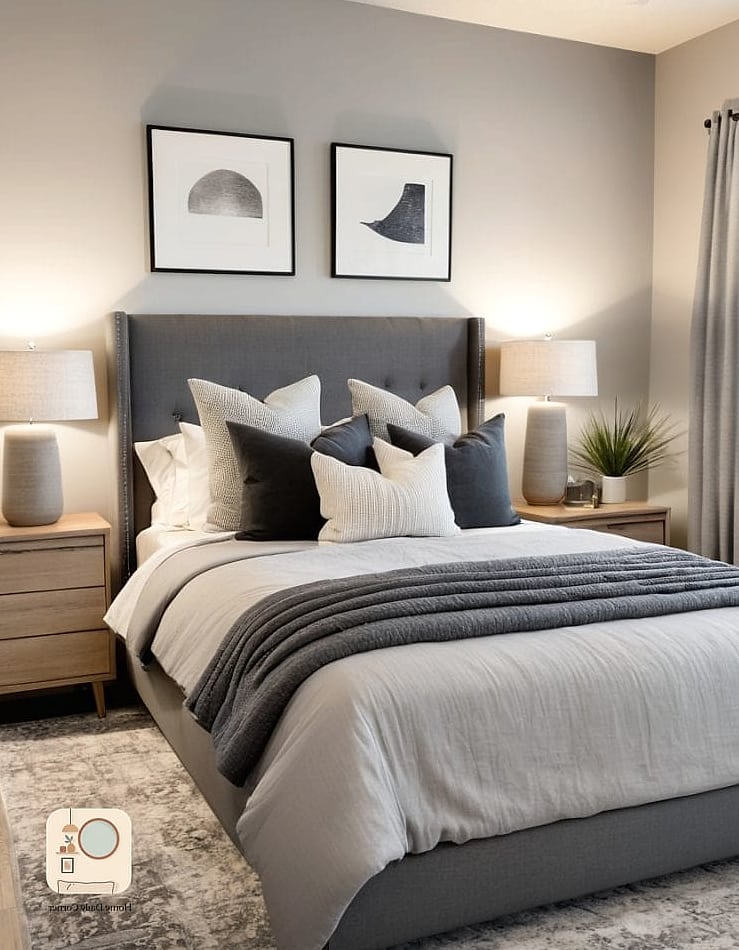
A monochrome grey bed can look flat if everything’s the same shade and material. The fix is layering textures, think a chunky knit throw, smooth cotton sheets, and a linen duvet cover, all in slightly different tones of grey.
This approach adds depth without adding clutter or color. It’s also genuinely practical since you can mix and match pieces from different sets rather than hunting for a perfectly matched bedding collection.
I’d recommend starting with your sheets as the lightest grey, then building up with a mid-tone duvet and darker throw pillows or blanket. Textured fabrics like bouclé, waffle knit, and linen all catch light differently, which keeps things visually interesting even though it’s technically all one color family.
Grey and Wood Nightstands for Warmth
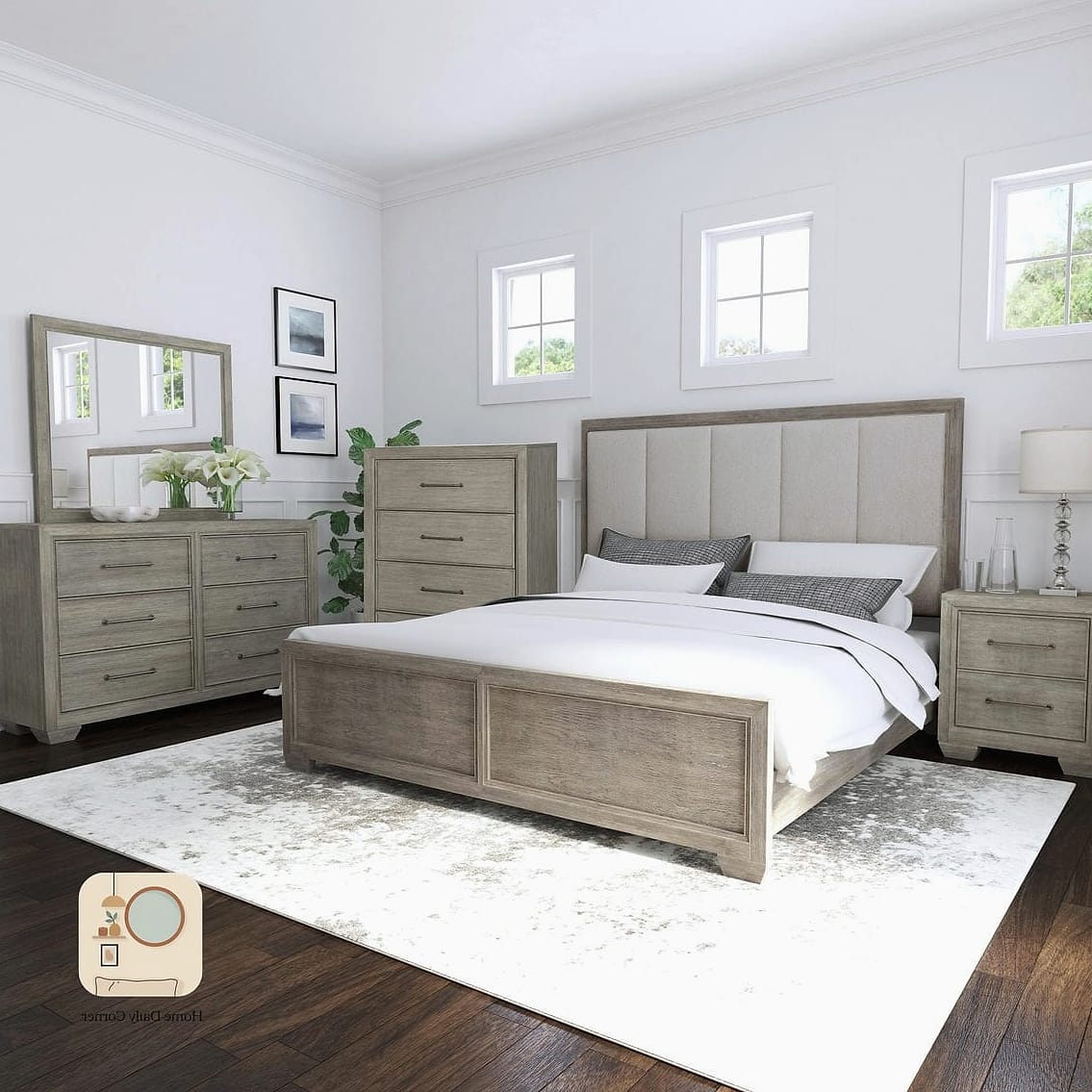
Pairing grey walls or bedding with natural wood furniture keeps the whole room from feeling too cool or clinical. Wood nightstands, especially in warm oak or walnut tones, act as a grounding element.
This combo is popular for a reason. It reads as modern but not sterile, and it works whether your bedroom leans more Scandinavian, mid-century, or transitional.
If you’re working with furniture you already own, you don’t need to replace everything at once. Start with the nightstands since they’re closest to eye level and have the biggest visual impact. Open shelving or a lower drawer style also adds a bit of practical storage for books or a charging station without looking bulky.
Moody Grey Ceiling for Unexpected Drama
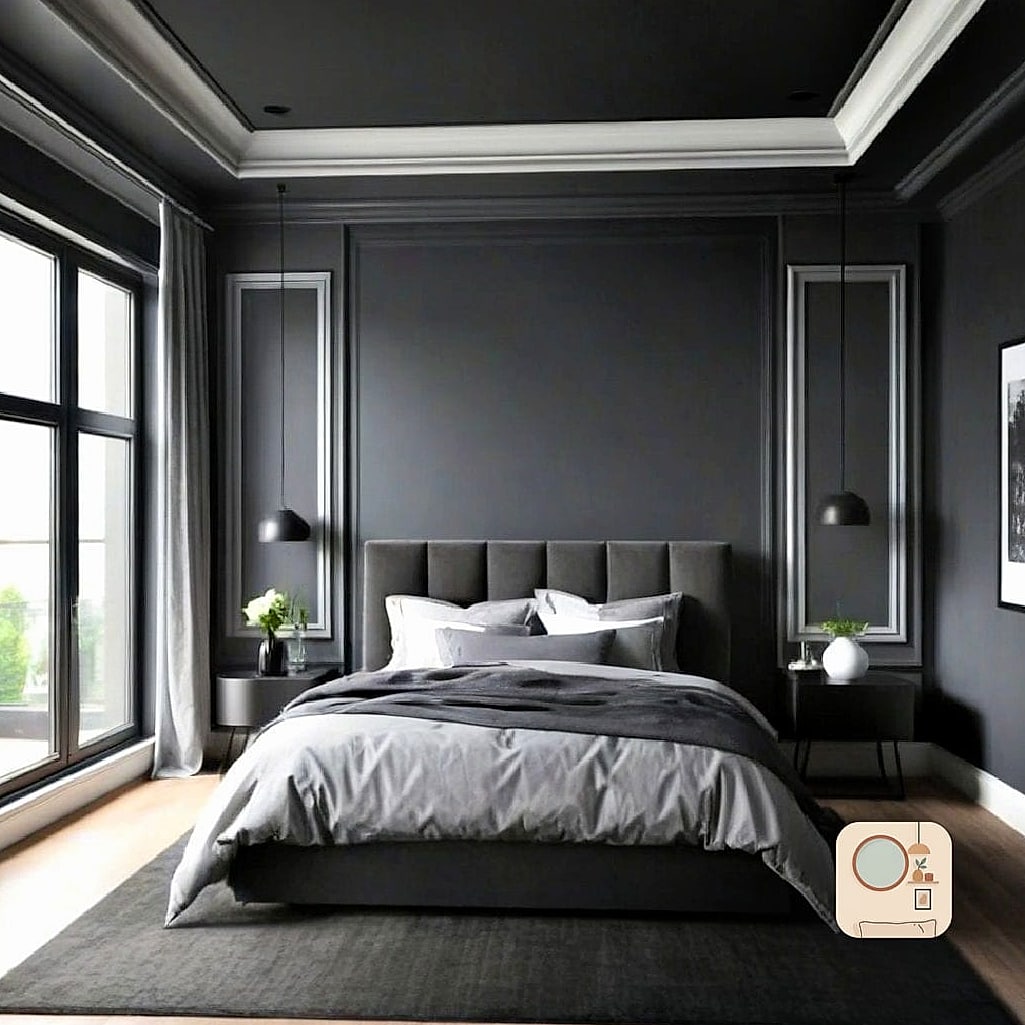
Painting the ceiling is one of those design moves that instantly makes a bedroom feel more custom without requiring a full renovation. A deep grey ceiling, sometimes called a “fifth wall,” adds coziness and makes the room feel enveloping rather than boxy.
This works best in bedrooms where you want a retreat-like, cocoon feeling, especially primary suites or smaller guest rooms where drama pays off more than in a huge open space.
Matte finish paint is your friend here since it hides imperfections and doesn’t create glare from overhead lighting. If you’re nervous about committing, try it in a smaller secondary bedroom first, or just paint the ceiling in a hallway to test how the color reads overhead before painting.
Grey Herringbone Accent Behind the Headboard
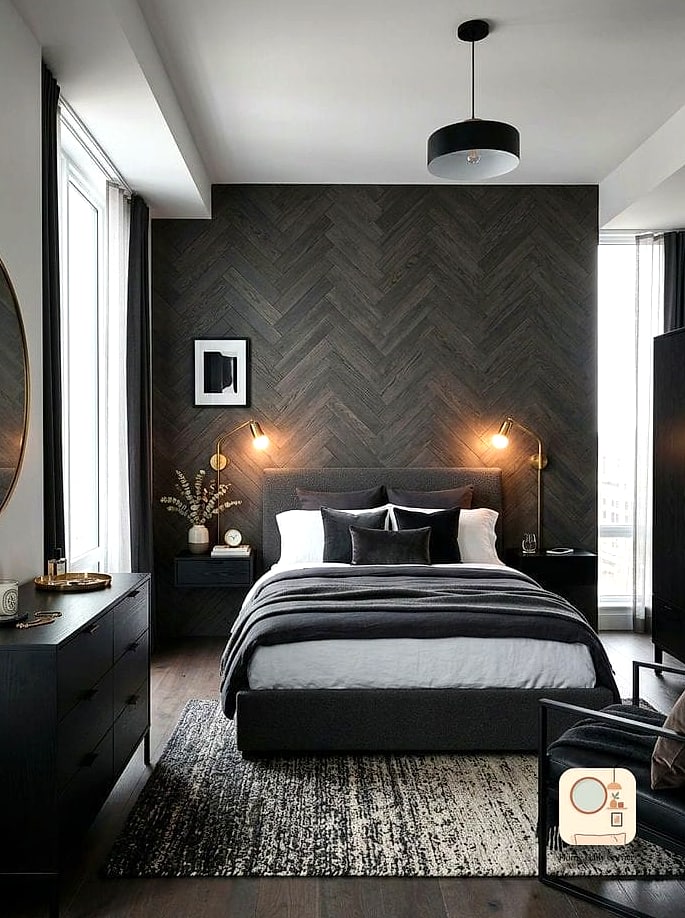
For a more textural take than a flat painted wall, consider a herringbone pattern in grey, whether that’s wood panels, upholstered fabric, or peel-and-stick tile designed for walls.
The angled pattern adds visual movement and a bit of luxury feel without needing bright colors or bold prints. It’s a nice option if your bedroom already has a lot of straight lines and you want to break things up.
Wood herringbone panels in a grey wash are fairly DIY-friendly if you’re comfortable with a miter saw, and there are also prefab panel kits that install with adhesive strips for a no-tools option. Either way, it makes the headboard wall the clear focal point of the room.
Layered Lighting in Warm Tones
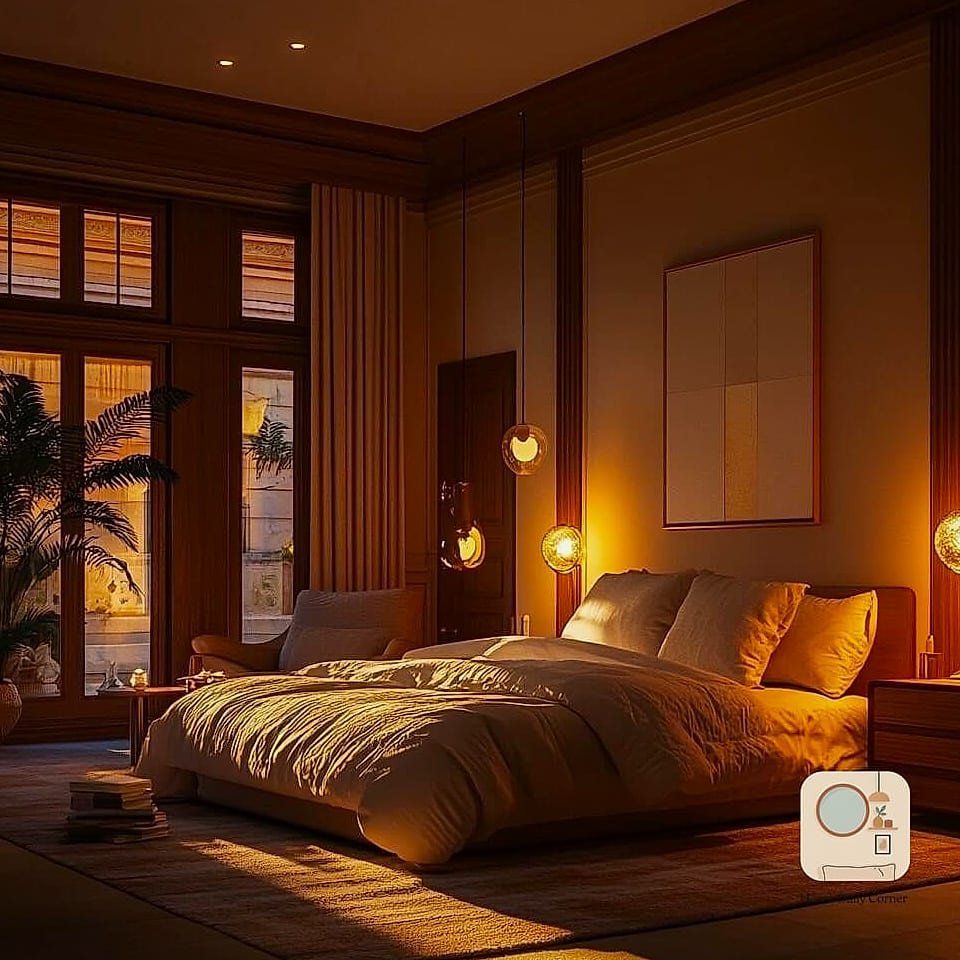
Grey bedrooms can start to feel flat under a single overhead light, so layering your lighting sources makes a bigger difference than most people expect. Combine a dimmable overhead fixture with bedside lamps and maybe a floor lamp in the corner.
Warm bulbs, in the 2700K to 3000K range, keep grey walls from reading cold or clinical, especially in the evening. This is a simple, inexpensive fix if your bedroom already feels a little sterile.
Brass or matte black lamp bases pair beautifully with grey walls and give you a chance to bring in another material without adding more color. If you’re renting, plug-in sconces are a great workaround since they don’t require any electrical work but still give you that layered, designer look.
Built-In Storage with Grey Cabinetry
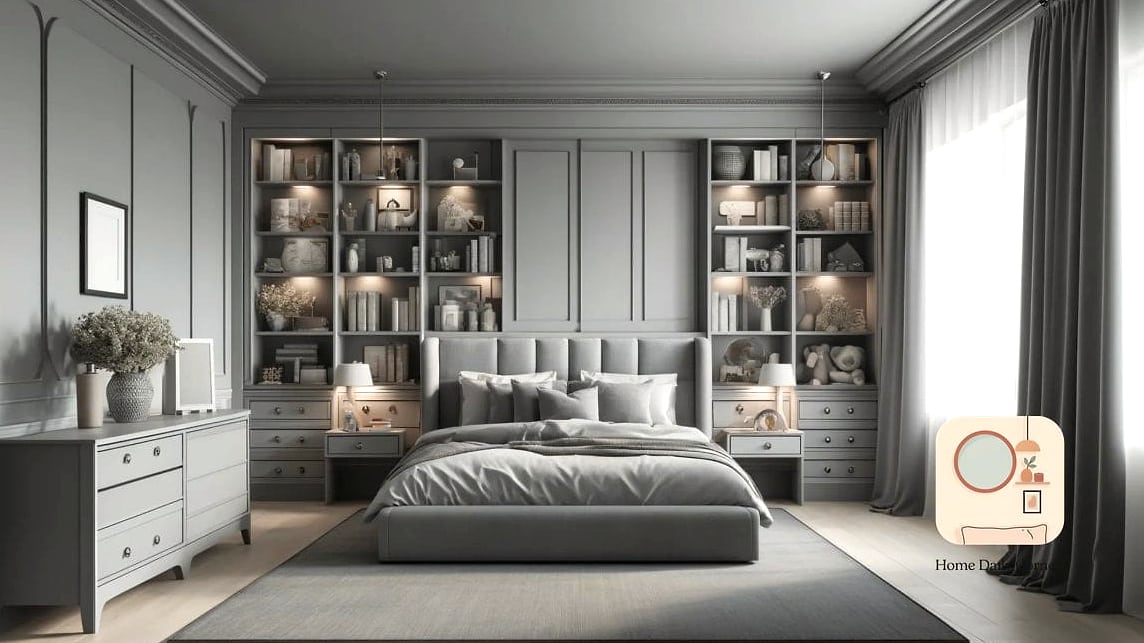
If your bedroom doubles as a workspace or just needs more storage, built-in cabinetry in a soft grey finish is both stylish and genuinely useful. Think a wall of closets, a window seat with drawers underneath, or a custom wardrobe unit.
This is particularly smart for smaller bedrooms where floor space is limited and every inch of storage needs to earn its keep. Grey cabinetry blends into the walls rather than competing with them, which keeps the room feeling calm.
Add brass or black hardware for contrast, and consider open shelving on one section to display books or decor. It’s a bigger investment than paint or bedding, but it solves a storage problem while still looking intentional rather than purely functional.
Grey Area Rug to Anchor the Room
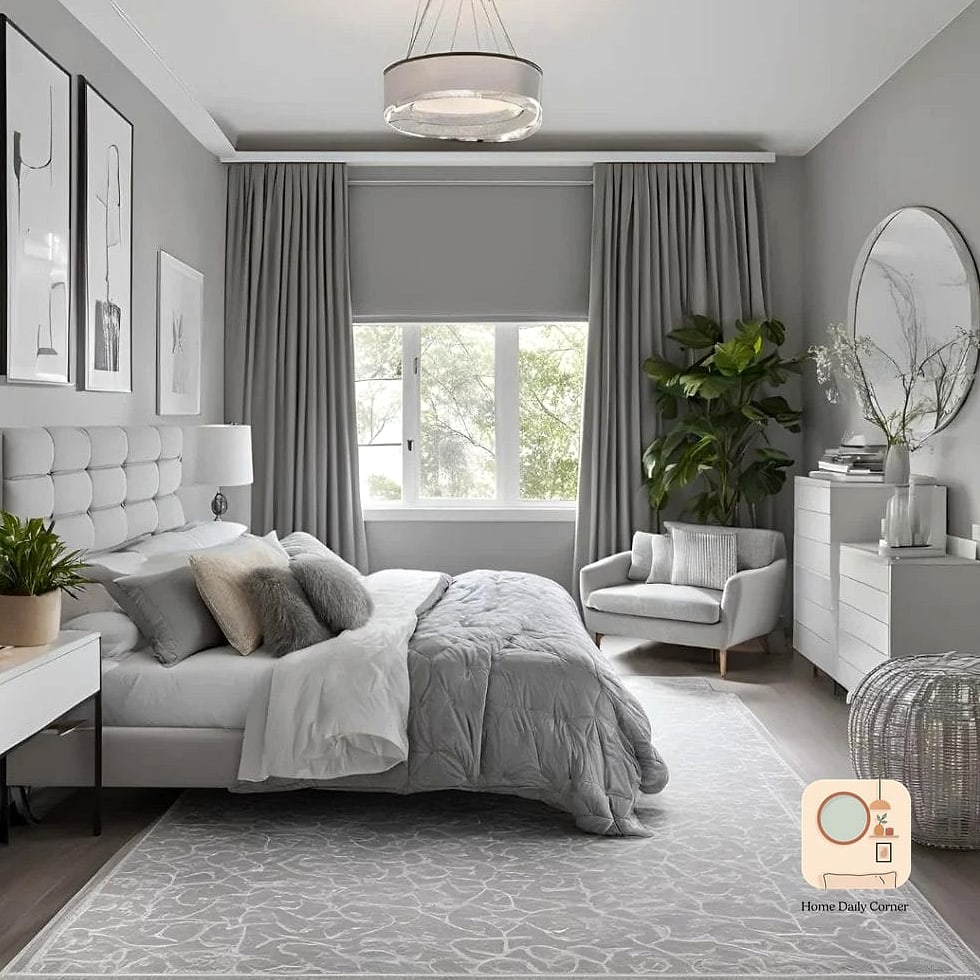
A large grey area rug is one of the easiest ways to tie a room together, especially if your flooring is a different tone like light wood or beige carpet. It also just makes the room more comfortable underfoot, which matters more than people think in a bedroom.
Look for a rug that extends at least a foot or two past the sides of the bed so it reads as intentional rather than like a small mat placed awkwardly under the frame. Wool blends are durable and soft, though if you have pets, a lower pile synthetic option will be easier to keep clean.
A textured or subtly patterned grey rug, like a chunky weave or a tone-on-tone geometric design, adds interest without clashing with your other grey elements. It’s also one of the more budget-friendly ways to refresh the whole room without touching paint or furniture.
Final Thoughts
A grey bedroom doesn’t have to feel cold, boring, or overly minimal. The real key is variety, mixing textures, warming things up with wood and brass, and layering your lighting so the room feels lived-in rather than staged.
You don’t need to tackle all nine of these ideas at once either. Start with whichever feels most doable, maybe swapping your bedding or adding a rug, and build from there. Grey is a great base precisely because it gives you so much room to experiment without ever looking wrong.