9 Creative Bedroom Interior Design Luxury Ideas You Haven’t Seen Before
- A Sunken Conversation Nook Instead of a Reading Chair
- Fabric-Wrapped Walls in Place of Paint or Wallpaper
- A Freestanding Tub as the Bedroom’s Focal Point
- A Ceiling Treatment That Actually Gets Attention
- Hidden Storage That Doubles as Architecture
- A Dedicated Scent and Sound Layer
- Layered, Low-Level Lighting Instead of One Overhead Fixture
- A Bold, Oversized Piece of Art Instead of a Gallery Wall
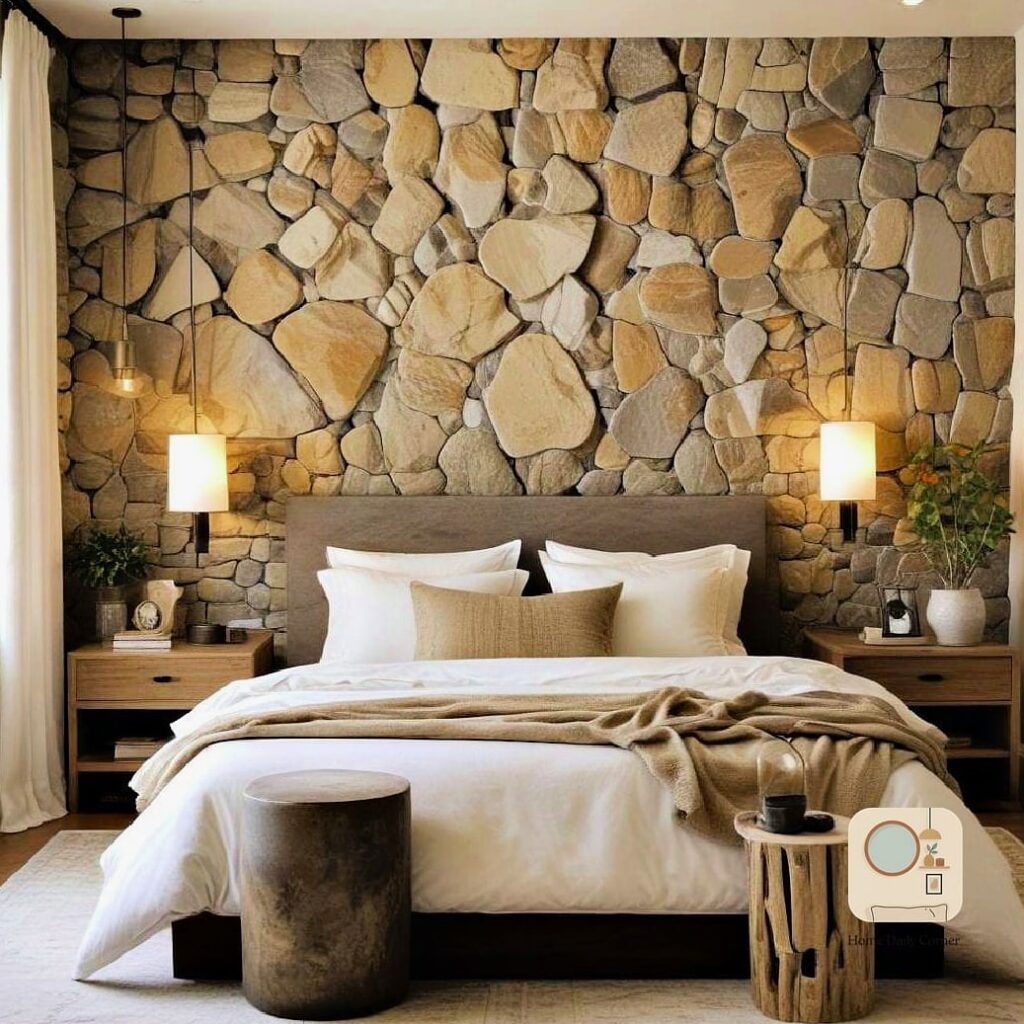
- Natural Stone Accents Brought Indoors
9 Creative Bedroom Interior Design Luxury Ideas You Haven’t Seen Before
Most “luxury bedroom” articles show you the same five things over and over. Tufted headboards, chandeliers, a fireplace nobody actually has room for. It gets old fast, and honestly, it doesn’t help you figure out what to do with your own space.
I’ve spent years pulling bedrooms together for clients (and myself, more times than I’d like to admit), and the ideas that actually make a room feel expensive rarely show up on the first page of Pinterest. They’re quieter. Smarter. Sometimes they cost less than you’d think.
Here are nine ideas that go a little deeper than the usual list.
A Sunken Conversation Nook Instead of a Reading Chair
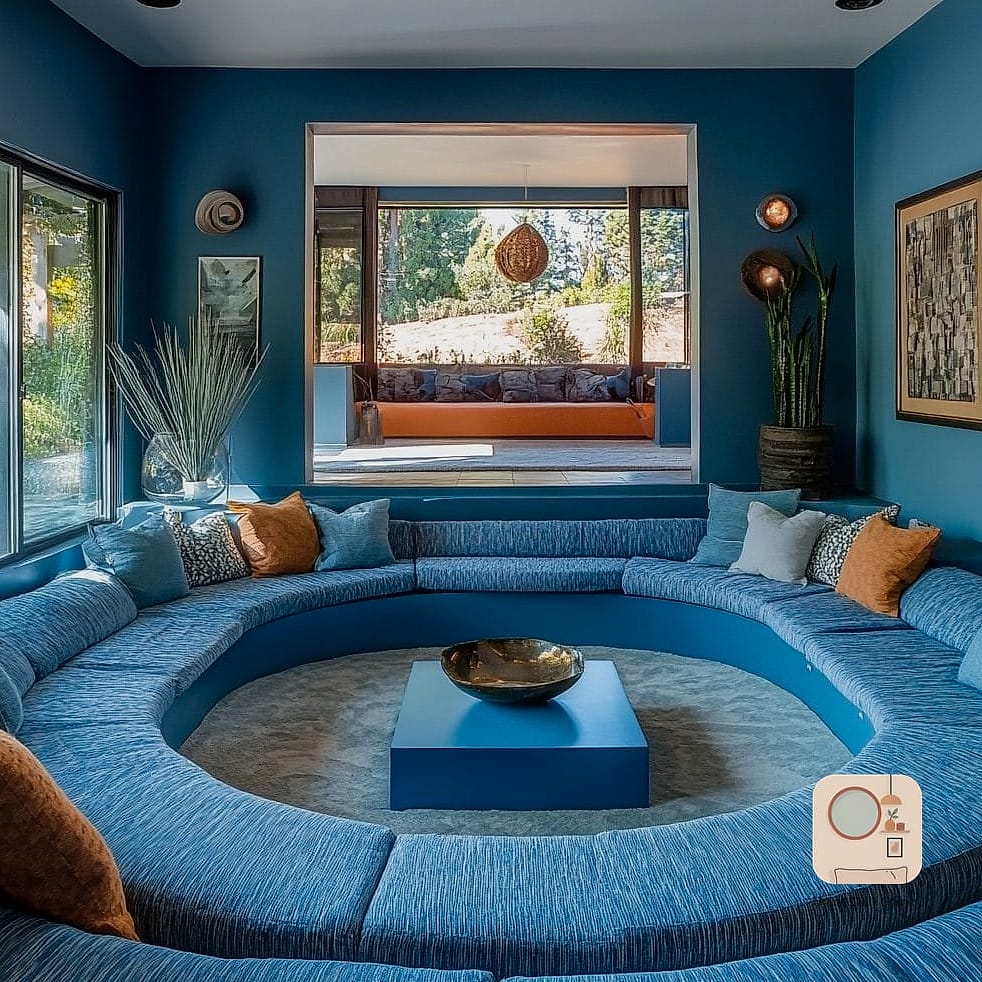
If your bedroom has the square footage to spare, skip the single accent chair in the corner and think about a sunken nook instead. We’re talking a slightly recessed platform, maybe six to eight inches down, lined with built-in bench seating and deep cushions.
It works best in larger primary suites or bonus-room-style bedrooms where you’ve got an awkward corner that never quite knows what to do with itself. Instead of fighting that dead space, you lean into it.
The reason people love this is that it creates a distinct zone without adding walls. Your brain reads “sleeping area” and “sitting area” as two different rooms, even though there’s no door between them. Add a low table, a couple of floor cushions, and warm sconce lighting, and you’ve got a spot that feels more like a boutique hotel lounge than a corner of your bedroom.
Budget-wise, this is a bigger lift since it usually involves some framing work. But a scaled-down version works too: a raised platform instead of a sunken one gets you 80% of the visual effect for a fraction of the cost.
Fabric-Wrapped Walls in Place of Paint or Wallpaper
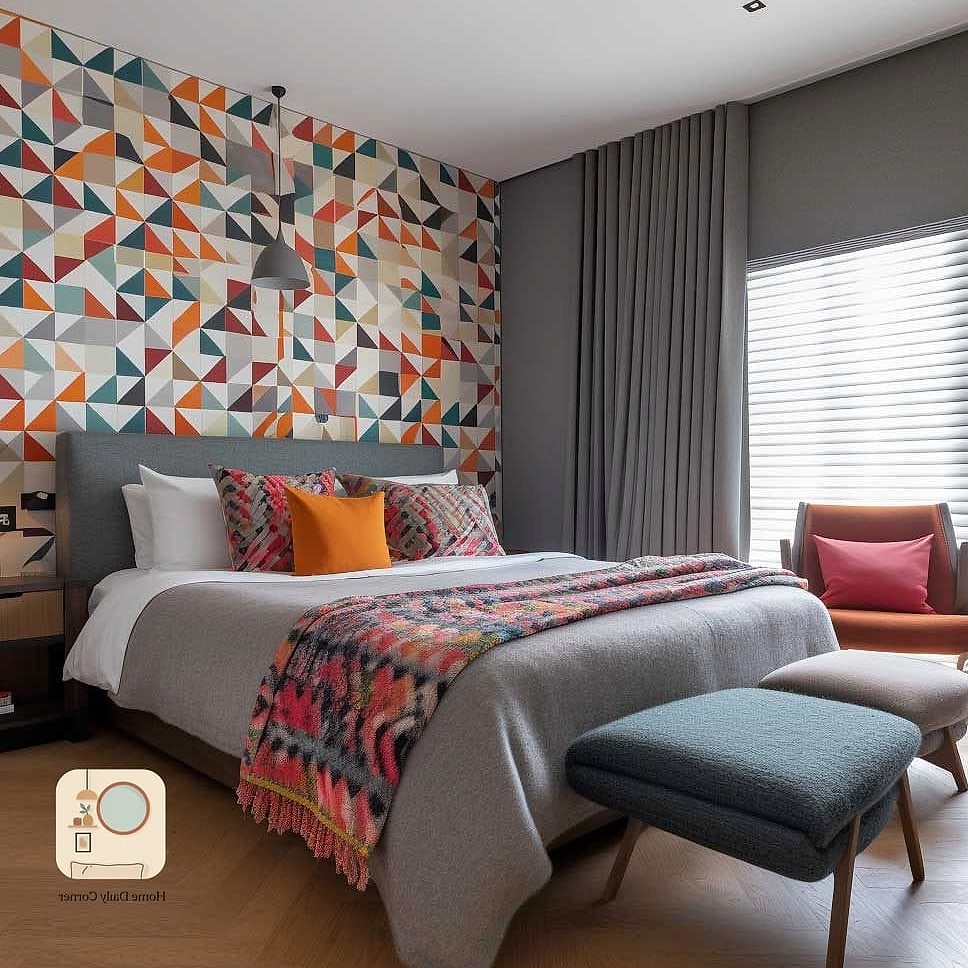
Upholstered walls used to be a hotel-only move, but more designers are bringing them into residential bedrooms because they genuinely change how a room sounds and feels, not just how it looks.
Picture one wall, usually the one behind the bed, wrapped in a channel-tufted or simply padded fabric panel. Linen, boucle, and velvet all work, though velvet leans more formal and boucle feels a little more relaxed and textural.
This is one of those upgrades that instantly makes a bedroom feel more custom without requiring a full renovation. It also does something paint can’t: it softens sound. Bedrooms with hardwood floors and lots of hard surfaces can feel echoey, and a fabric wall quiets that down noticeably.
Maintenance is the tradeoff. Fabric walls need occasional vacuuming with a soft brush attachment and aren’t the best choice if you’ve got pets who treat every soft surface as a scratching post. For renters, there are peel-and-stick fabric panel kits now that mimic the look without the commitment.
A Freestanding Tub as the Bedroom’s Focal Point
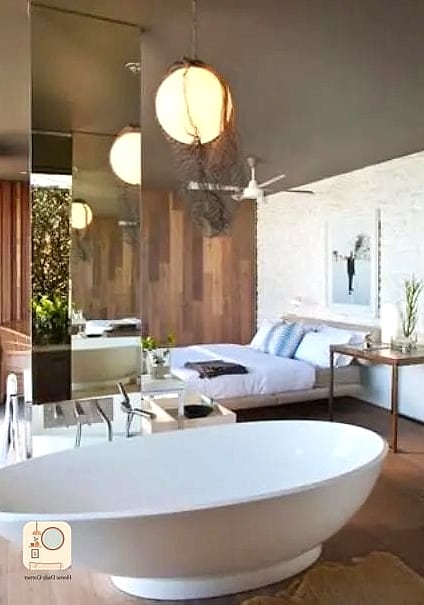
This sounds unconventional until you see it done well. Instead of tucking the tub away in the bathroom, some primary suites are pulling it right into the bedroom itself, positioned near a window or as a visual anchor across from the bed.
It works best in larger layouts where there’s already an open flow between the sleeping area and the ensuite, so it doesn’t feel like you’re bathing in the middle of your living space. A half-wall or a slatted wood screen can add just enough separation to keep it from feeling exposed.
Homeowners love it because it’s genuinely rare. It signals “spa” in a way that a fully enclosed bathroom just doesn’t, and it turns bath time into part of the bedroom’s ambiance rather than a separate errand.
Practically speaking, you’ll want a floor drain nearby and a contractor who understands waterproofing outside a typical wet zone. It’s not a weekend DIY project, but it’s one of the highest-impact luxury moves on this list if your layout allows for it.
A Ceiling Treatment That Actually Gets Attention
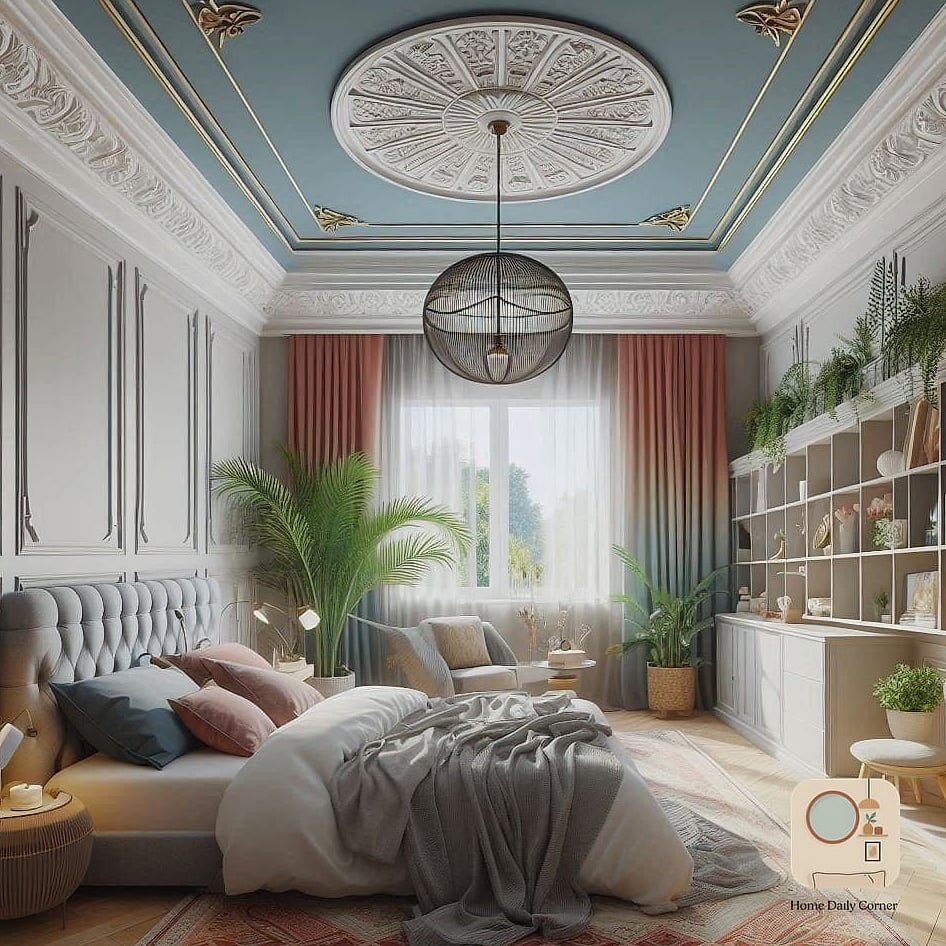
We spend most of our time in bed staring straight up, yet most bedroom ceilings are just flat white nothing. A textured or paneled ceiling changes that completely.
Wood slat ceilings, coffered panels, or even a deep, moody paint color like charcoal or forest green overhead can make a room feel intentional in a way that four matching walls never quite manage. Wood tones especially bring warmth without making the room feel darker, since the light still bounces around at eye level.
This works in bedrooms of pretty much any size, though lower ceilings do better with lighter tones or slimmer wood slats so the room doesn’t feel like it’s closing in.
For a lower-cost version, even a simple painted ceiling in a soft, warm neutral instead of standard white gets you noticed results. Wood slats can be installed as a DIY weekend project if you’re reasonably comfortable with a level and a nail gun.
Hidden Storage That Doubles as Architecture
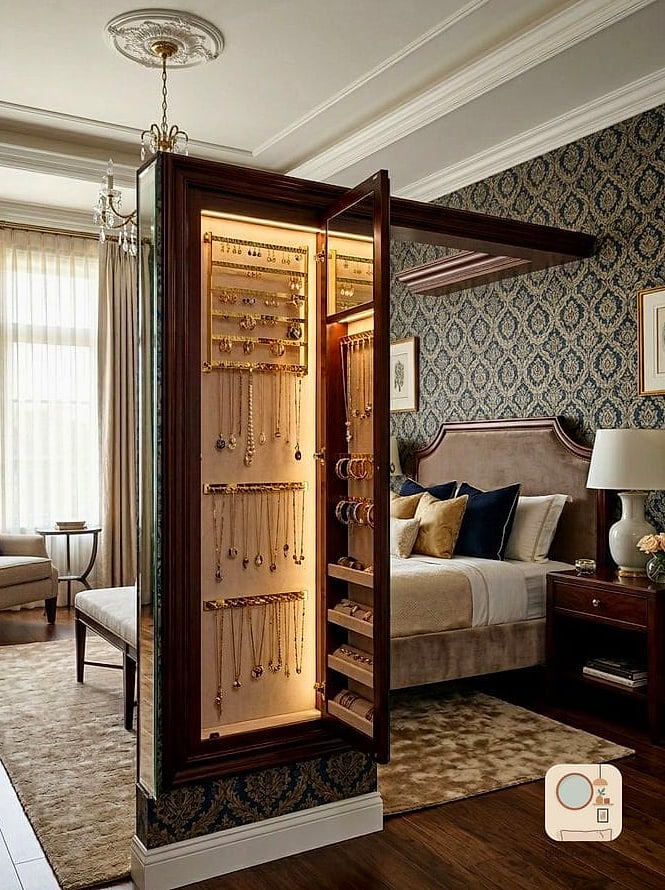
Luxury doesn’t always look like more stuff. Sometimes it looks like less clutter, achieved through storage so well integrated you don’t even clock it as storage.
Think platform beds with drawers built into a raised base, closet doors disguised as wall paneling, or a headboard wall that conceals a slim closet system behind it. The goal is a room that reads as clean and uncluttered because everything has a home that isn’t visible.
This is especially great for smaller bedrooms or families who need function without sacrificing style. Built-in drawer organizers and labeled bins inside these hidden systems keep things from turning into a mess the second you open a panel.
It’s not the cheapest route since custom millwork adds up quickly, but ready-made platform storage beds are a solid middle ground if you want the look without a full built-in budget.
A Dedicated Scent and Sound Layer
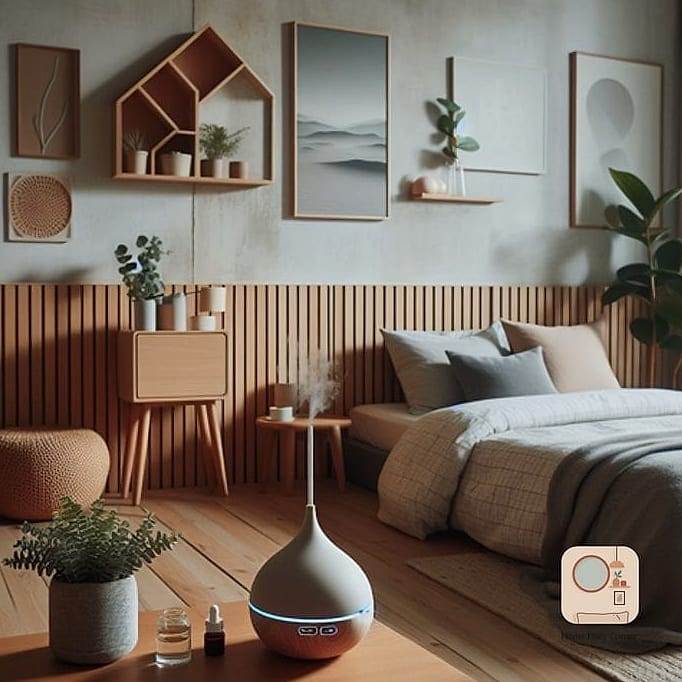
This one isn’t visual at all, and that’s exactly why it stands out. High-end bedrooms increasingly treat scent and sound as design elements, not afterthoughts.
A built-in diffuser system, a small shelf styled with a rotation of candles, or even discreet ceiling speakers wired for a low, ambient soundscape all add a sensory layer most bedrooms skip entirely. It’s the kind of detail guests notice without being able to explain why the room feels so good.
I’d recommend starting simple. A quality diffuser on a timer and a couple of warm, woodsy or linen-scented candles get you most of the effect. If you want to go further, in-ceiling speakers paired with a small smart hub let you set the mood without a bulky speaker taking up nightstand space.
This is genuinely one of the most affordable ideas on this list, and it’s completely renter-friendly since none of it requires touching the walls.
Layered, Low-Level Lighting Instead of One Overhead Fixture
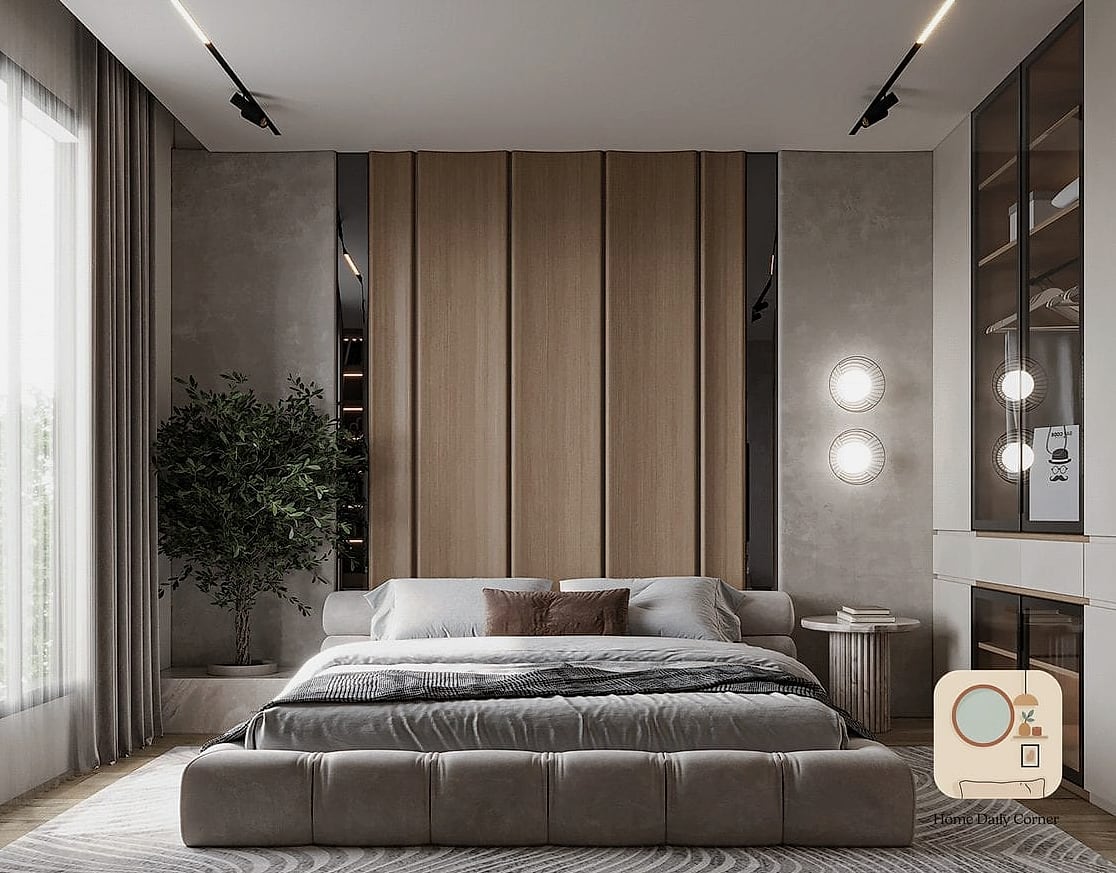
A single ceiling light does a bedroom no favors. Luxury bedrooms rely on multiple light sources set at different heights: wall sconces flanking the bed, a floor lamp in the reading nook, LED strips tucked under a floating nightstand or behind the headboard.
This layered approach lets you control mood in a way a single overhead switch never will. Bright and functional for getting dressed, warm and dim for winding down at night.
It works in every bedroom size, though smaller rooms benefit even more since good lighting can make a tight space feel considerably bigger than it is. Warm-toned bulbs, somewhere in the 2700K range, tend to read as cozier and more expensive than the cooler white light a lot of fixtures ship with by default.
Budget-friendly version: plug-in sconces and battery-powered LED strips get you 90% of the effect without any electrical work. Full version involves hardwiring, which is worth it long-term but does need an electrician.
A Bold, Oversized Piece of Art Instead of a Gallery Wall
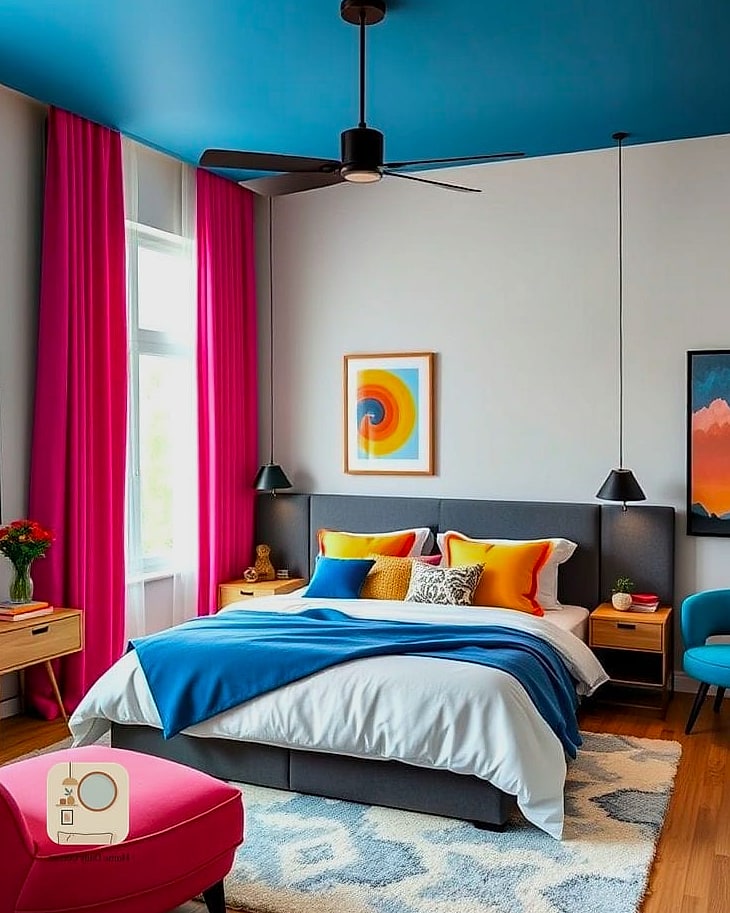
Gallery walls have had their moment, and they’re still lovely, but one large-scale piece of art, floor-to-near-ceiling if you can manage it, reads as noticeably more luxurious.
This works especially well on the wall opposite the bed, since it becomes the first thing you see when you walk in and the last thing you look at before falling asleep. A single striking piece, whether it’s abstract, a large botanical print, or a commissioned painting, does more visual work than a dozen smaller frames ever could.
Homeowners love this because it’s low-maintenance decor. One piece to dust occasionally instead of managing a dozen frame angles and spacing. It also photographs beautifully, which matters more than people admit if you’re ever planning to sell.
Budget tip: oversized canvas prints from online print shops cost a fraction of custom framing and still deliver that same visual weight.
Natural Stone Accents Brought Indoors
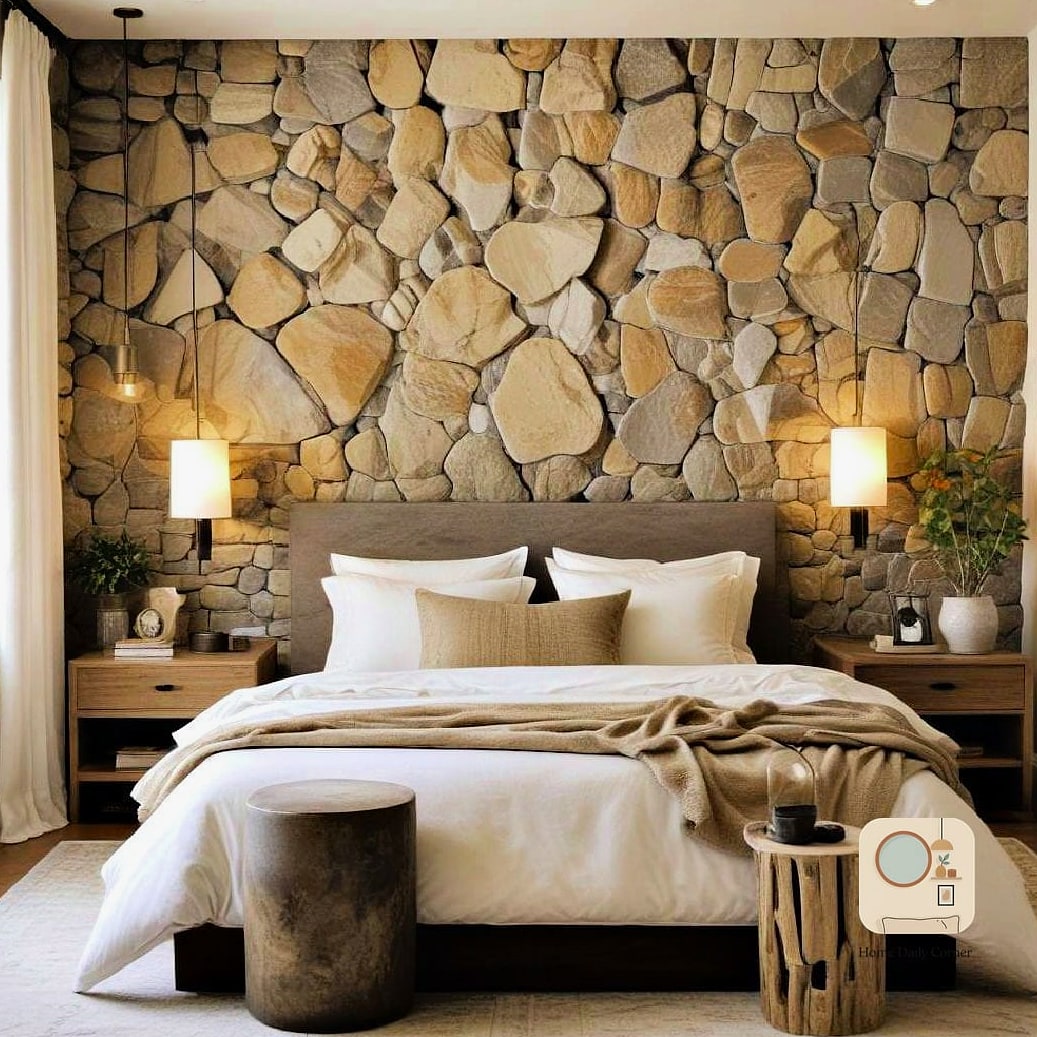
Stone isn’t just for kitchens and bathrooms anymore. A slim stone accent wall, a stone-topped nightstand, or even a stone bench at the foot of the bed brings texture and coolness that fabric and wood alone can’t replicate.
Materials like travertine, honed marble, or textured limestone tile work particularly well here. They add warmth despite being cool to the touch, especially in creamy, sandy tones rather than stark white or black.
This suits primary suites going for a spa-like, grounded feel, and it pairs beautifully with the warm wood tones and layered lighting mentioned earlier in this list. Stone accent walls also hold up well over time, they don’t fade, stain easily, or need much beyond an occasional wipe-down.
If a full stone wall feels like too much commitment, a stone-topped nightstand or bench is a much smaller investment that still brings in that same natural, grounded texture.
Final Thoughts
None of these ideas require ripping your bedroom down to the studs, though a couple of them certainly can go that far if your budget allows. What they have in common is that they think past the obvious moves.
Start with whichever idea matches your current layout and budget best, whether that’s a lighting overhaul this weekend or a stone accent wall down the road. Luxury bedroom design isn’t really about spending the most money. It’s about making choices most people don’t think to make.