7 Wardrobe Design Bedroom Ideas That Are Both Stylish and Practical
7 Wardrobe Design Bedroom Ideas That Are Both Stylish and Practical
Your wardrobe does more heavy lifting than almost any other piece of furniture in your bedroom. It’s not just about hanging clothes anymore. A well-designed wardrobe can quietly organize your entire morning routine, make a small room feel bigger, and even become the visual anchor of the whole space.
If you’ve been scrolling through inspiration photos feeling a little overwhelmed, I get it. There are so many directions you could go. So let’s break down seven wardrobe design bedroom ideas that actually work in real homes, not just showroom photos.
Built-In Wall-to-Wall Wardrobes
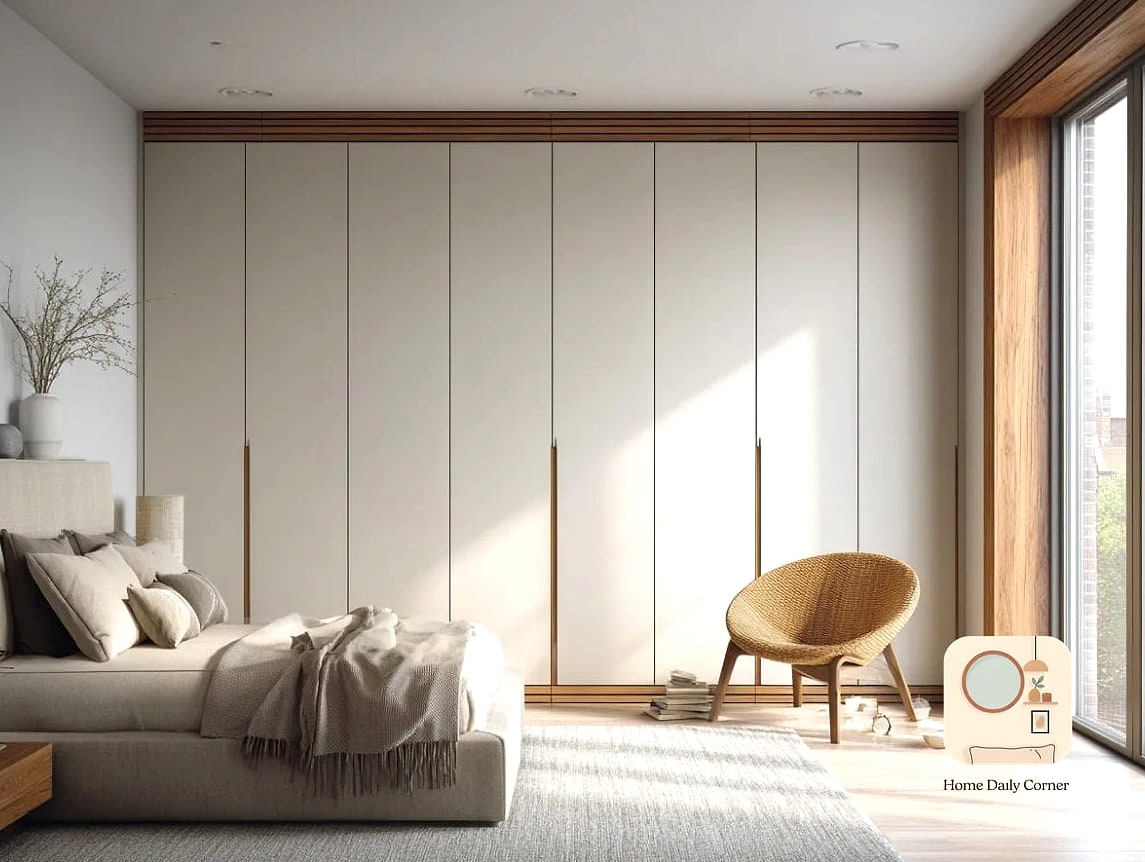
This is the option most designers reach for when a bedroom has awkward corners or wasted wall space. A built-in wardrobe runs from one wall to the other, floor to ceiling, so there’s no gap collecting dust bunnies on top.
It works especially well in bedrooms with lower ceilings or slightly irregular wall angles, since the cabinetry can be customized to fit the exact dimensions of the room. You lose a little floor space, but you gain a ridiculous amount of storage.
Matte finishes in soft neutrals like sage, warm greige, or off-white are having a moment right now, and they tend to age better than glossy fronts that show every fingerprint. Inside, think adjustable shelving, a mix of hanging rods at different heights, and a few drawers for smaller items.
Budget-wise, built-ins are a bigger investment upfront, but they add real value if you’re planning to stay in the home for a while. For renters, this obviously isn’t an option, but it’s worth keeping in mind for a future remodel.
Open Wardrobe Shelving With Curated Display
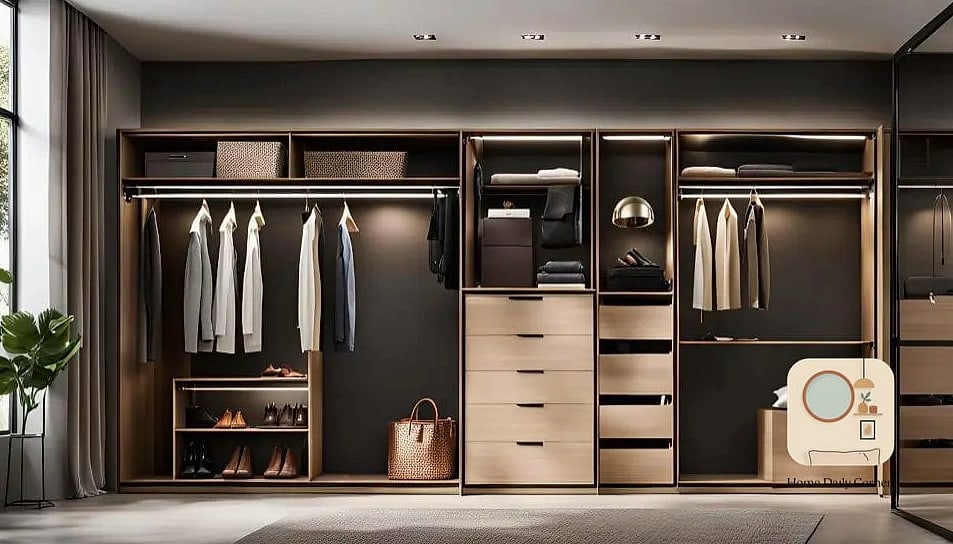
Not every wardrobe needs doors. An open shelving wardrobe system turns your clothing into part of the decor, which sounds a little intimidating until you see how good it looks when done right.
This idea shines in bedrooms with a more minimalist or Scandinavian aesthetic, where the goal is a calm, uncluttered look. Folded sweaters, a few structured bags, and some woven baskets on the lower shelves create texture without visual chaos.
The catch is honesty: this only works if you’re willing to keep things tidy. If your closet tends toward the “clothes everywhere” end of the spectrum, open shelving might stress you out more than it helps.
Wood-toned shelving with brass or black hardware brings warmth, while floating shelves against a neutral wall keep things feeling light. It’s also a nice renter-friendly option since floating shelves can be installed with minimal wall damage.
Sliding Mirror Door Wardrobes
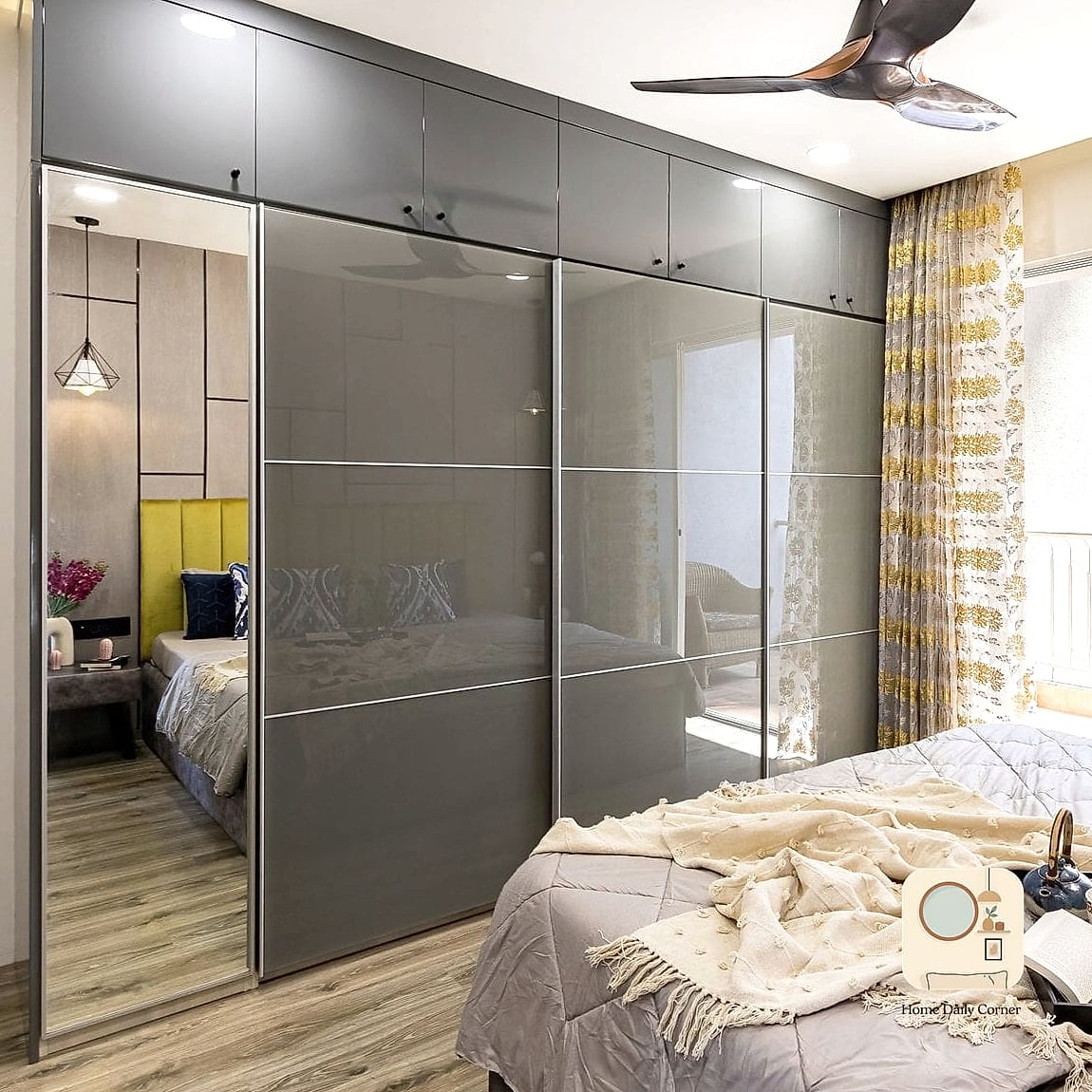
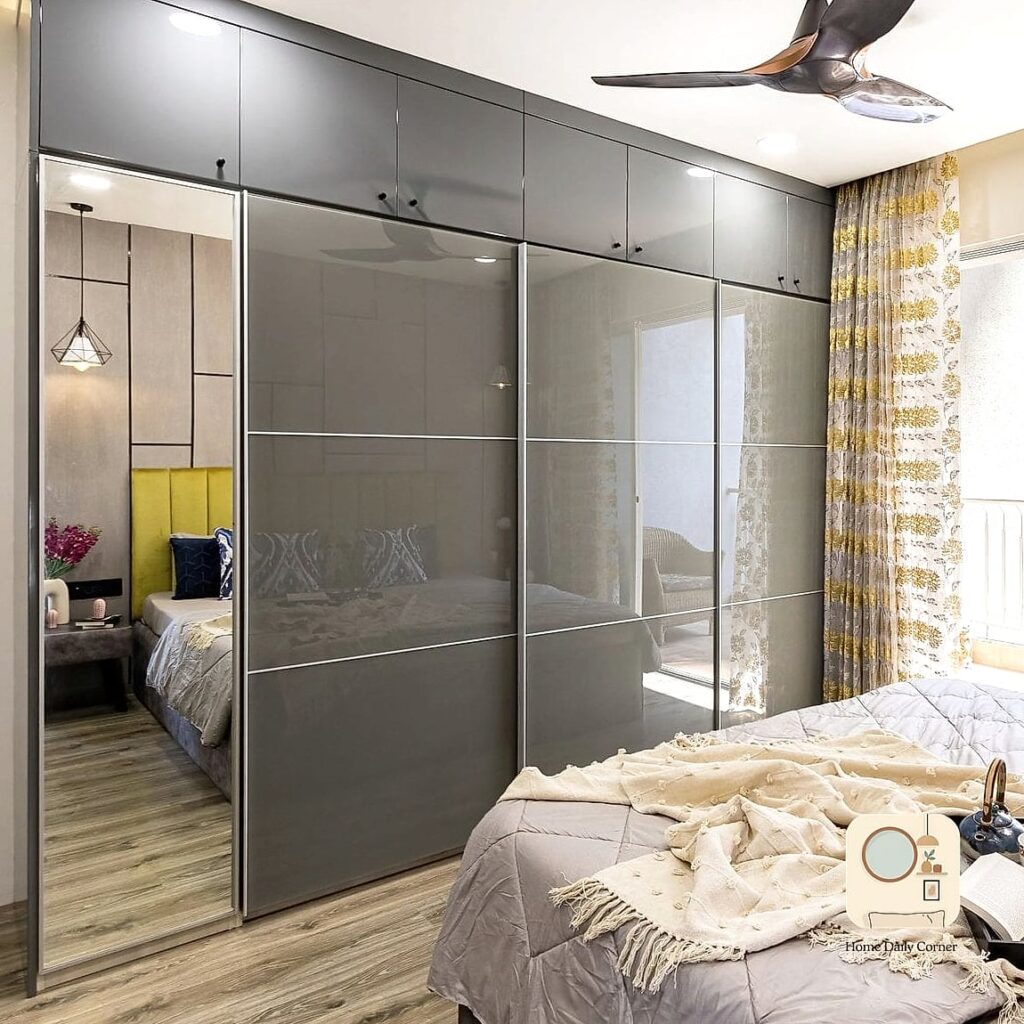
Sliding doors solve a problem that swing doors create in smaller bedrooms: they don’t need clearance space to open. That alone makes this one of the most practical wardrobe design bedroom ideas for compact layouts.
Adding mirrored panels to the sliding doors is a genuinely clever move because it doubles as a full-length mirror without taking up extra floor space. It also bounces light around the room, which makes a small or dim bedroom feel noticeably bigger and brighter.
These work particularly well in apartments, guest rooms, or shared bedrooms where every square foot counts. You can go with a single large mirrored panel for a sleek, modern look, or split it into two or three sections for a more traditional feel.
Maintenance is pretty low, though you’ll want a good glass cleaner on hand since mirrored surfaces show smudges more than regular wood or laminate fronts.
Walk-In Wardrobe With a Central Island
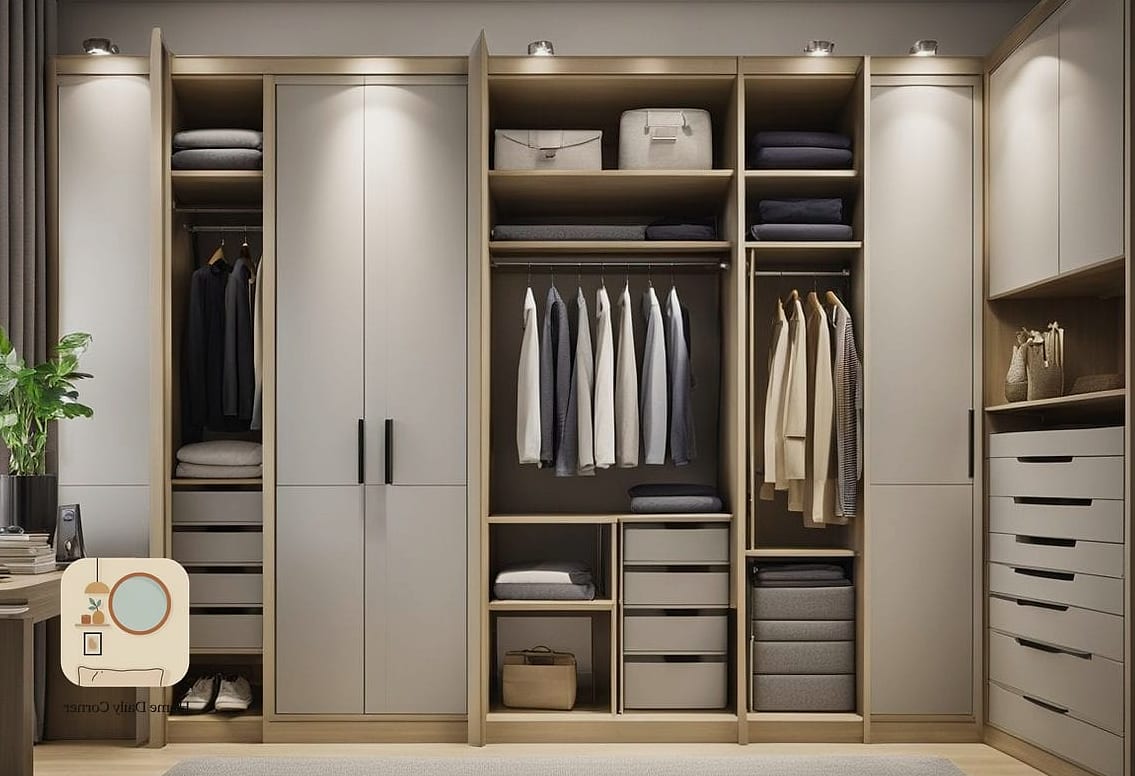
If you’ve got the square footage, a walk-in wardrobe with a small central island feels like a genuine upgrade to daily life, not just a design flex. The island can hold folded items, jewelry trays, or even double as a spot to sit while you put on shoes.
This idea works best when converted from an underused guest room, a large closet, or a section of an oversized primary bedroom. It’s less about square footage alone and more about having a somewhat enclosed, dedicated space.
Layered lighting matters a lot here. A central overhead fixture combined with under-shelf LED strips makes it much easier to actually see your clothes, especially early in the morning or in windowless closets.
Natural stone or quartz countertops on the island add a touch of luxury, but a simple wood-topped island works just as well if you’re keeping costs down. Either way, this is one of those upgrades that instantly makes a bedroom feel more custom without requiring a full home renovation.
Compact Corner Wardrobes for Small Bedrooms
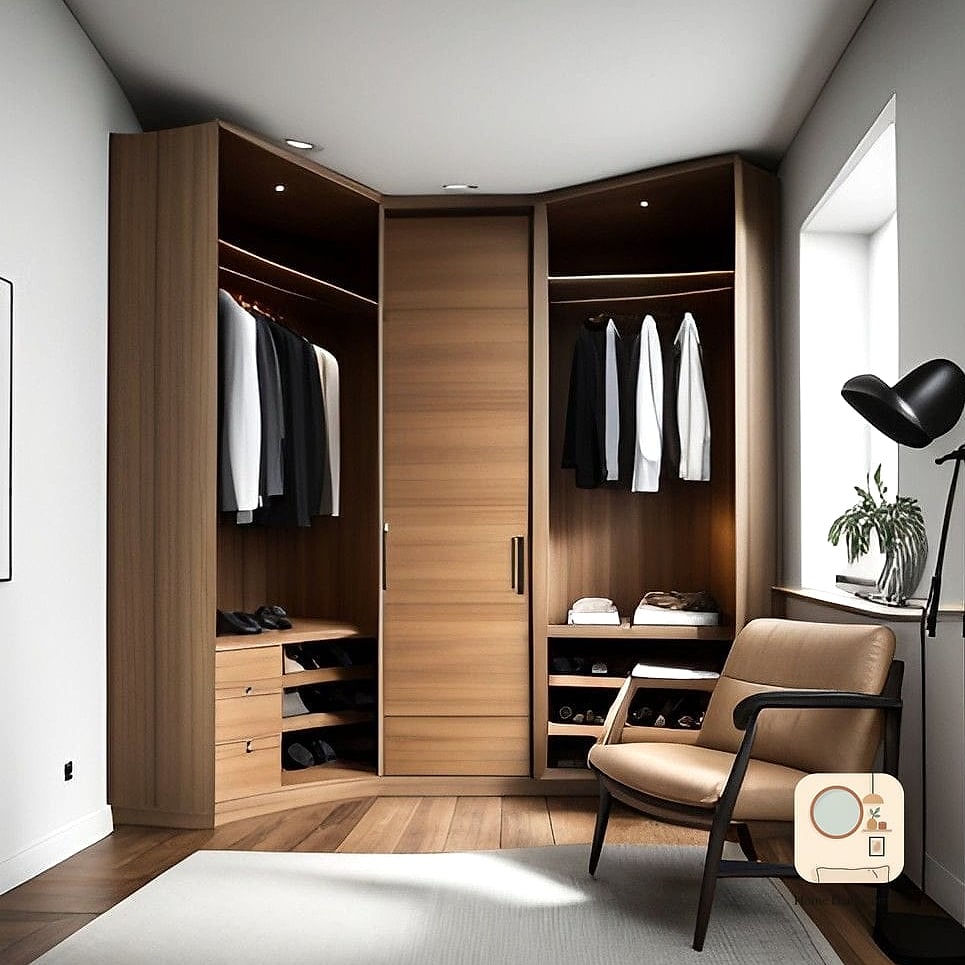
Corner space in a bedroom is so often wasted, just sitting there awkwardly between two walls. A corner wardrobe, sometimes shaped like an angled L, tucks neatly into that dead zone and frees up the rest of the room for a proper bed and nightstands.
This is one of the most practical wardrobe design bedroom ideas for small apartments, kids’ rooms, or older homes with unusual layouts. Since the wardrobe fills a corner rather than a full wall, you keep more open floor space for movement, which matters a lot in tighter rooms.
Look for units with diagonal hanging rods or pull-out baskets specifically designed for corner use, since standard straight shelving can waste a surprising amount of the available space. Light, neutral color palettes help the piece feel less bulky visually.
Flat-pack corner wardrobes are widely available and reasonably DIY-friendly if you’re comfortable with an Allen wrench and a little patience. It’s a solid middle ground between a full built-in and a basic freestanding closet.
Wardrobe With Integrated Vanity or Desk
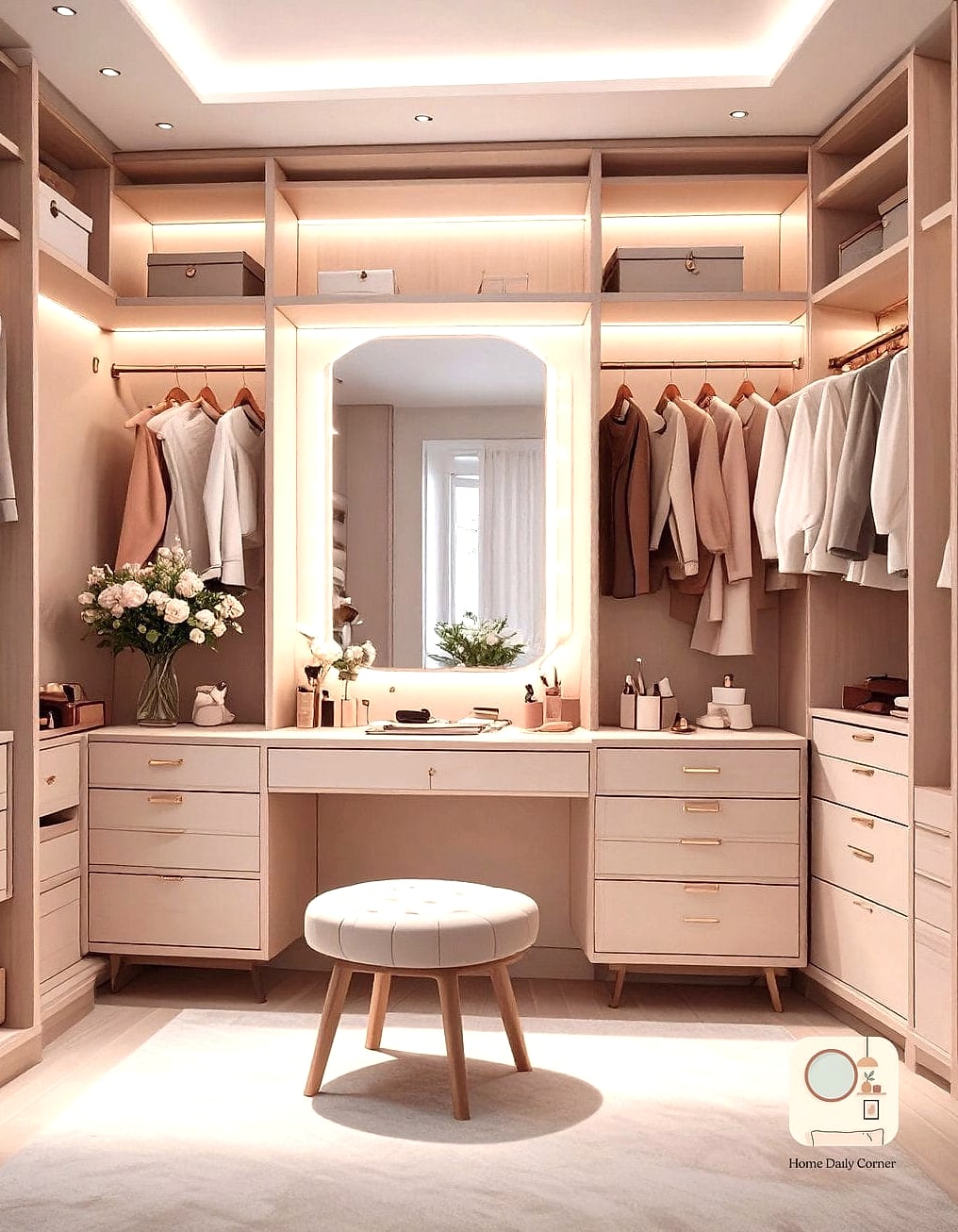
Combining your wardrobe with a small vanity or fold-out desk is a smart move for bedrooms that need to multitask. Instead of squeezing in three separate pieces of furniture, one unit handles clothing storage, a mirror, and a workspace.
This design works particularly well in studio apartments, teenage bedrooms, or guest rooms that occasionally double as a home office. A drop-down desk surface can fold flat against the wardrobe front when not in use, which keeps the room feeling open the rest of the time.
Brushed brass or black hardware pairs nicely with warm wood tones here, giving the whole setup a slightly more furniture-like feel rather than reading as pure storage. Add a small stool that tucks underneath and you’ve got a genuinely functional corner without cluttering the room.
Practicality-wise, this is a great option for anyone short on square footage who still wants a spot to do makeup, answer emails, or get ready in the morning without leaving the bedroom.
Two-Tone Wardrobe With Mixed Storage Zones
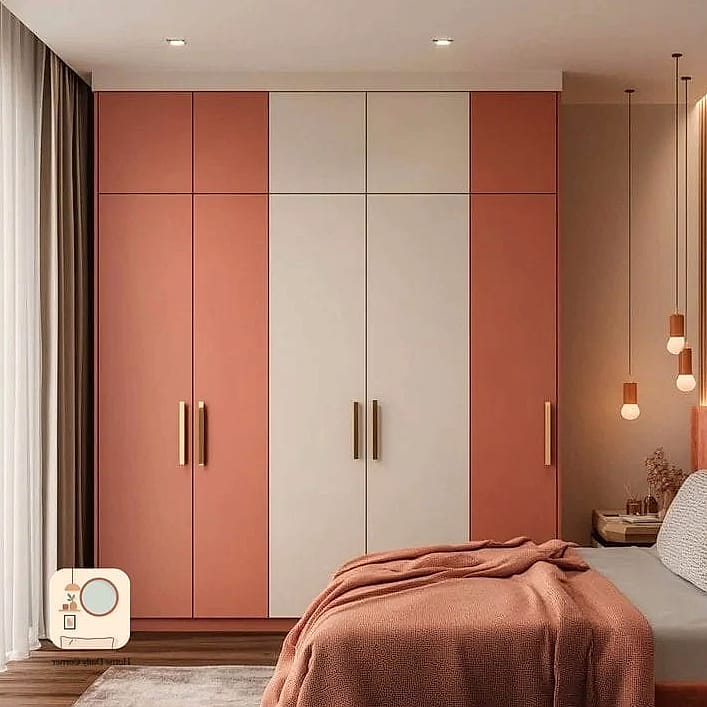
Two-tone wardrobes have become a favorite among designers because they break up what would otherwise be a big, flat block of cabinetry. Pairing a matte black or navy lower section with a lighter wood or white upper section adds visual interest without going overboard.
This idea works in almost any bedroom style, from modern to transitional, and it’s particularly good for larger primary bedrooms where the wardrobe is a dominant piece of furniture. The color break also helps define different storage zones: darker lower drawers for folded basics, lighter upper cabinets for less-used items.
Mixing materials adds even more depth. Think a wood-grain laminate on top with a smooth matte lacquer below, or vice versa depending on your color scheme. Textured finishes on at least one section keep the whole thing from feeling too flat or builder-grade.
Inside, mix your storage types: adjustable shelving for shoes, drawer organizers for accessories, and a couple of pull-out baskets for laundry or off-season items. This kind of layered organization system makes the wardrobe feel less like a box and more like a genuinely thought-out piece of the room.
Bringing your favorite wardrobe design bedroom ideas to life doesn’t require picking just one approach. Plenty of homeowners mix elements, maybe sliding mirror doors on a built-in unit, or a corner wardrobe with an integrated vanity, depending on their room’s quirks and their own storage habits.
Whatever direction you go, think about how you actually get dressed in the morning, what you tend to lose track of, and how much maintenance you’re realistically willing to keep up with. The best wardrobe isn’t necessarily the fanciest one. It’s the one that fits how you actually live.