11 Master Bedrooms Decor Designs That Maximize Style and Function
11 Master Bedrooms Decor Designs That Maximize Style and Function
Your bedroom should feel like the best room in the house, not the one you forgot to finish decorating. A lot of homeowners pour all their design energy into kitchens and living rooms, then treat the master bedroom as an afterthought with a bed and maybe a lamp. That’s a missed opportunity, honestly, because this is the room you actually spend the most time in.
The good news is you don’t need a huge budget or a full renovation to make your bedroom feel intentional. These 11 master bedroom decor designs balance beautiful style with real everyday function, so you get a room that looks great and actually works for how you live.
Warm Minimalist Retreat
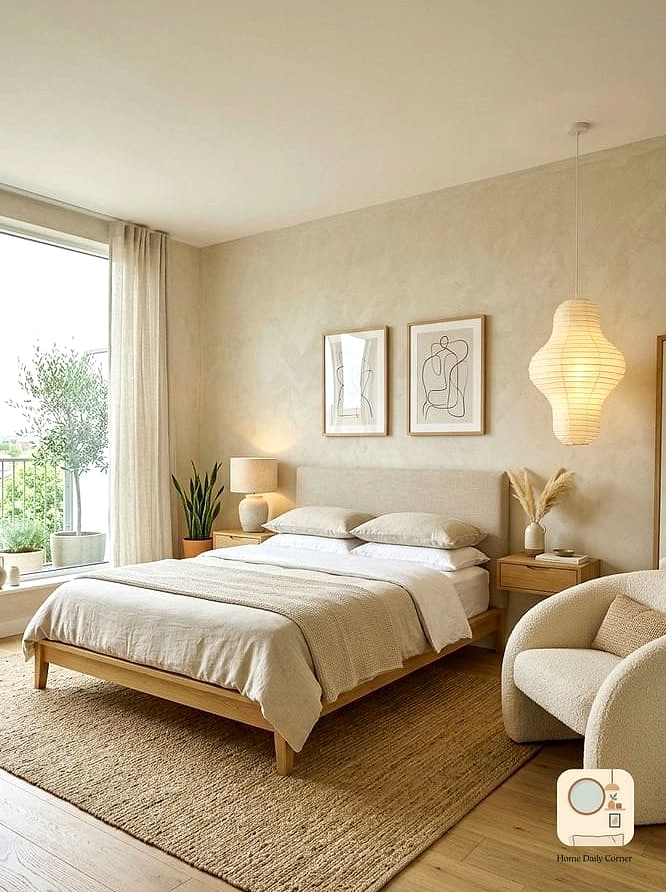
This look strips things back to what matters: a comfortable bed, quality linens, and a neutral color palette that feels calm rather than cold. Think warm whites, soft taupe, and muted greige tones layered with natural textures like linen bedding and a wool area rug.
It works especially well in smaller bedrooms where too much furniture or clutter makes the space feel cramped. Fewer pieces means less to dust, too, which is a nice bonus if cleaning isn’t your favorite weekend activity.
Add one or two wood accents, like a simple nightstand or a bench at the foot of the bed, to keep things from feeling too stark. This style is also budget-friendly since you’re investing in fewer, better pieces instead of filling every corner.
Moody Statement Wall
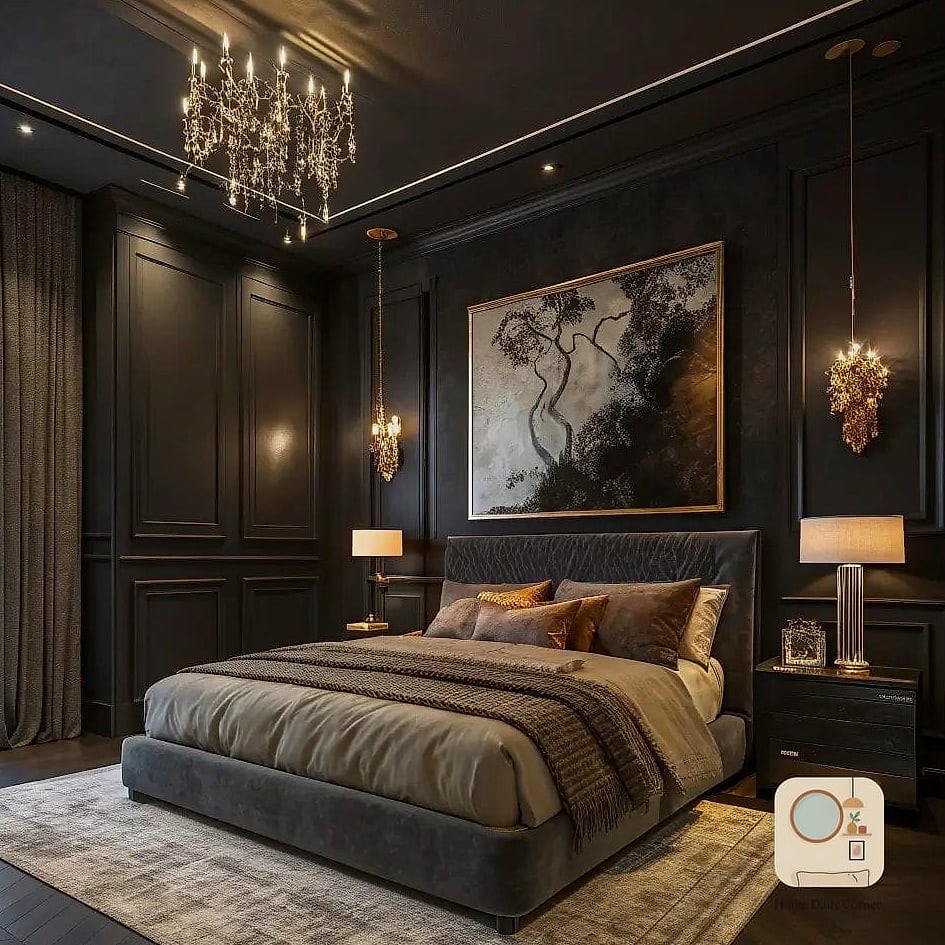
A dark accent wall behind the headboard instantly makes a bedroom feel more sophisticated and cozy at the same time. Deep charcoal, navy, or even a rich forest green can work beautifully, especially paired with brushed brass or matte black hardware.
This design shines in bedrooms with good natural light, since the dark tone won’t make the room feel like a cave. If your room is on the darker side already, consider layering in warm lighting instead of relying on the wall color to carry the mood.
It’s a great weekend DIY project if you’re comfortable with a paintbrush and painter’s tape. Renters can get a similar effect with a large peel-and-stick wallpaper panel that comes down cleanly when you move out.
Functional Reading Nook Corner
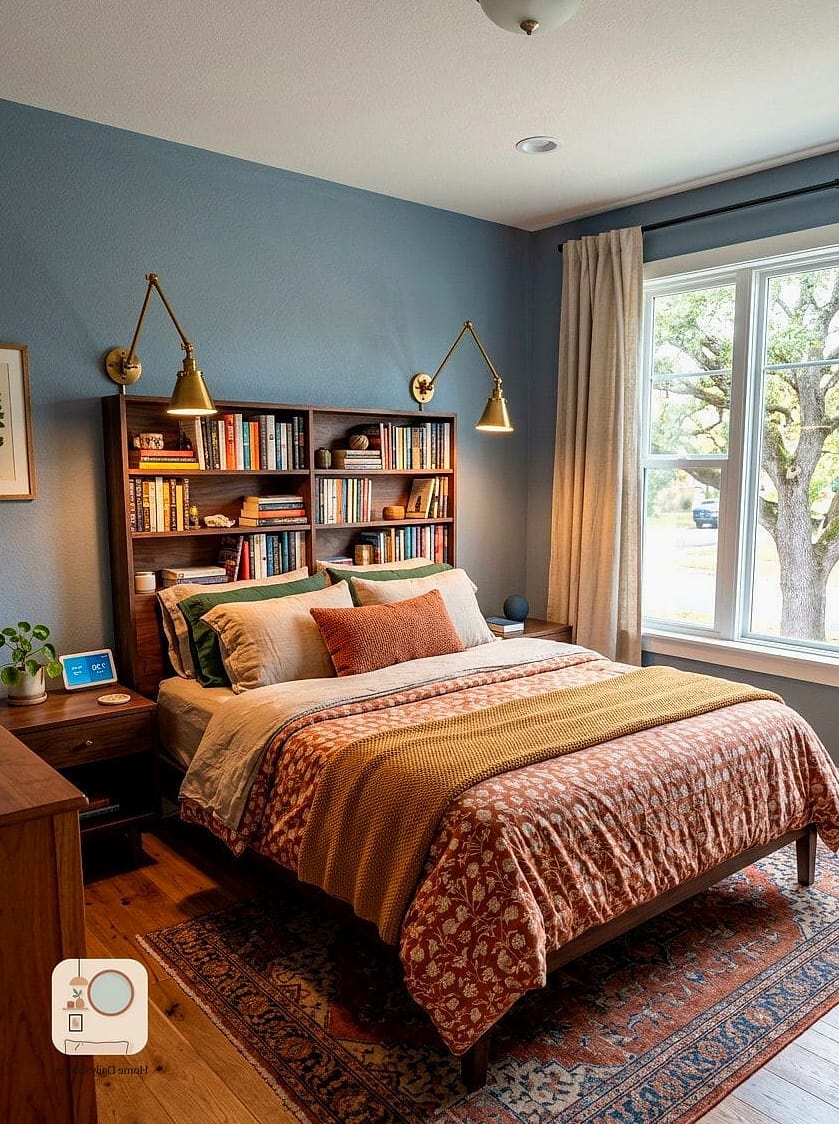
If you’ve got an awkward corner or unused wall space, turning it into a reading nook adds both charm and practicality. A comfortable chair, a small side table, and a floor lamp with warm lighting is really all it takes.
This idea works especially well for anyone who winds down with a book before bed instead of scrolling their phone. Add a small basket nearby for current reads so books don’t pile up on the nightstand.
For smaller rooms, a window seat with built-in storage underneath does double duty as seating and hidden storage for extra blankets or off-season clothing.
Layered Textile Sanctuary
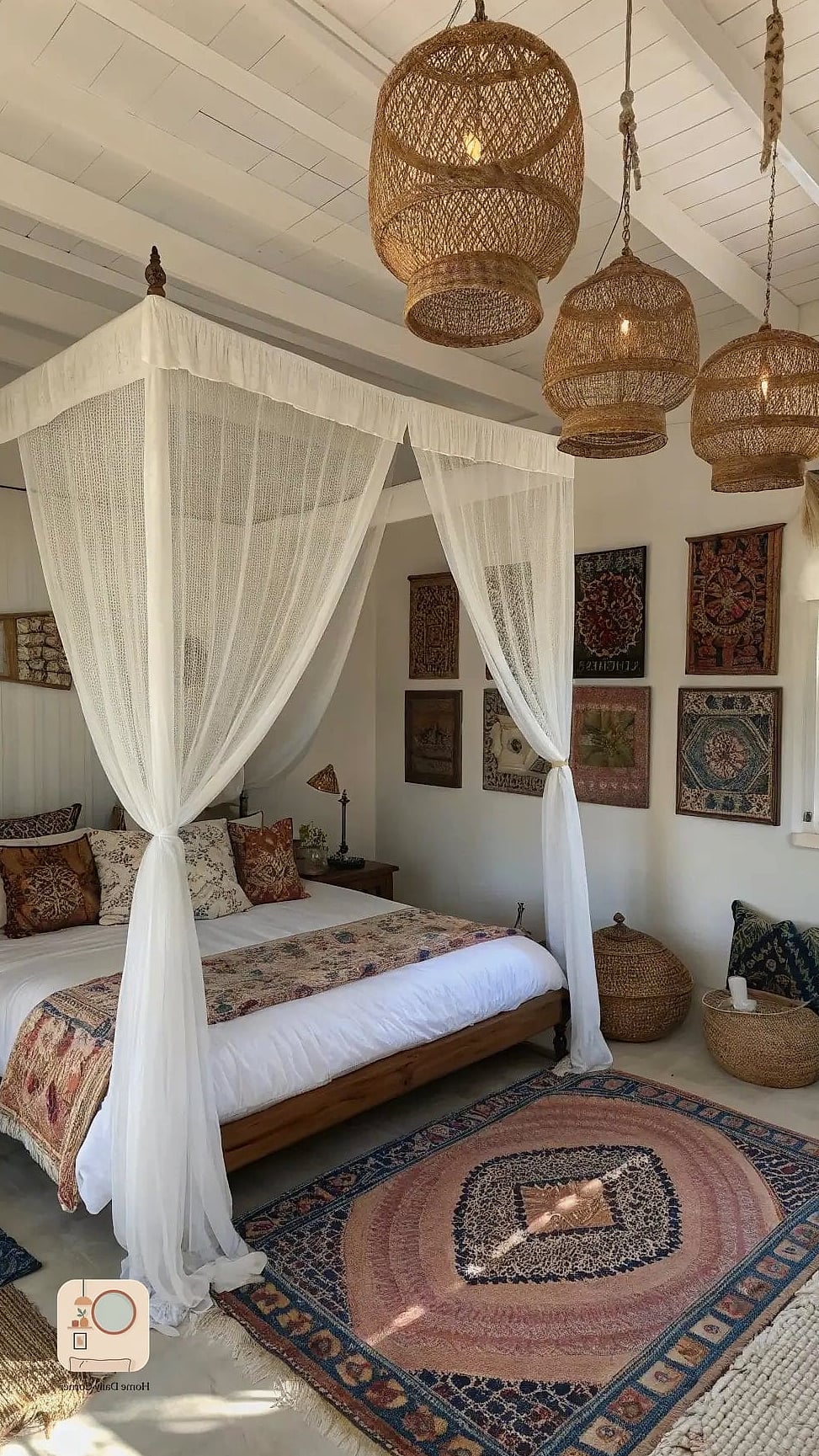
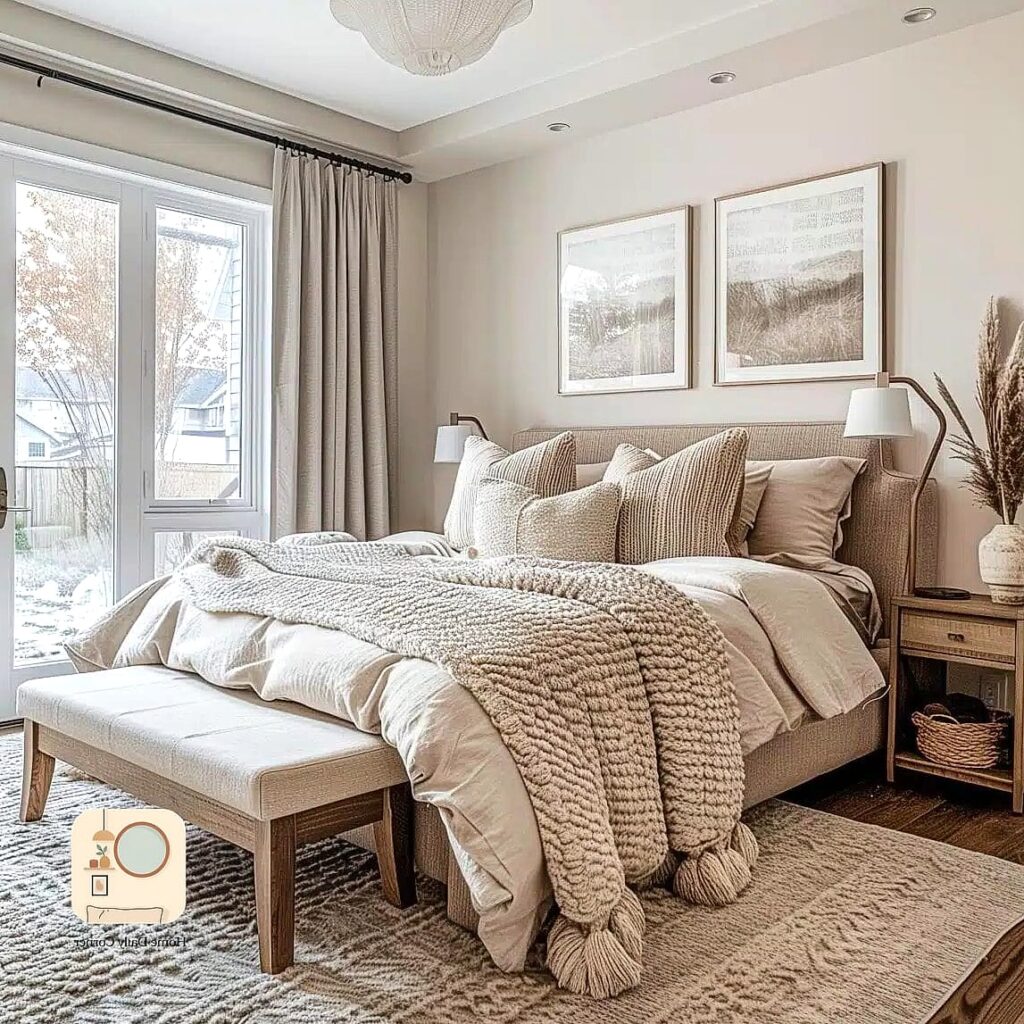
This design leans into texture over pattern, mixing chunky knit throws, linen sheets, velvet pillows, and a woven rug all in a similar neutral or earth-tone palette. The result feels rich and inviting without looking busy.
It’s particularly good for bedrooms that get a lot of natural light, since the textures catch shadows and add visual interest throughout the day. Stick to two or three fabric types so it doesn’t start feeling chaotic.
Wash your throw pillow covers and duvet cover regularly since layered textiles tend to trap dust. A fabric refresher spray between washes keeps things smelling fresh without extra laundry loads.
Built-In Storage Wall
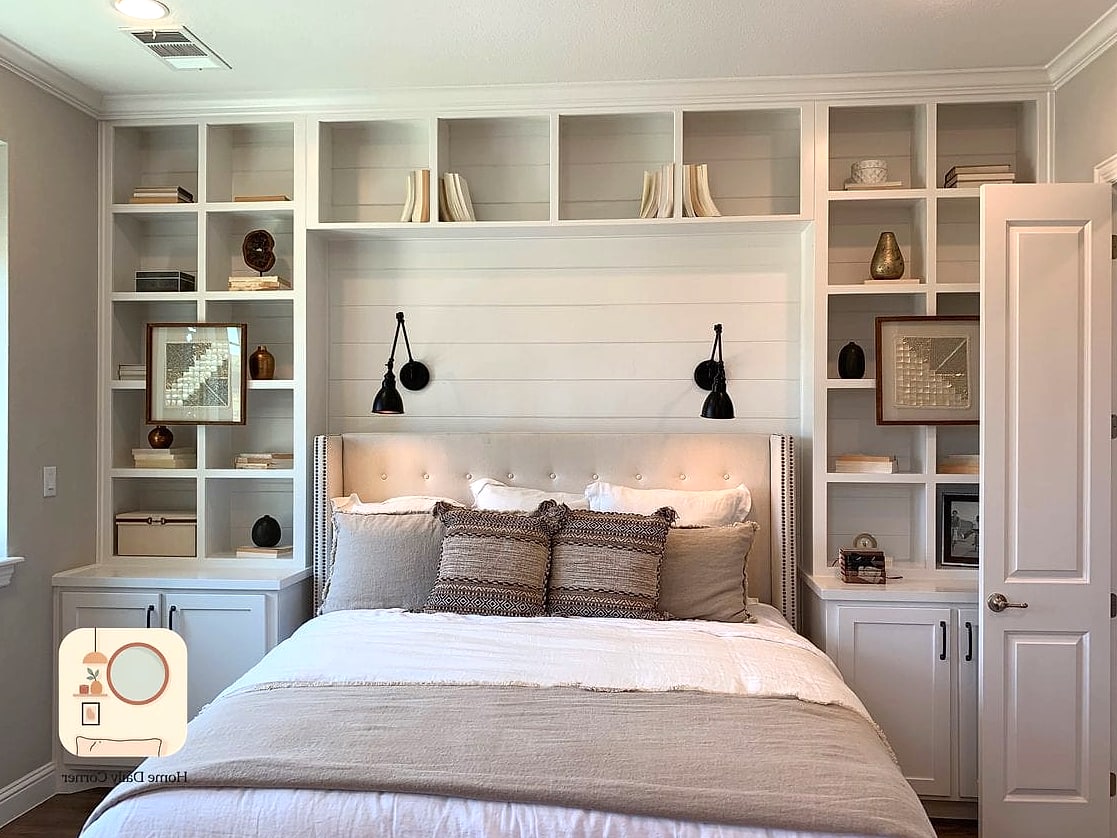
For bedrooms without a walk-in closet, a built-in storage wall behind or beside the bed solves the function problem while looking custom and intentional. Think floor-to-ceiling cabinetry with a mix of open shelving and closed cabinets.
This works great in family-friendly homes where storage is always at a premium, and it’s especially useful in smaller primary bedrooms that need every inch to count. Open shelves are nice for displaying books or decor, while closed cabinets hide the less photogenic stuff like extra bedding.
Budget-wise, this leans more toward the investment side, but modular storage systems from home improvement stores offer a more affordable version you can install yourself over a weekend.
Scandinavian-Inspired Simplicity
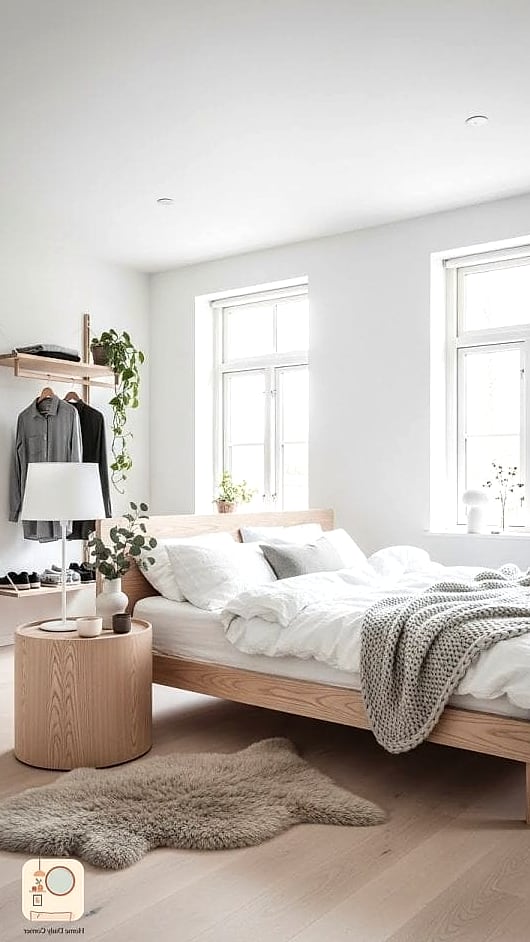
This design borrows the best parts of Scandinavian style: light wood tones, white or off-white walls, and just enough greenery to keep things feeling alive. Everything has a purpose, and nothing feels overly decorated.
It’s a natural fit for bedrooms that get plenty of daylight, since the light palette really needs sunlight to shine. A simple platform bed frame in light oak or ash keeps the silhouette clean and low to the ground.
Add one plant, like a snake plant or pothos, since they tolerate lower light and don’t need much fussing over. This style also tends to photograph beautifully if you’re the type who likes sharing your space online.
Hotel-Style Luxury Suite
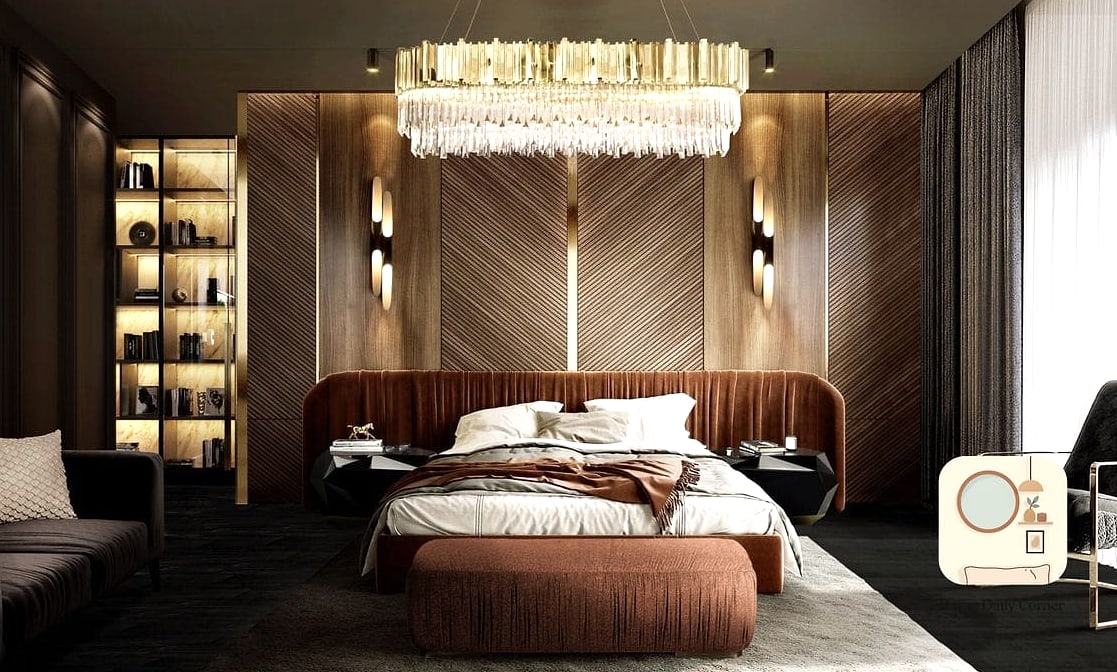
Recreating that plush hotel feeling at home comes down to a few key details: a substantial headboard, crisp white bedding with one contrasting throw, and layered lighting instead of one overhead fixture.
This works in bedrooms of any size, though larger rooms have more room to add a bench at the foot of the bed or a small seating area to complete the effect. Matte black or brushed brass sconces mounted beside the bed free up nightstand space and add that boutique hotel touch.
Keep surfaces clear and minimize visible cords for that polished look. A cord management box or clip system tucked behind the nightstand keeps charging cables out of sight without much effort.
Boho Eclectic Escape
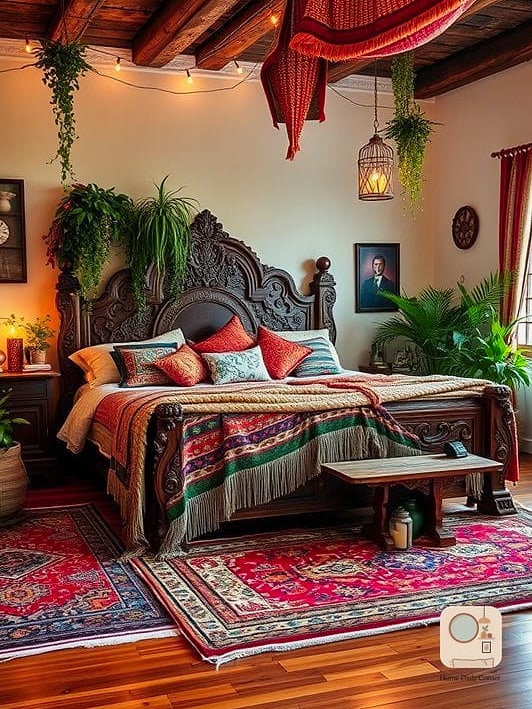
This design mixes patterns, textures, and global-inspired pieces like rattan furniture, macrame wall hangings, and layered rugs in warm terracotta and mustard tones. It’s more relaxed and personal than a lot of the other styles on this list.
It works especially well for anyone who’s collected pieces over time or loves vintage and secondhand finds. A gallery of mismatched frames or textiles on one wall gives the room personality without needing to buy everything new.
Because there’s more going on visually, keep your furniture pieces simple so the room doesn’t feel overwhelming. This is also one of the easier styles to build on a budget, since thrift stores and vintage shops are full of pieces that fit right in.
Dual-Purpose Home Office Corner
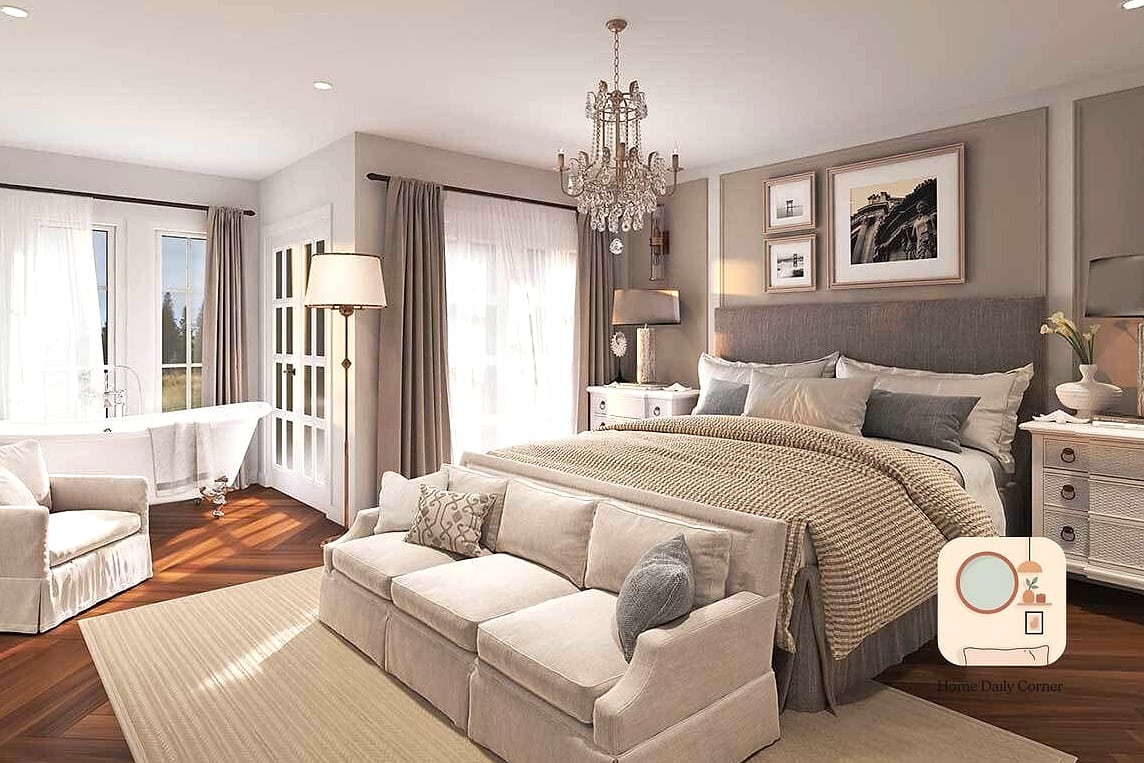
With more people working from home at least part of the week, carving out a small desk area in the bedroom has become genuinely practical. A slim desk, a comfortable chair, and good task lighting can tuck into a corner without taking over the room.
This works best when the desk area is visually separated from the sleeping space, either with a room divider, a different rug, or simply facing the desk toward a window instead of the bed. That separation helps your brain distinguish work time from wind-down time.
Cable management is worth the extra effort here. A basket or drawer to stash laptop chargers and papers keeps the desk from creeping into the rest of the room’s calm design.
Nature-Inspired Calm
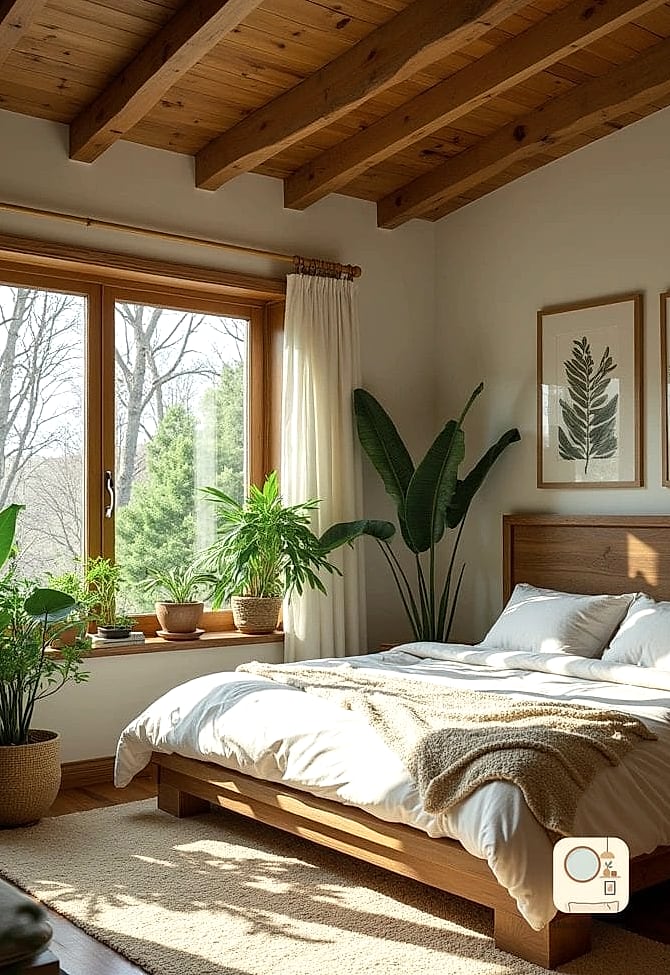
This design pulls in earthy greens, sandy neutrals, and organic materials like rattan, jute, and unfinished wood to create a room that feels grounded and restful. It’s a step further than Scandinavian simplicity, leaning more into a garden-meets-bedroom feeling.
Bedrooms with a view of trees or greenery outside really benefit from this style since it echoes what’s already outside the window. Layer in a few plants of different heights, like a tall fiddle leaf fig paired with a smaller trailing pothos on the dresser.
Natural fiber rugs and linen curtains complete the look, though keep in mind jute rugs need a bit more care than synthetic options if you’re prone to spills.
Multifunctional Small Bedroom Layout
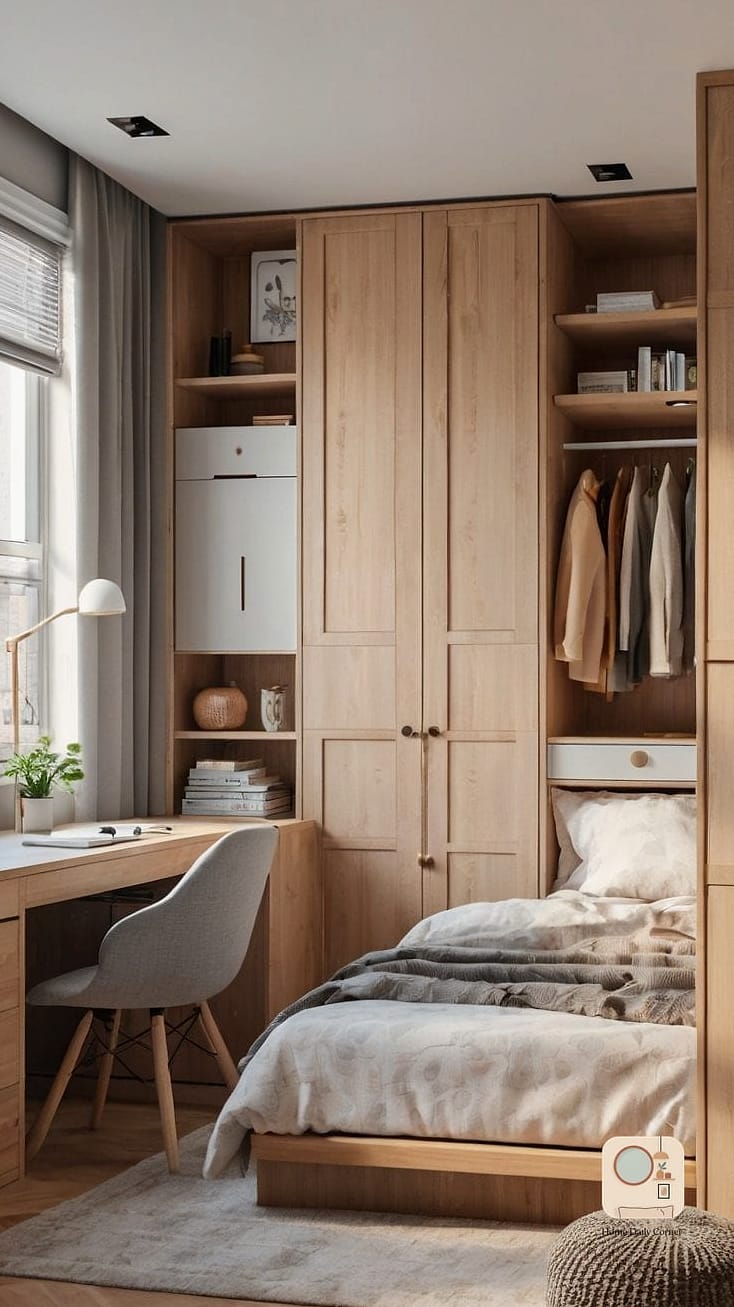
Not every primary bedroom is spacious, and this design focuses specifically on making a smaller room feel functional without sacrificing style. The key is furniture that pulls double duty, like a storage ottoman at the foot of the bed or a nightstand with drawers instead of open shelves.
Floating shelves above the bed replace bulky nightstands and free up floor space, which makes the whole room feel more open. Mirrors placed opposite windows also help bounce light around and make the space read larger than it actually is.
Choose a bed frame with built-in drawer storage underneath if closet space is tight. It’s a simple swap that adds real storage without adding visual bulk, and it’s one of those small changes that makes a noticeably bigger difference than you’d expect.
Whichever direction you take, remember that a great master bedroom doesn’t have to check every box on this list. Pick the elements that fit your space, your budget, and how you actually use the room, and build from there. The best bedroom designs are the ones that still feel like you a year from now, not just on move-in day.