25 Bedroom Inspirations Tips From Top Interior Designers
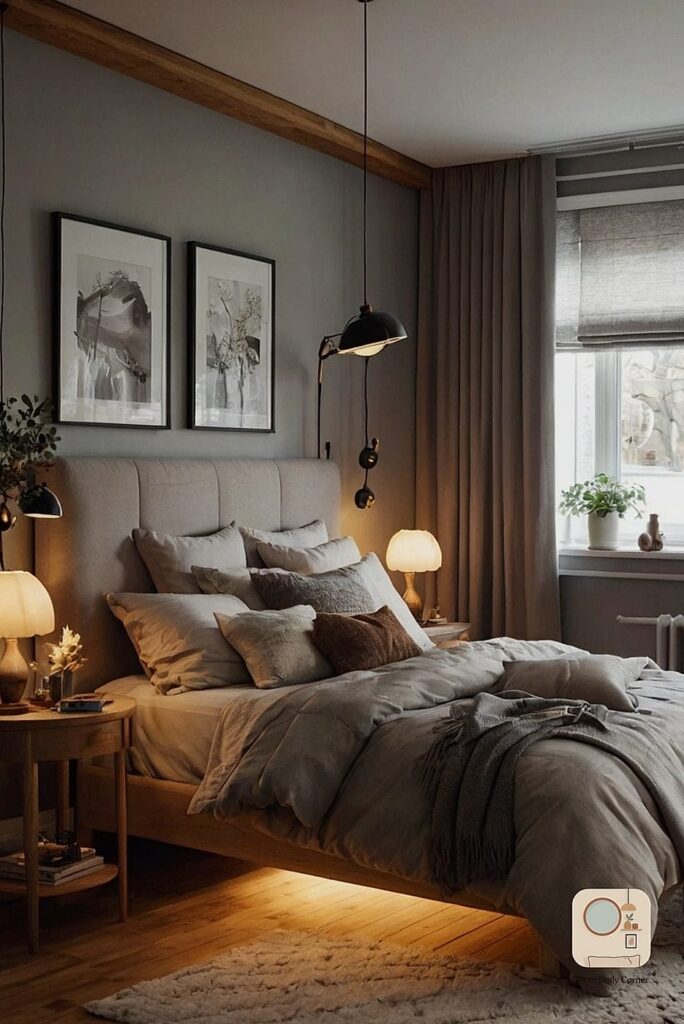
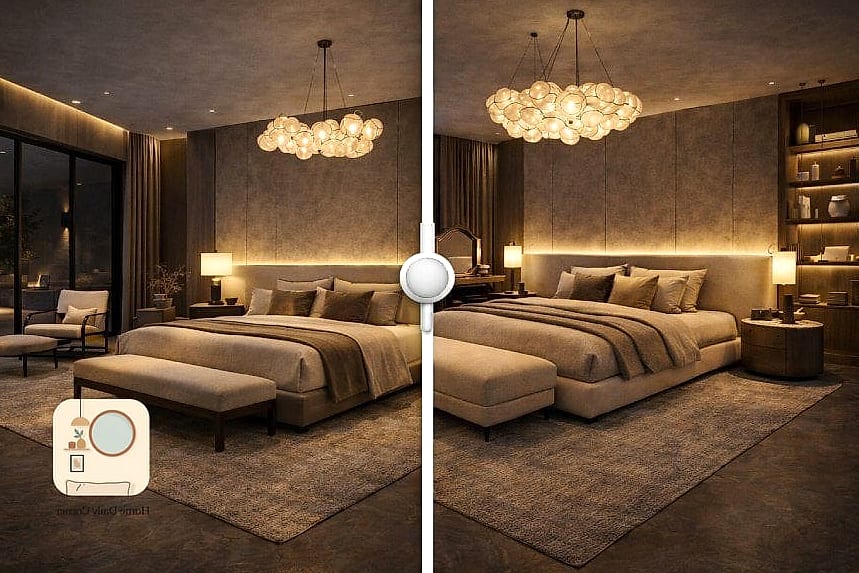
- Layer Your Lighting Instead of Relying on One Overhead Fixture
- Go Bigger Than You Think You Need on Nightstands
- Add a Textured Headboard as the Room’s Anchor
- Bring In an Area Rug, Even Over Carpet
- Paint the Ceiling for an Unexpected Cozy Effect
- Use Vertical Space With Wall-Mounted Shelving
- Choose a Warm, Neutral Color Palette as Your Base
- Swap Standard Hardware for Brushed Brass or Matte Black
- Dress the Bed in Layers, Not Just a Comforter
- Create a Reading Nook in an Unused Corner
- Bring in Natural Wood Tones for Warmth
- Add Window Treatments That Actually Block Light
- Hang Art at the Right Height, Not Too High
- Use a Statement Rug Under the Bed as a Focal Point
- Add a Bench or Ottoman at the Foot of the Bed
- Incorporate Greenery, Real or Faux
- Try a Canopy or Draped Fabric Above the Bed
- Mix Metals Instead of Matching Everything
- Add a Full-Length Mirror for Function and Light
- Use Textiles to Add Pattern Without Overwhelming the Room
- Keep Nightstands and Surfaces Mostly Clear
- Choose a Bed Frame With Built-In Storage for Small Rooms
- Add a Dose of Personality Through Art and Objects
- Consider a Grasscloth or Textured Wallpaper Accent Wall
- Keep the Color Story Consistent Across Bedding, Walls, and Accents
25 Bedroom Inspirations Tips From Top Interior Designers
Your bedroom should feel like the one room in the house that’s actually just for you. Not the guest room, not the catch-all storage space, not the place where laundry goes to die. A real retreat.
I’ve talked to enough designers over the years to notice the same handful of moves keep showing up in the bedrooms that actually feel good to be in. Not trendy for the sake of trendy — just smart, livable, and a little bit personal. Here are 25 of them.
Layer Your Lighting Instead of Relying on One Overhead Fixture
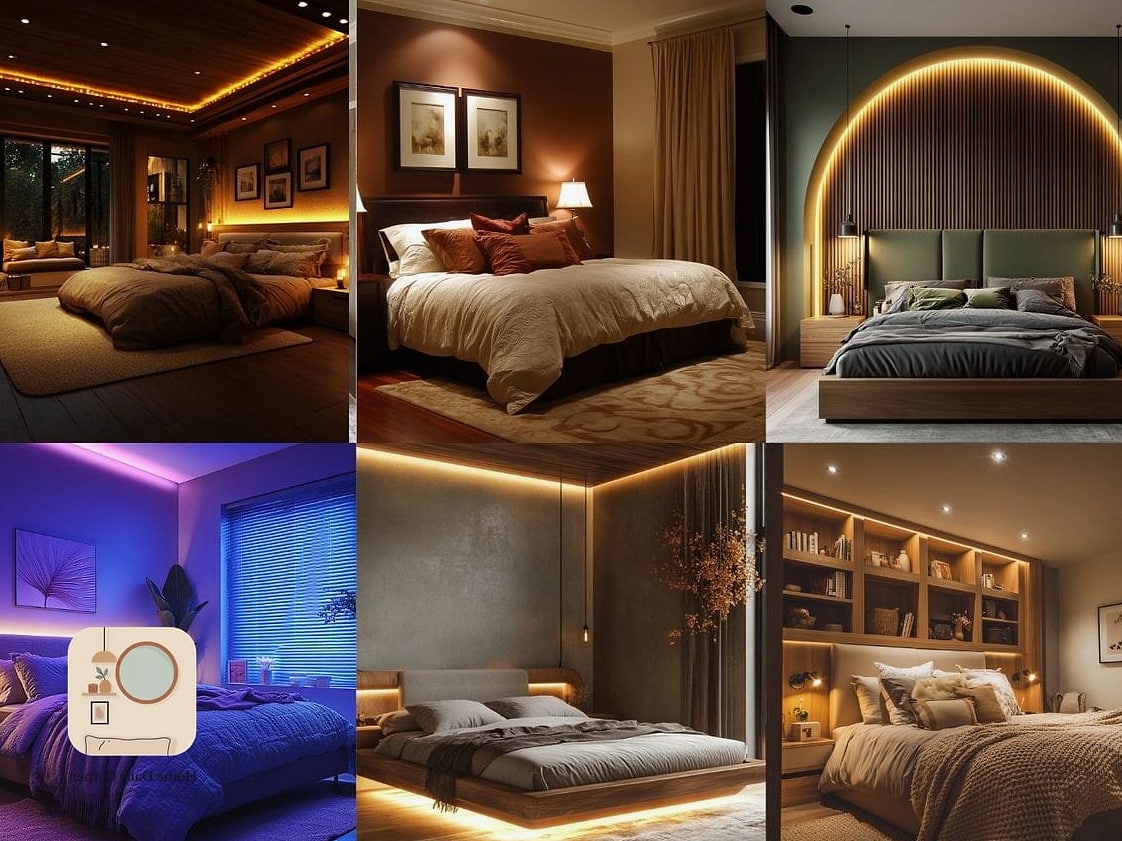
A single ceiling light makes a bedroom feel like a hotel hallway. Designers almost always mix a few sources instead: a dimmable overhead fixture, bedside lamps, and maybe a plug-in sconce or two.
This lets you shift the mood from “getting ready for work” bright to “reading before bed” soft without flipping a dozen switches. Warm bulbs (2700K or lower) help a ton here too.
Go Bigger Than You Think You Need on Nightstands
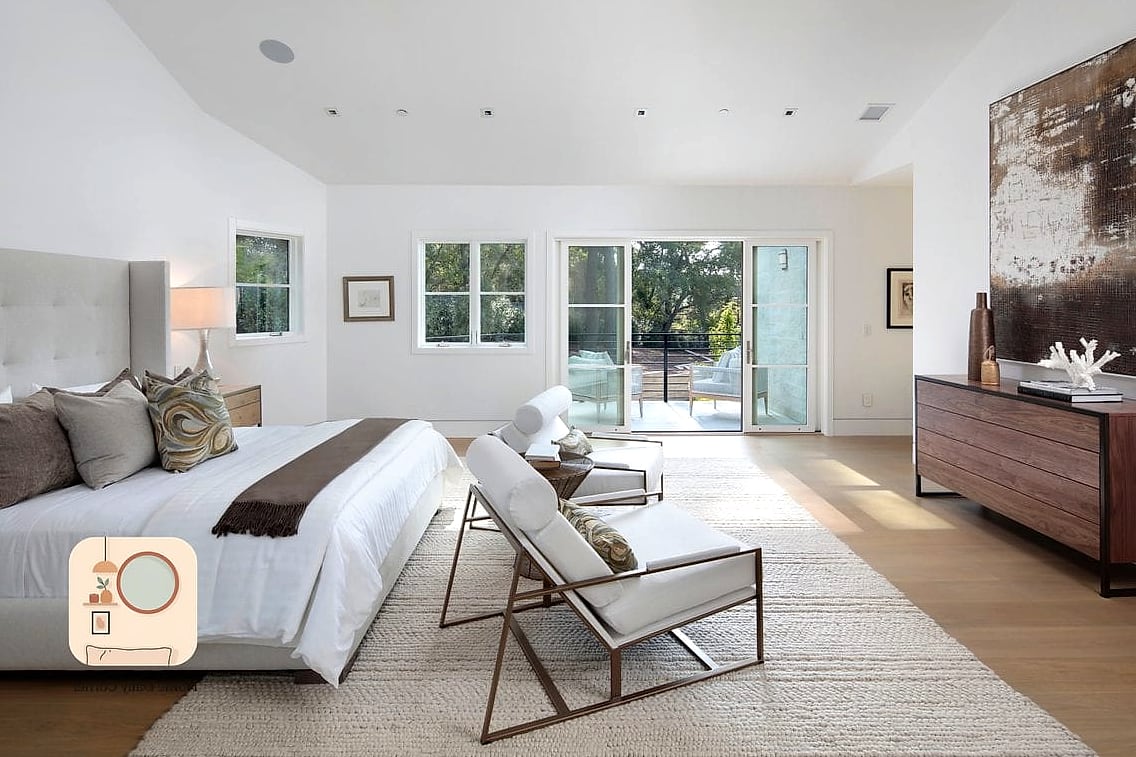
Tiny nightstands look proportionally off next to a full or queen bed, and they run out of surface space fast. A deeper nightstand with a drawer gives you somewhere to actually stash chargers, lotion, and that book you haven’t finished in three months.
If your room is tight, a wall-mounted floating nightstand keeps the footprint small while still giving you real storage underneath.
Add a Textured Headboard as the Room’s Anchor
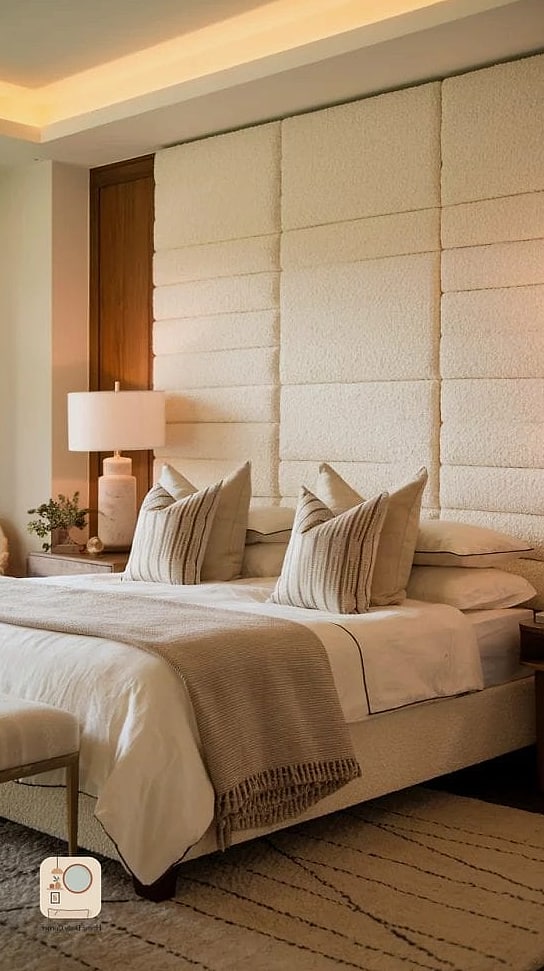
A padded, channel-tufted, or cane headboard instantly makes a bed look intentional instead of thrown together. It’s often the first thing designers add when a bedroom feels flat.
Boucle and linen upholstery are popular right now because they add softness without screaming for attention. Budget-friendly? Plenty of peel-and-stick and DIY headboard kits get a similar look for a fraction of custom upholstery pricing.
Bring In an Area Rug, Even Over Carpet
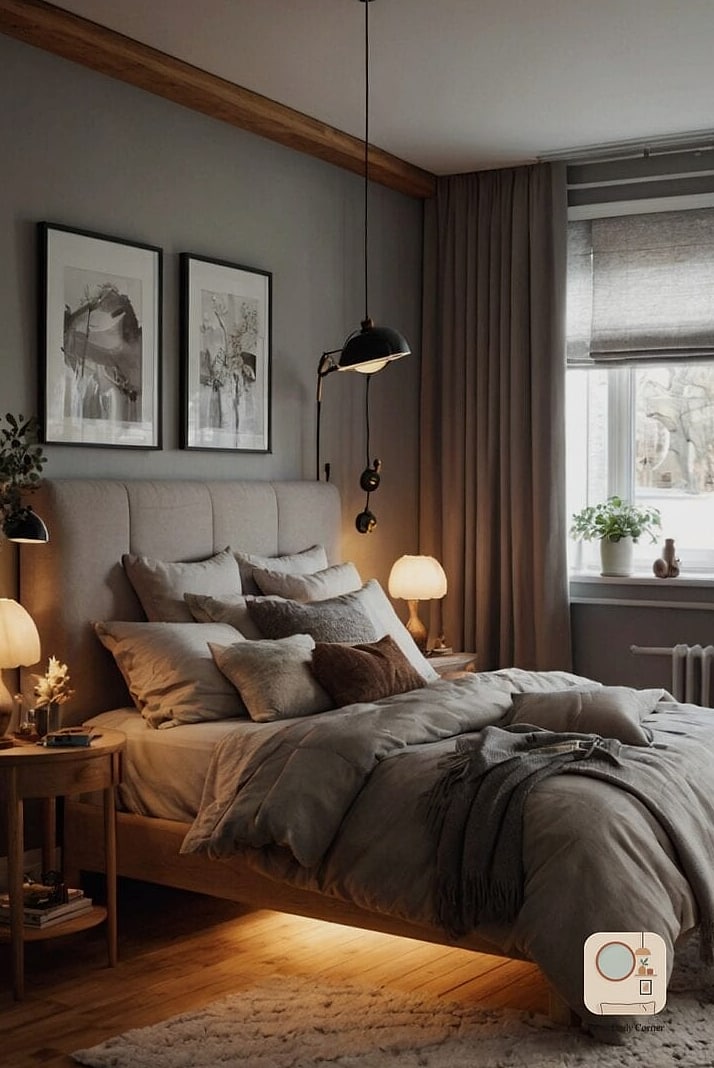
Yes, even over carpet. A rug under the bed defines the space, adds warmth underfoot, and breaks up a room that might otherwise be one solid color from wall to wall.
Wool and wool-blend rugs hold up well and hide footprints better than you’d expect, which matters if you’ve got pets wandering through.
Paint the Ceiling for an Unexpected Cozy Effect
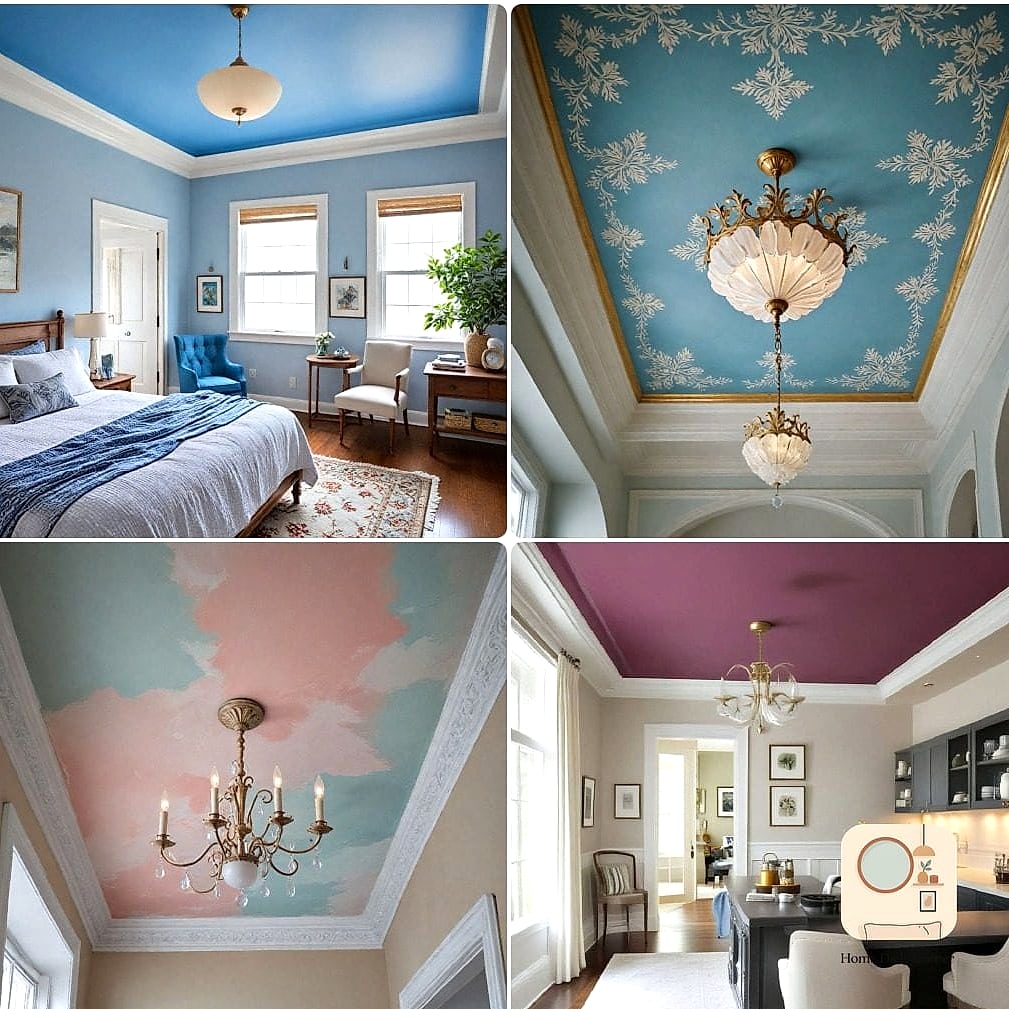
This one surprises people, but a painted ceiling — sometimes called a “fifth wall” — makes a bedroom feel intimate rather than boxy. Deep greens, warm terracottas, and soft charcoals are popular choices.
It’s a low-cost way to add drama without committing to a bold accent wall you might tire of.
Use Vertical Space With Wall-Mounted Shelving
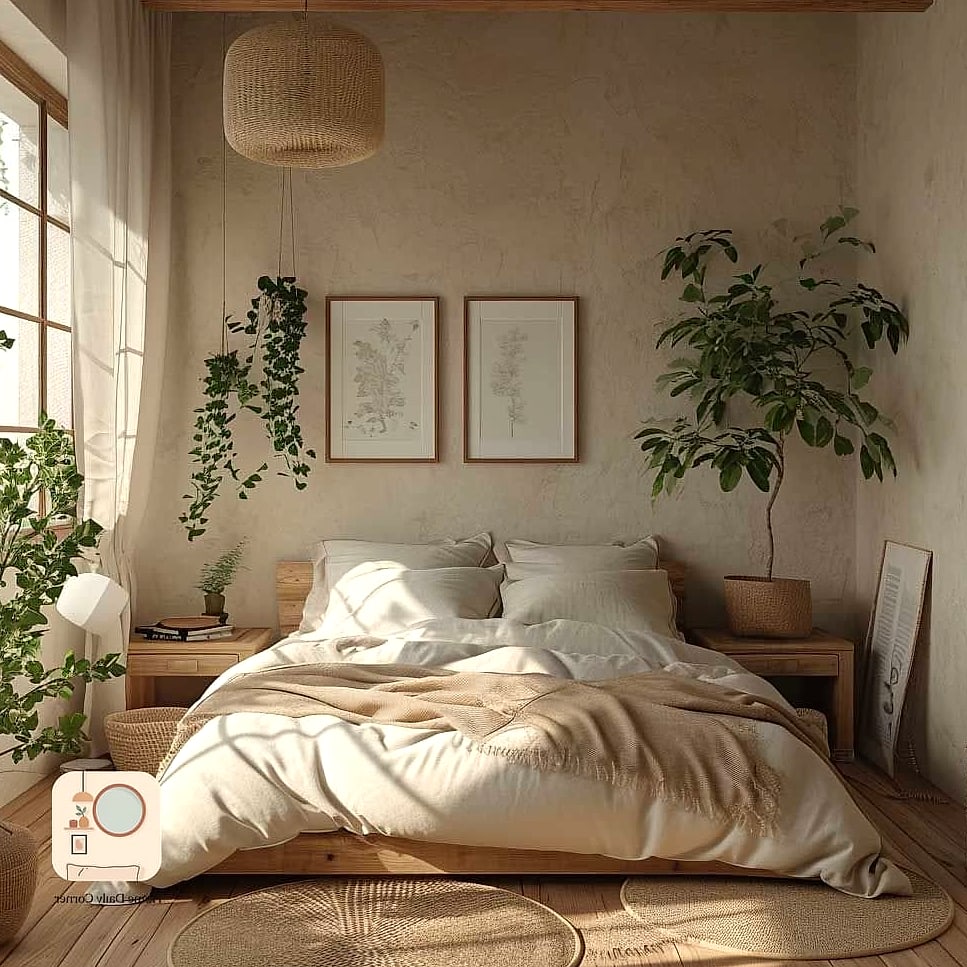
Floating shelves above a dresser or flanking the bed give you display space and storage without eating into square footage. Designers like this for smaller bedrooms especially, where every inch of floor matters.
Style them the way you would a bookshelf — mix books, a small plant, and one or two personal objects rather than lining everything up perfectly.
Choose a Warm, Neutral Color Palette as Your Base
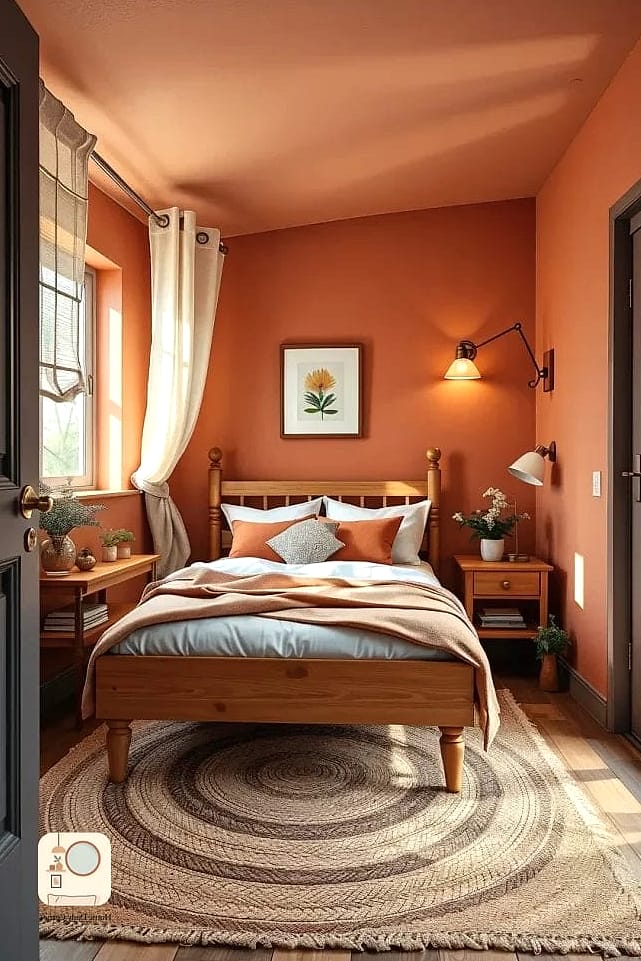
Soft whites, warm greiges, and muted taupes show up again and again because they’re calming and they play well with almost any accent color you add later. Bedrooms are meant for winding down, not visual stimulation.
You can always layer in personality through textiles and art — the walls don’t have to do all the work.
Swap Standard Hardware for Brushed Brass or Matte Black
This is a five-minute upgrade with a surprisingly big payoff. New knobs and pulls on a dresser or nightstand instantly modernize furniture you already own.
Brushed brass leans warm and traditional-meets-modern, while matte black feels a little more graphic and contemporary. Either one is an easy weekend project.
Dress the Bed in Layers, Not Just a Comforter
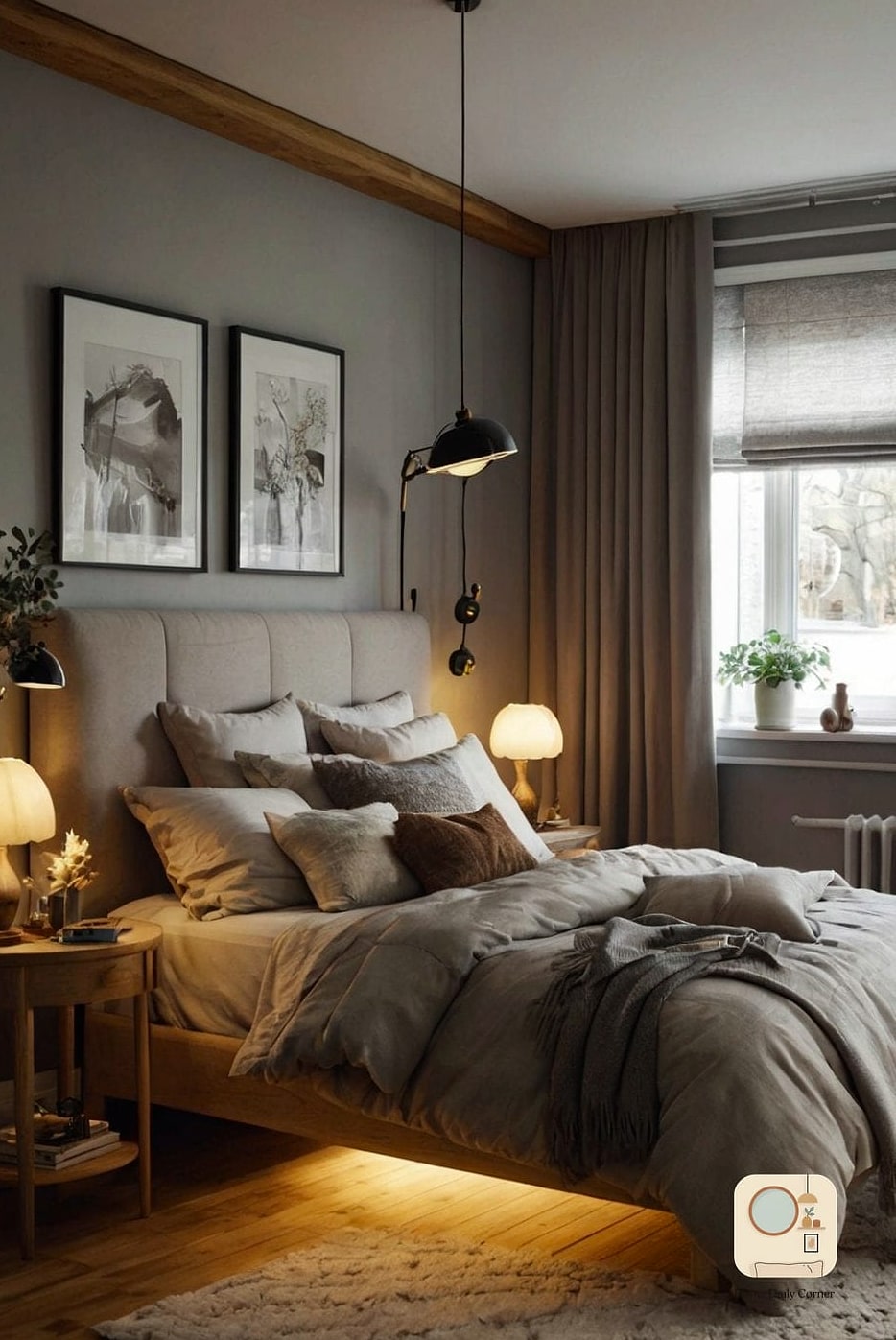
A flat comforter with nothing else can look a little sad. Designers build beds in layers: a fitted sheet, a duvet or quilt, a folded throw at the foot, and a mix of pillow sizes.
Mixing textures — linen, cotton, a knit throw — adds visual depth even if you’re sticking to a mostly neutral palette.
Create a Reading Nook in an Unused Corner
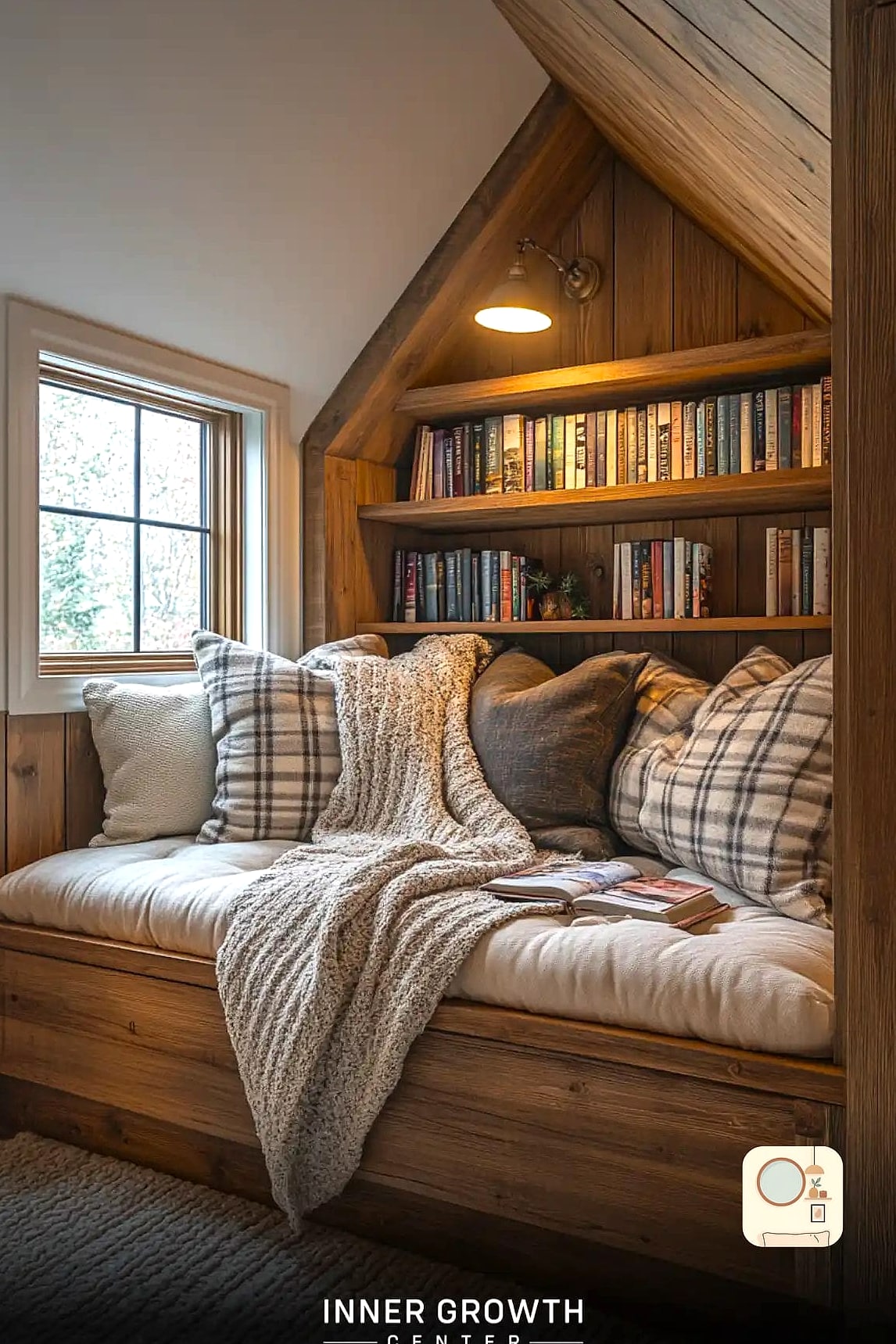
If you’ve got a corner that’s currently just collecting dust or laundry baskets, a small chair with a floor lamp and a side table turns it into an actual destination in the room.
This works especially well near a window, but even an interior corner benefits from good task lighting.
Bring in Natural Wood Tones for Warmth
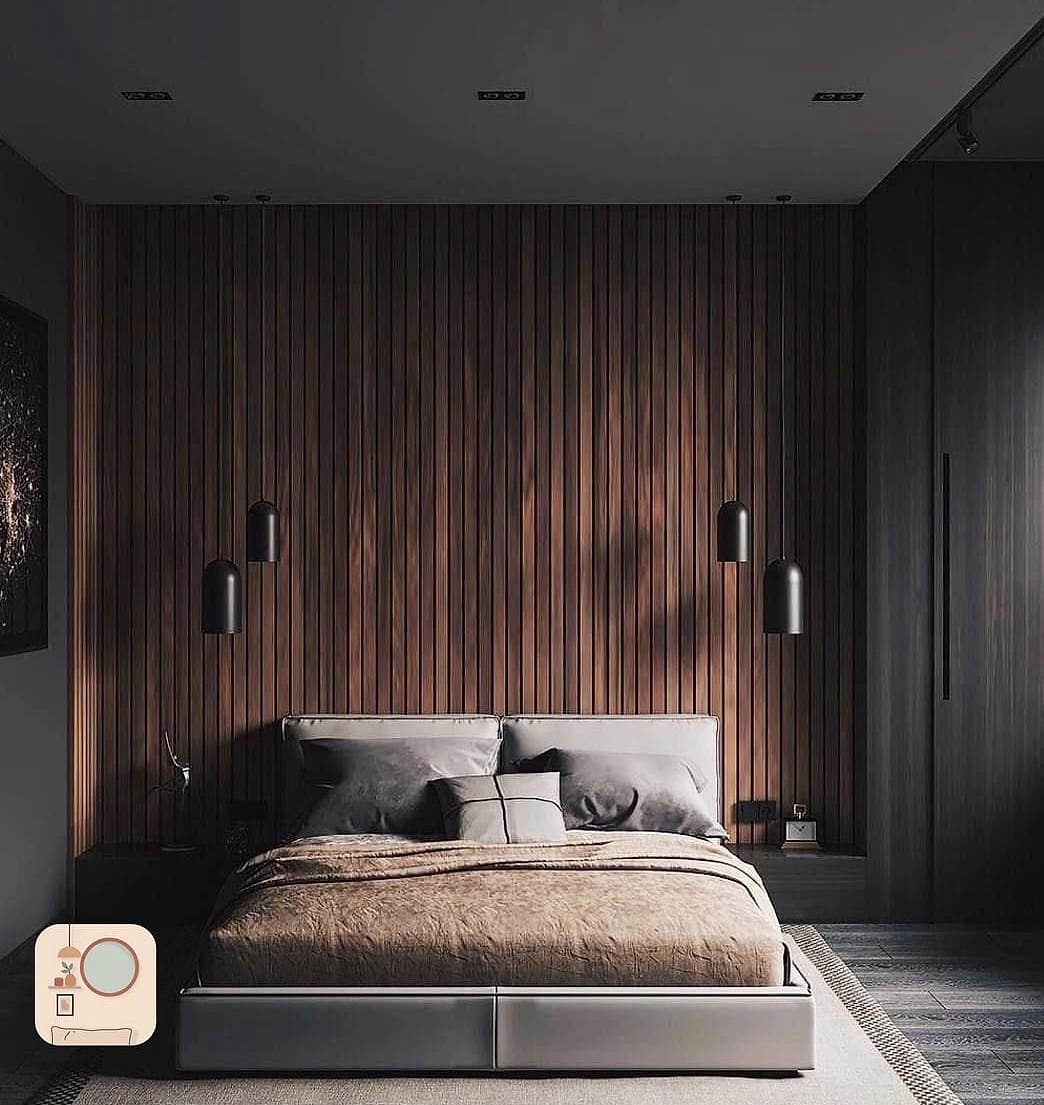
An all-white or all-gray bedroom can start to feel a little sterile. Adding a wood dresser, nightstand, or bed frame warms things up instantly and keeps the space from feeling too matchy.
Mixing wood tones is more accepted than it used to be — a walnut nightstand next to an oak bed frame reads as intentional, not mismatched.
Add Window Treatments That Actually Block Light
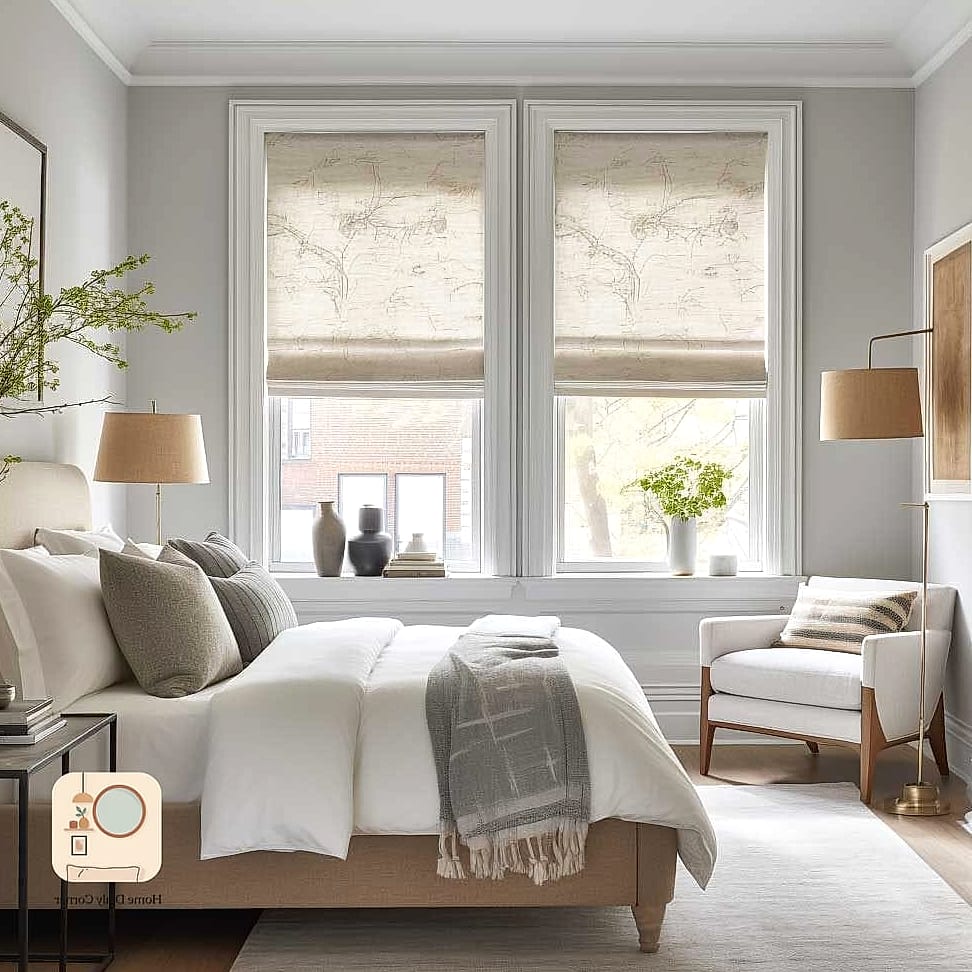
Sheer curtains look pretty in photos, but most people sleeping in the room want real blackout capability. Layering blackout curtains behind a sheer panel gives you both the light control and the softness.
This is one of those upgrades that instantly makes a bedroom feel more custom without requiring a full renovation.
Hang Art at the Right Height, Not Too High
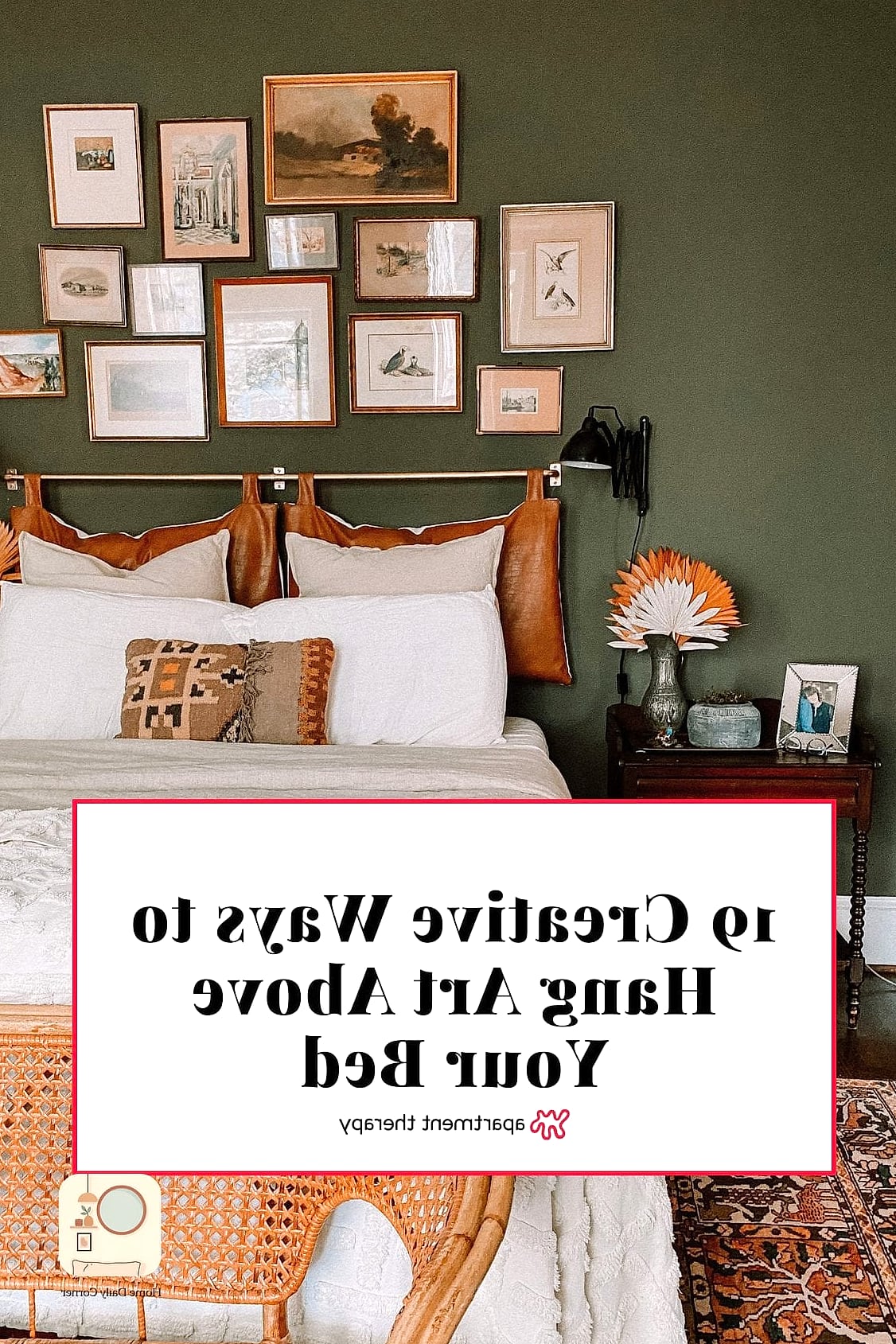
A common designer note: art gets hung too close to the ceiling in bedrooms. The center of a piece should generally sit around eye level when standing, or scaled to the furniture below it if it’s hanging over a bed or dresser.
Oversized art above the headboard reads as more designer than a cluster of small mismatched frames.
Use a Statement Rug Under the Bed as a Focal Point
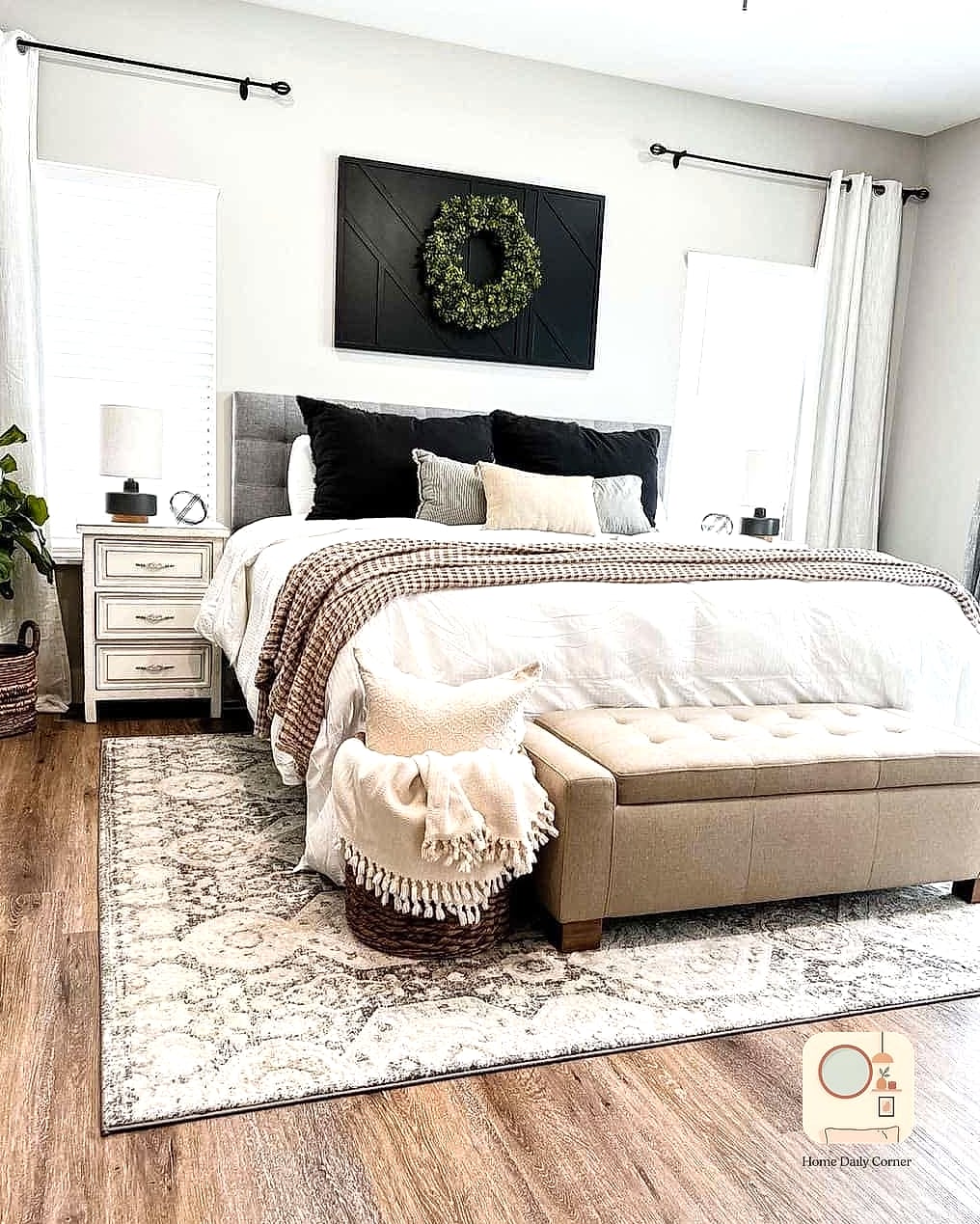
Beyond just adding warmth, a patterned or boldly colored rug can act as the room’s main visual moment, especially if your walls and bedding are kept simple and neutral.
Vintage-style Persian and Turkish rugs are especially popular for this because they bring in pattern without competing with anything else.
Add a Bench or Ottoman at the Foot of the Bed
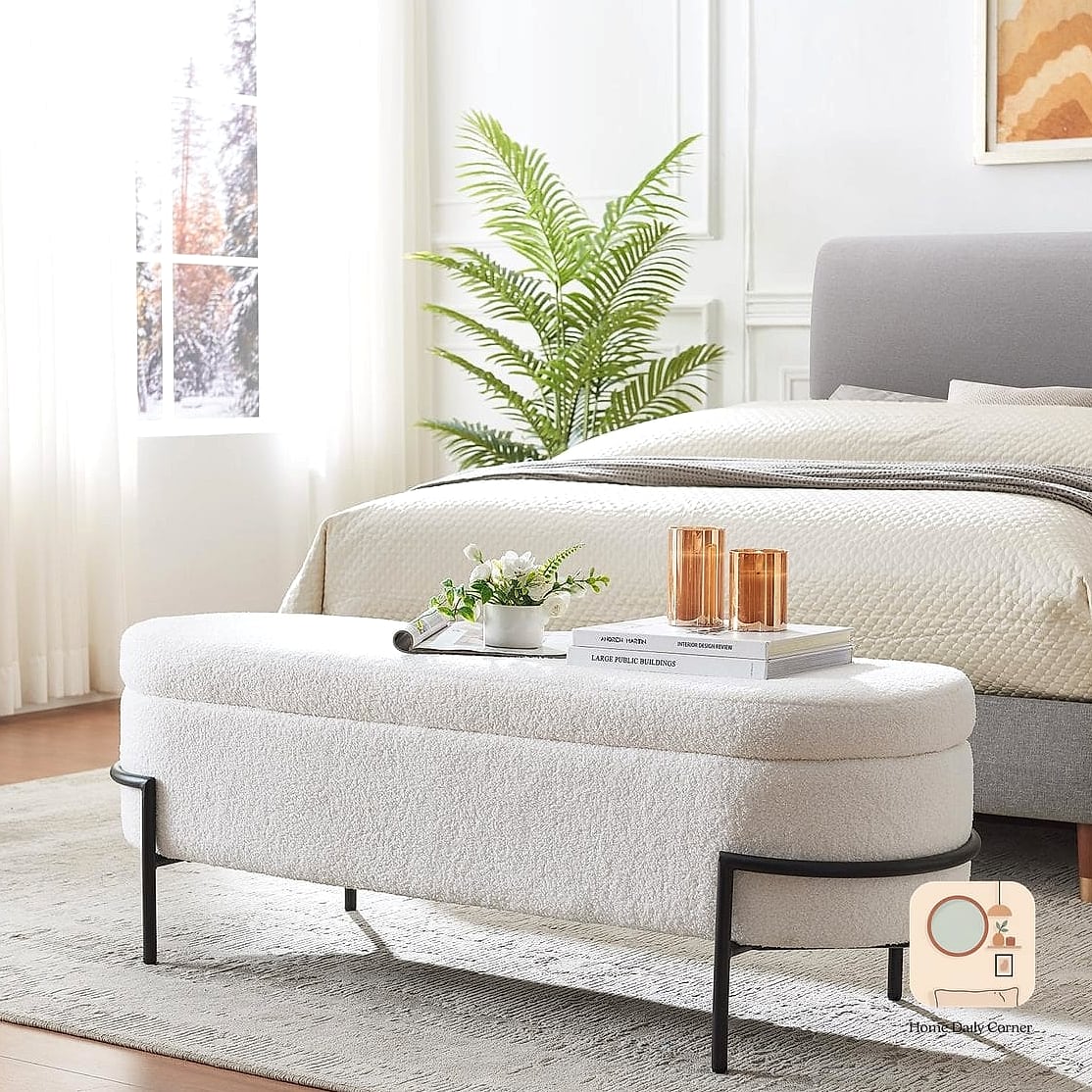
Purely practical, honestly — somewhere to sit while putting on shoes, toss a robe, or stack extra throw pillows overnight. It also fills the visual gap at the foot of the bed that can otherwise feel empty.
Upholstered benches with hidden storage underneath are great for smaller bedrooms doing double duty as a place to sit and a place to stash extra blankets.
Incorporate Greenery, Real or Faux
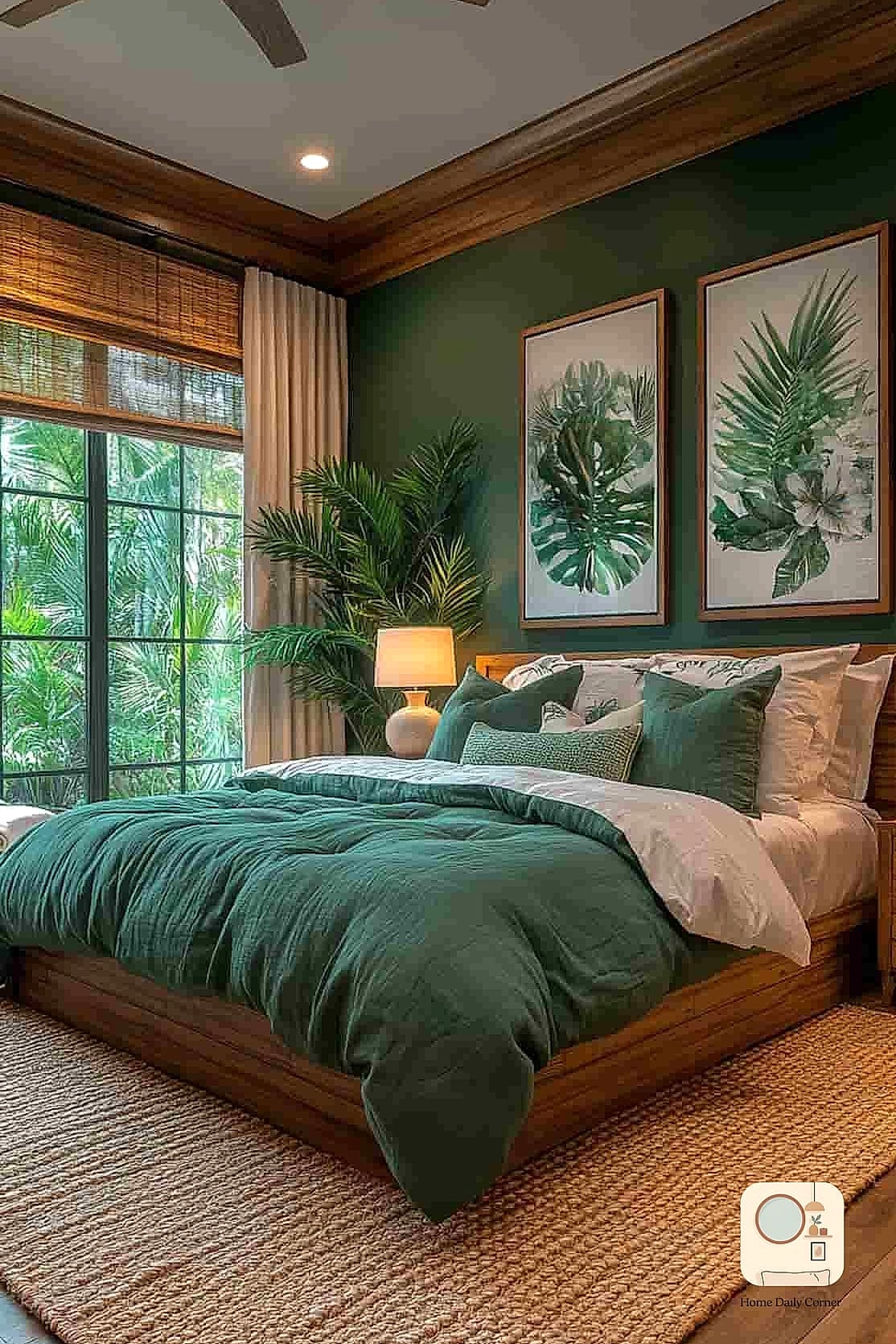
A plant or two softens a bedroom in a way that’s hard to replicate with any other single object. Low-light varieties like snake plants or pothos do fine in bedrooms that don’t get direct sun.
If you don’t trust yourself with a real plant (no judgment), a high-quality faux version gets most of the same visual benefit.
Try a Canopy or Draped Fabric Above the Bed
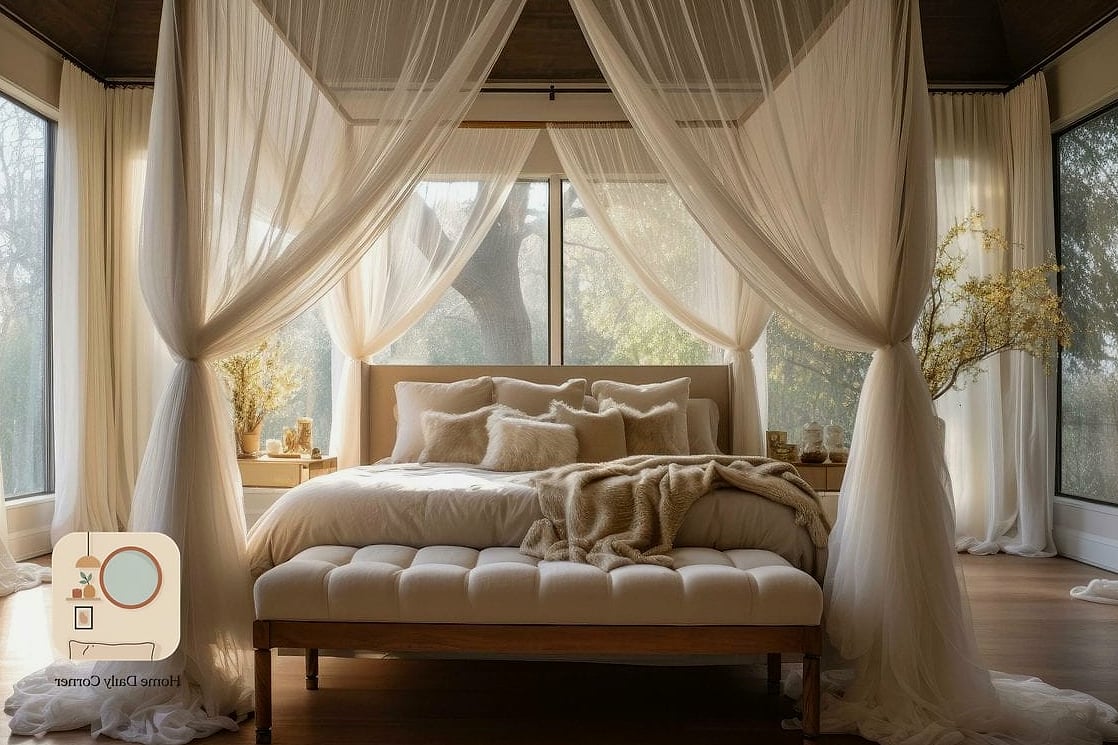
This doesn’t have to mean a full four-poster frame. A simple curtain rod mounted above the headboard with lightweight fabric draped over it creates a soft, romantic focal point without major construction.
It’s a favorite in rental-friendly bedroom makeovers because it doesn’t require altering the walls beyond a couple of screw holes.
Mix Metals Instead of Matching Everything
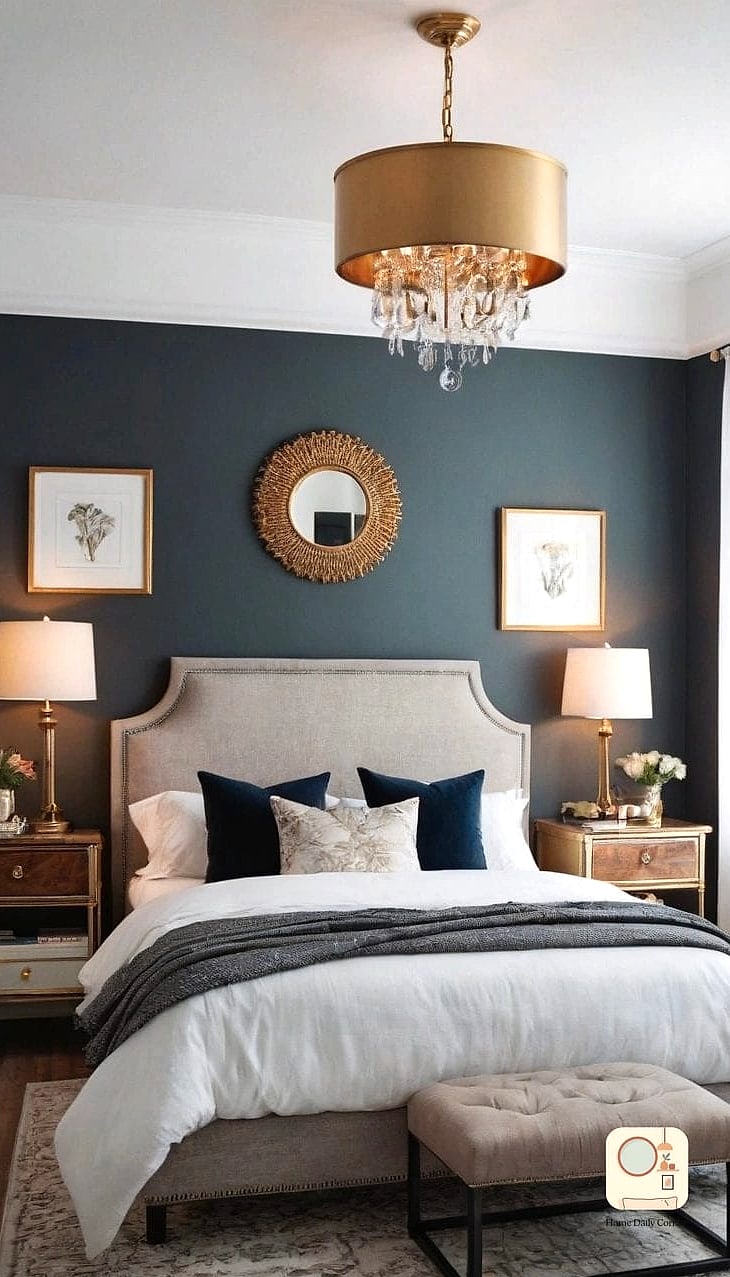
Designers have mostly moved past the “everything must match” rule. A brass lamp, black window hardware, and a chrome mirror can coexist in the same room just fine as long as there’s some visual balance across the space.
The key is repetition — use each metal at least twice so nothing looks accidental.
Add a Full-Length Mirror for Function and Light
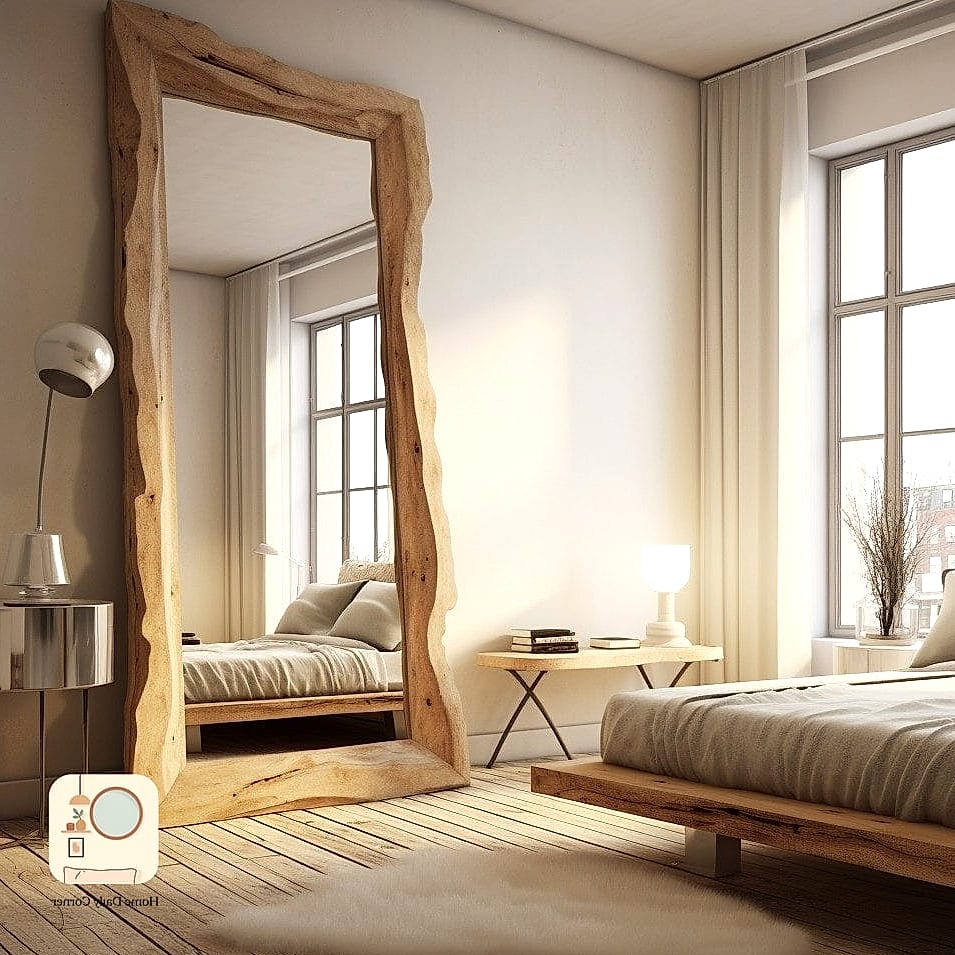
Beyond the obvious practical use, a well-placed mirror bounces light around the room and can make a smaller bedroom feel noticeably more open. Leaning it against the wall instead of mounting it adds a slightly more relaxed, styled look.
Use Textiles to Add Pattern Without Overwhelming the Room
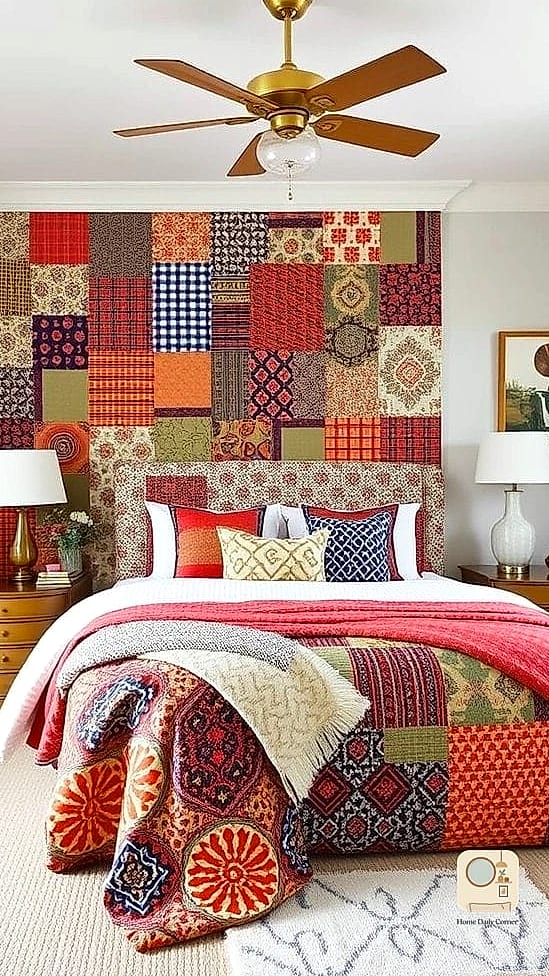
Throw pillows, a patterned duvet, or a printed lumbar pillow let you experiment with bold pattern in small, low-commitment doses. If you get tired of it, swapping textiles is a lot easier than repainting a room.
Stick to one dominant pattern and let everything else stay relatively simple so the room doesn’t feel busy.
Keep Nightstands and Surfaces Mostly Clear
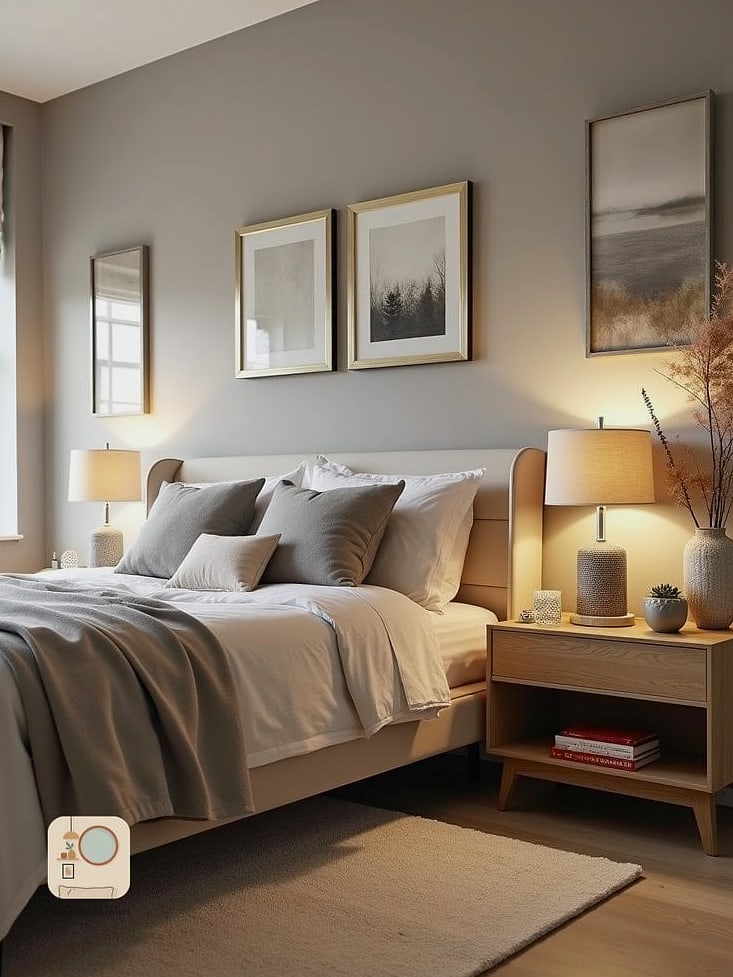
This is more of an organizing tip than a decorating one, but it matters just as much. A cluttered nightstand makes the whole room feel chaotic, even if everything else is styled beautifully.
A small tray or dish for rings, chargers, and loose odds and ends keeps the clutter contained instead of spread across the surface.
Choose a Bed Frame With Built-In Storage for Small Rooms
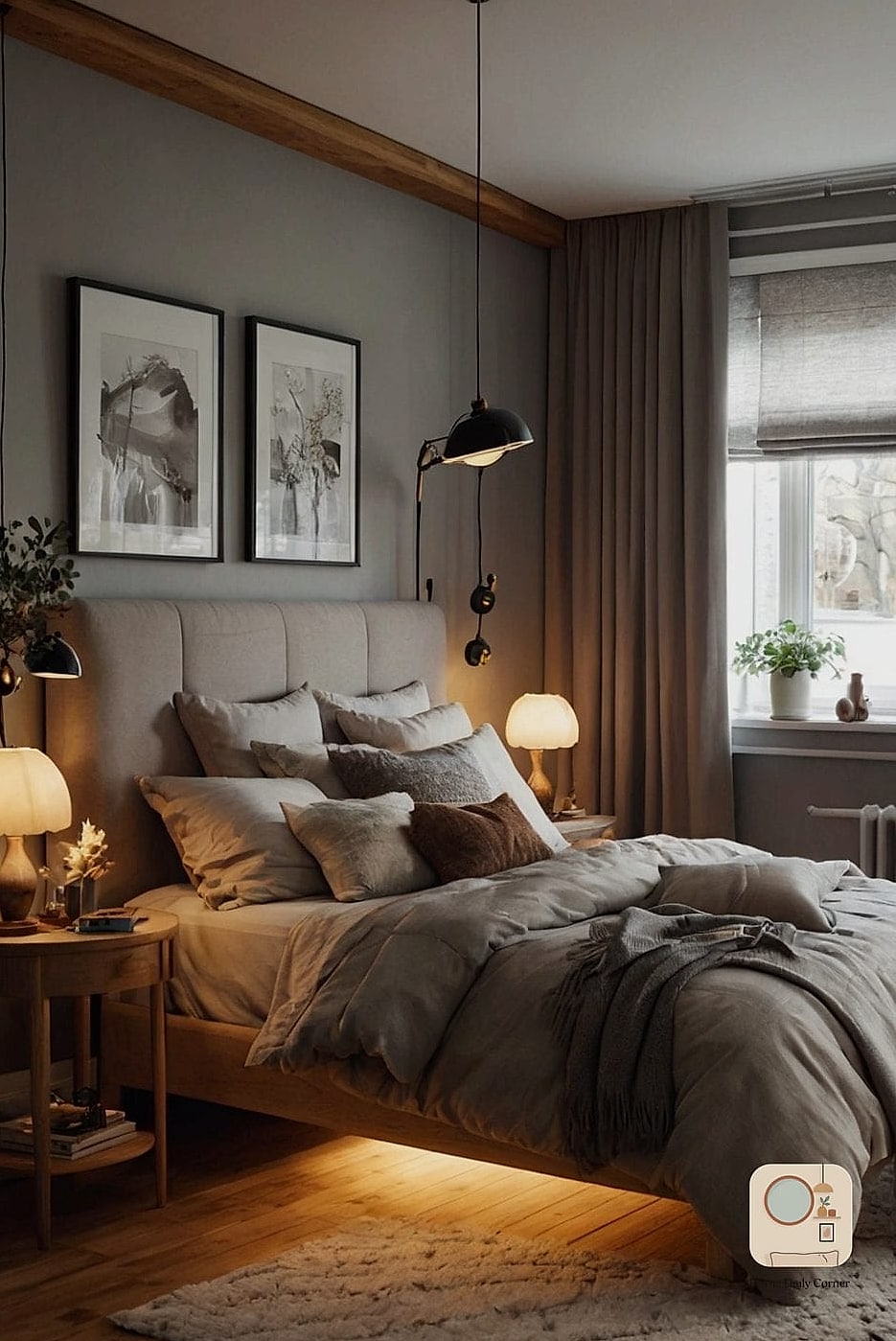
If you’re working with a tight bedroom and no room for a dresser, a platform bed with drawers underneath solves a lot of problems at once. It’s not the most glamorous design move, but it’s one of the most practical.
Under-bed storage bins are a solid backup option for bed frames that don’t already have drawers built in.
Add a Dose of Personality Through Art and Objects
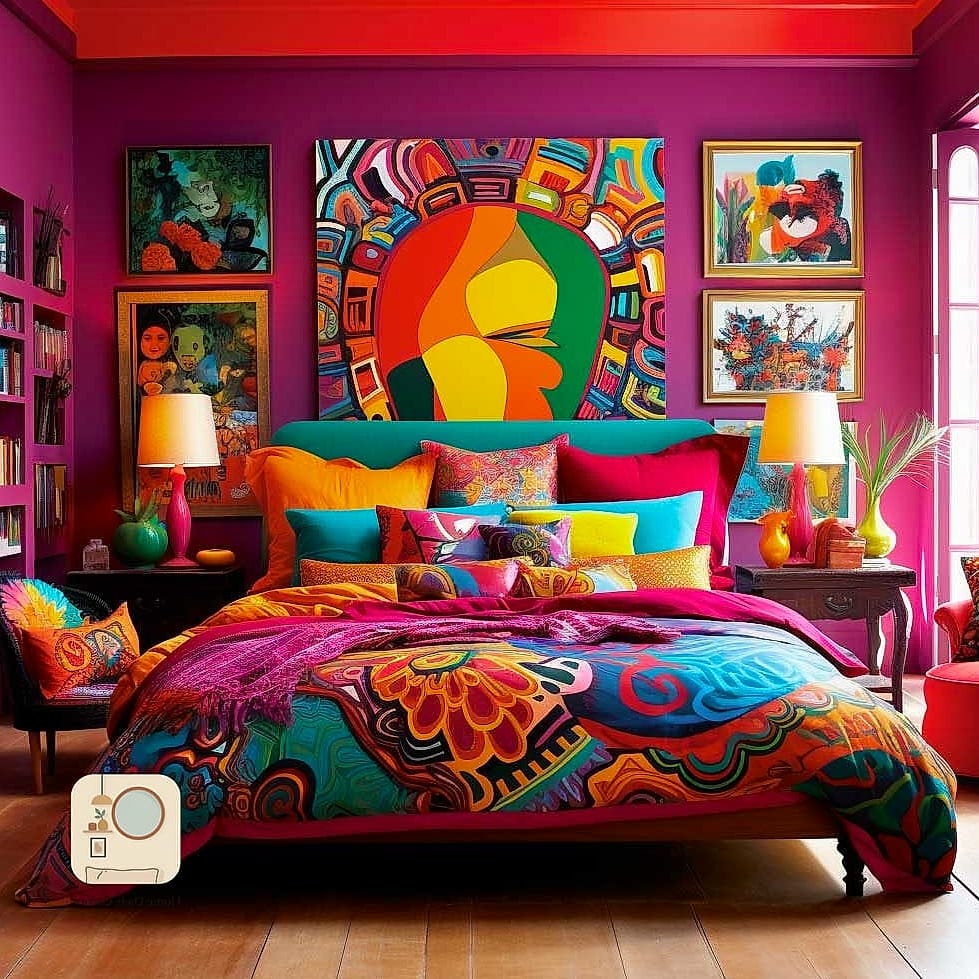
The bedrooms that feel most memorable usually have something a little unexpected in them — a piece of art from a trip, a vintage find, a framed print that doesn’t match anything else perfectly. Designers tend to encourage clients to include at least one piece that has a story rather than filling every surface with catalog decor.
Consider a Grasscloth or Textured Wallpaper Accent Wall
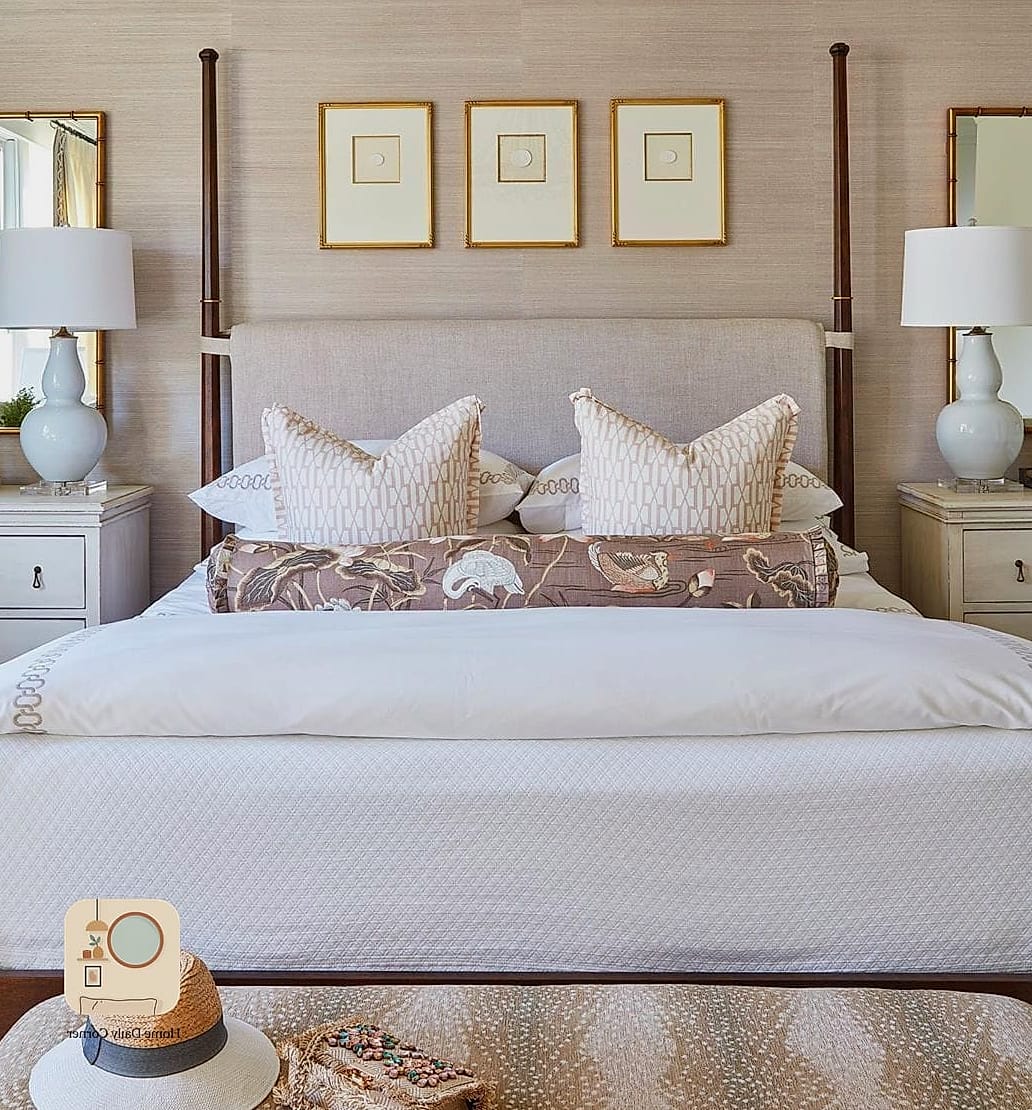
Textured wallpaper adds depth in a way flat paint can’t quite match. Grasscloth, linen-look, and subtle geometric prints are common choices because they read as sophisticated without being visually loud.
Peel-and-stick versions have gotten a lot better in recent years, which makes this a realistic renter-friendly option too.
Keep the Color Story Consistent Across Bedding, Walls, and Accents
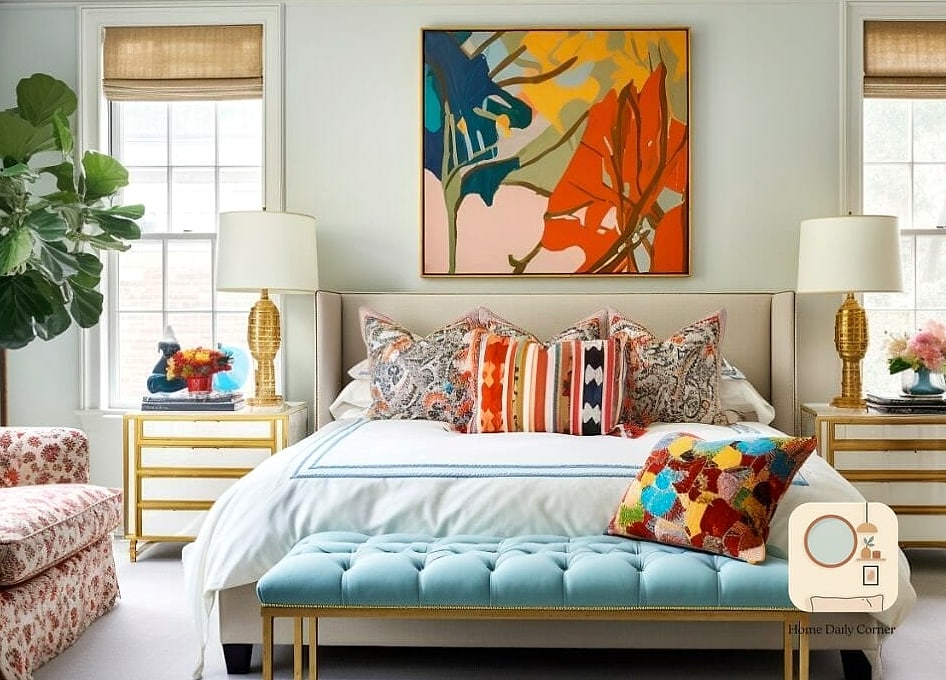
The most put-together bedrooms usually share a cohesive color story — maybe two or three main tones that repeat across the walls, bedding, and a few accent pieces. It doesn’t mean everything matches exactly, but there’s a clear thread tying the room together.
Picking your rug or bedding first and building the wall color around it is often easier than the other way around.
Putting even five or six of these ideas to work can shift a bedroom from “fine” to genuinely restful. You don’t need a full renovation — start with lighting, layering, and one focal point, and build from there.