15 70S Bedroom Designs That Maximize Style and Function
- Sunburst Headboard as the Room’s Focal Point
- Earthy Terracotta and Rust Color Palette
- Shag Rug Underfoot
- Rattan and Wicker Furniture Accents
- Velvet Upholstered Headboard in a Jewel Tone
- Statement Wallpaper with Bold Botanical or Geometric Print
- Warm Wood Paneling on the Walls
- Platform Bed with Low Profile Wood Frame
- Macrame Wall Hanging Above the Bed
- Mixed Metal Lighting with Warm Bulbs
- Built-In Wood Shelving and Storage
- Corduroy and Textured Fabric Bedding
- Sunken or Lowered Lounge Nook
- Bold Striped or Ombre Accent Wall
- Vintage-Inspired Gallery Wall with Warm Frames
15 70S Bedroom Designs That Maximize Style and Function
The 70s get a bad rap sometimes, but honestly, this decade had some of the coziest, most personality-packed bedroom design out there. We’re talking warm wood tones, sunken conversation pits, shag rugs you could lose a sock in, and color palettes that actually had confidence. If you’ve been craving a bedroom that feels lived-in and layered instead of sterile and matchy, pulling from 70s design is a great place to start. Here are 15 ways to bring that groovy warmth into your own space without it feeling like a costume party.
Sunburst Headboard as the Room’s Focal Point
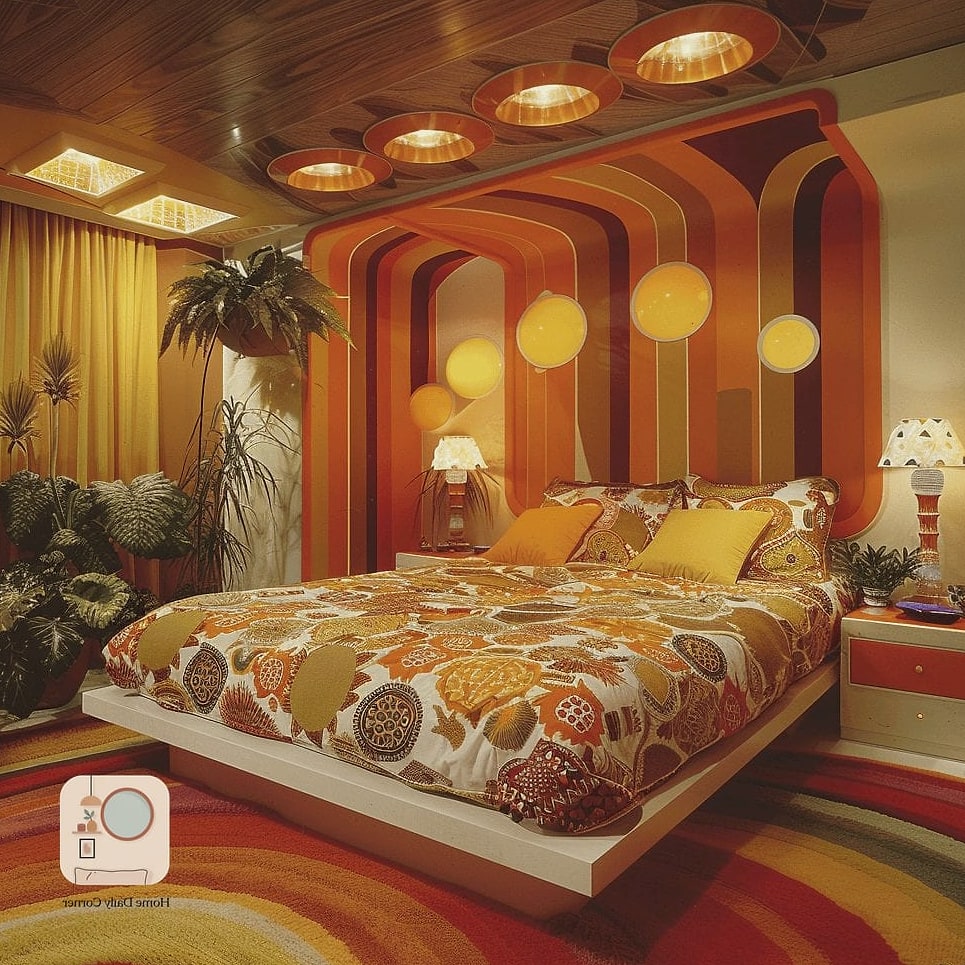
A wood sunburst headboard is basically the unofficial mascot of 70s bedroom design. The radiating spokes add movement and drama above the bed without needing a giant piece of art.
This works especially well in bedrooms with lower ceilings since the vertical lines trick the eye upward. Look for reclaimed teak or walnut versions if you want that authentic vintage patina, or go with a lighter oak stain for a softer, more Scandinavian-meets-70s feel.
Pair it with simple bedding so the headboard stays the star of the show.
Earthy Terracotta and Rust Color Palette
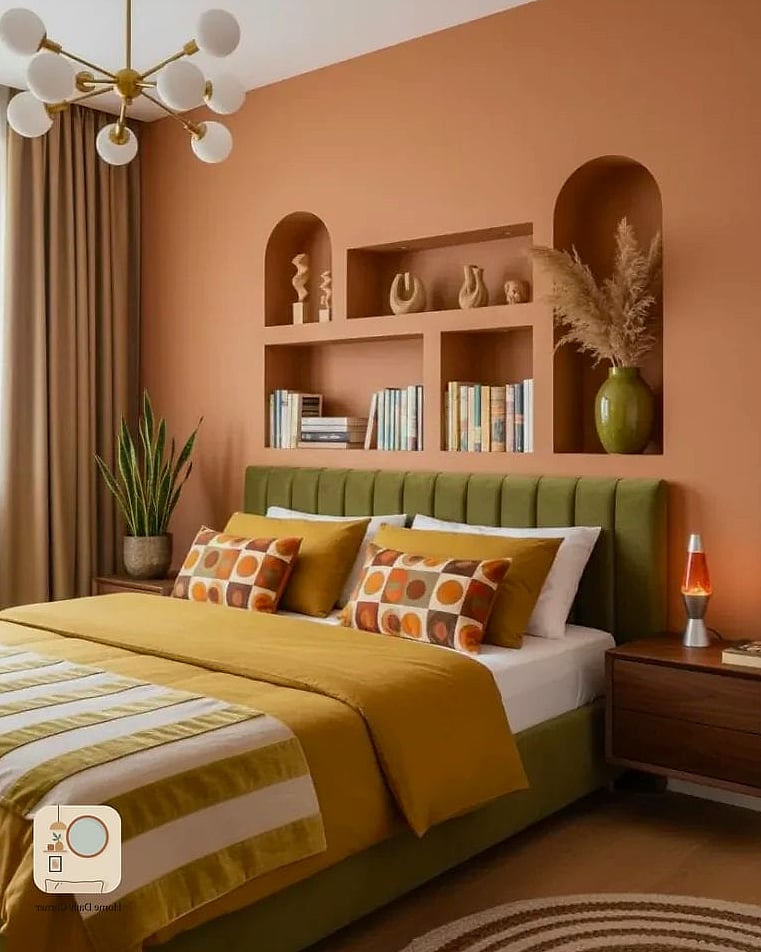
Nothing says 70s quite like a wall painted in burnt orange or terracotta. These warm, earthy tones feel grounding and surprisingly current again, especially paired with cream linens and natural wood furniture.
If a full accent wall feels like too much commitment, try it on just the ceiling instead. A “fifth wall” moment in rust or clay adds warmth overhead without overwhelming the room.
This palette is particularly forgiving with natural light, so it tends to look good in both bright rooms and dimmer, north-facing ones.
Shag Rug Underfoot
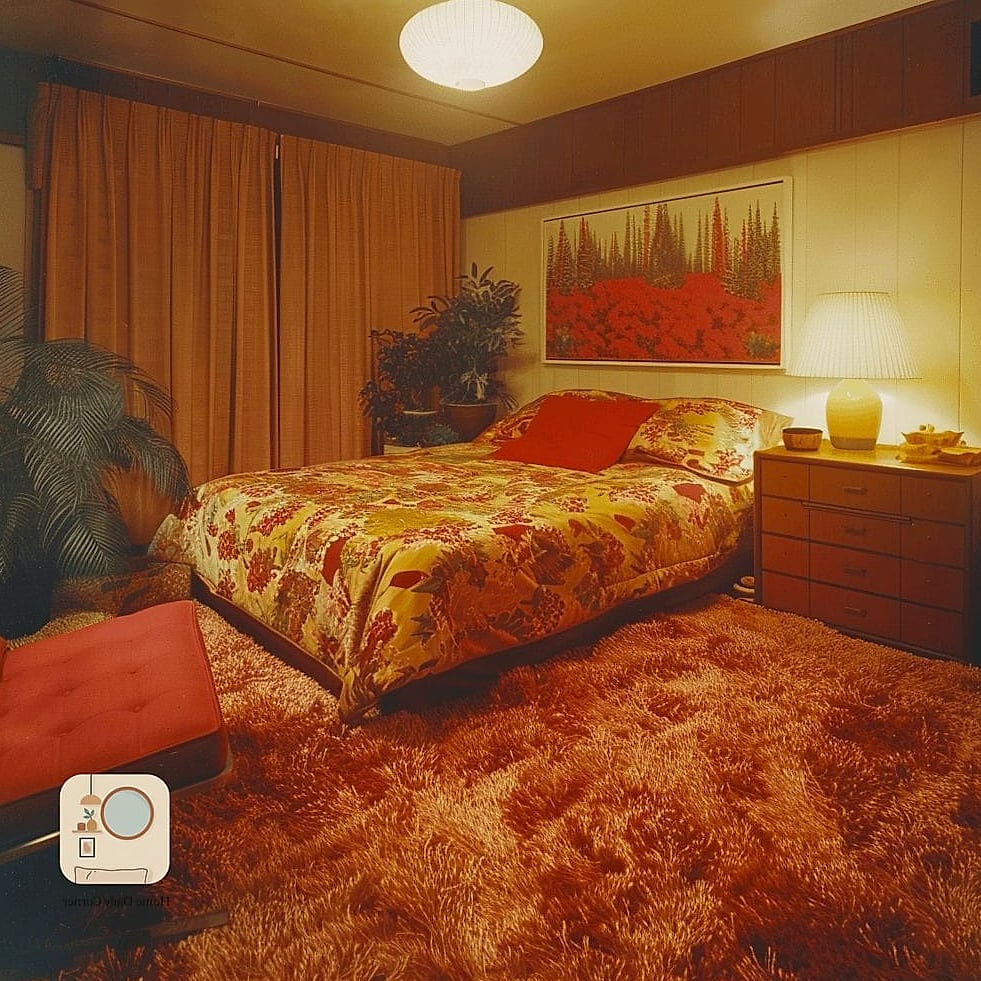
A thick shag rug in cream, chocolate brown, or burnt orange instantly makes a bedroom feel softer and more inviting. There’s a reason this texture never really disappeared from design conversations.
Go for a high-pile wool or wool-blend version if you want something that holds up over time, since synthetic shag can flatten quickly with regular foot traffic. If you’ve got pets, look for a shorter shag or a shag-style with tighter loops that won’t trap as much fur.
Vacuum with a beater bar turned off, or on the lowest setting, to keep the fibers from getting yanked out.
Rattan and Wicker Furniture Accents
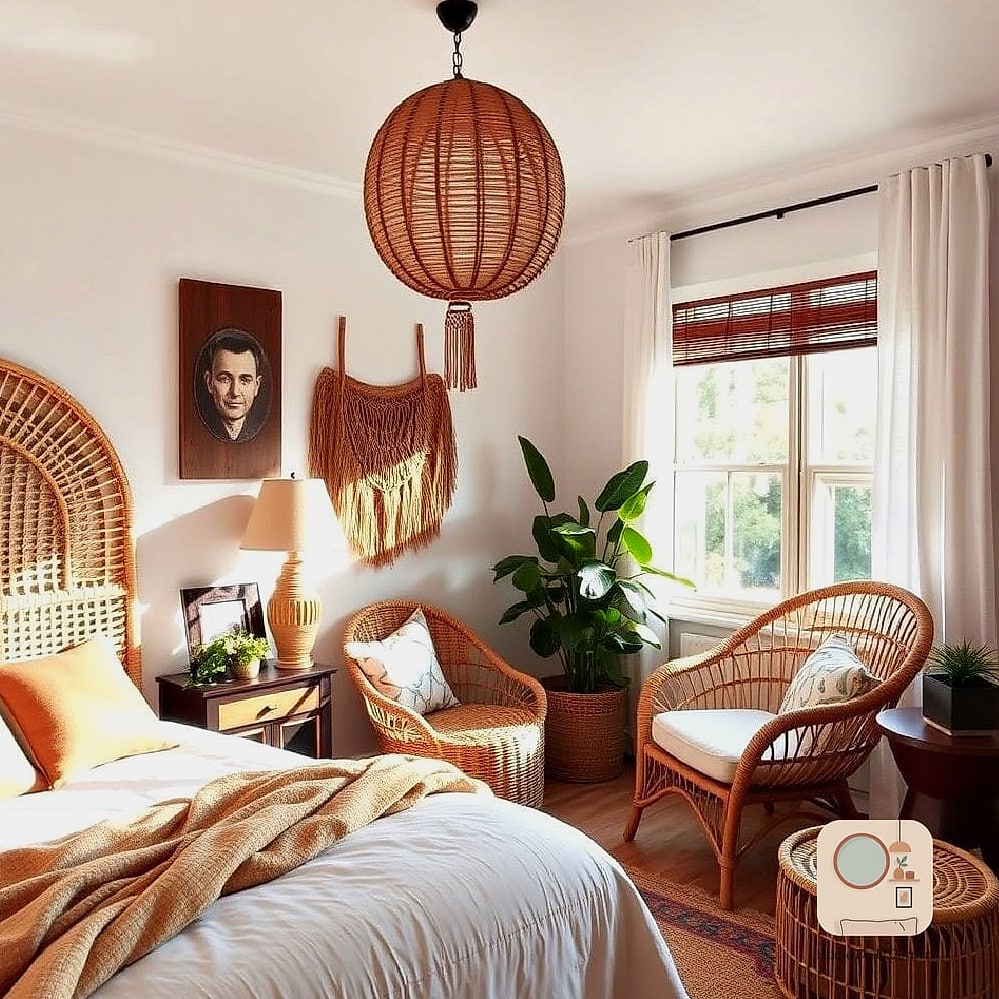
Rattan headboards, wicker nightstands, and woven pendant lights bring texture and lightness into a 70s-inspired bedroom. This material choice pairs beautifully with earthy color palettes and adds an organic, almost boho edge.
Rattan works well in smaller bedrooms too, since the open weave keeps pieces from feeling visually heavy. A rattan bench at the foot of the bed is a great entry point if you’re not ready to commit to a full rattan headboard.
Keep rattan pieces out of direct, harsh sunlight for years to come, since prolonged exposure can dry out and crack the material over time.
Velvet Upholstered Headboard in a Jewel Tone
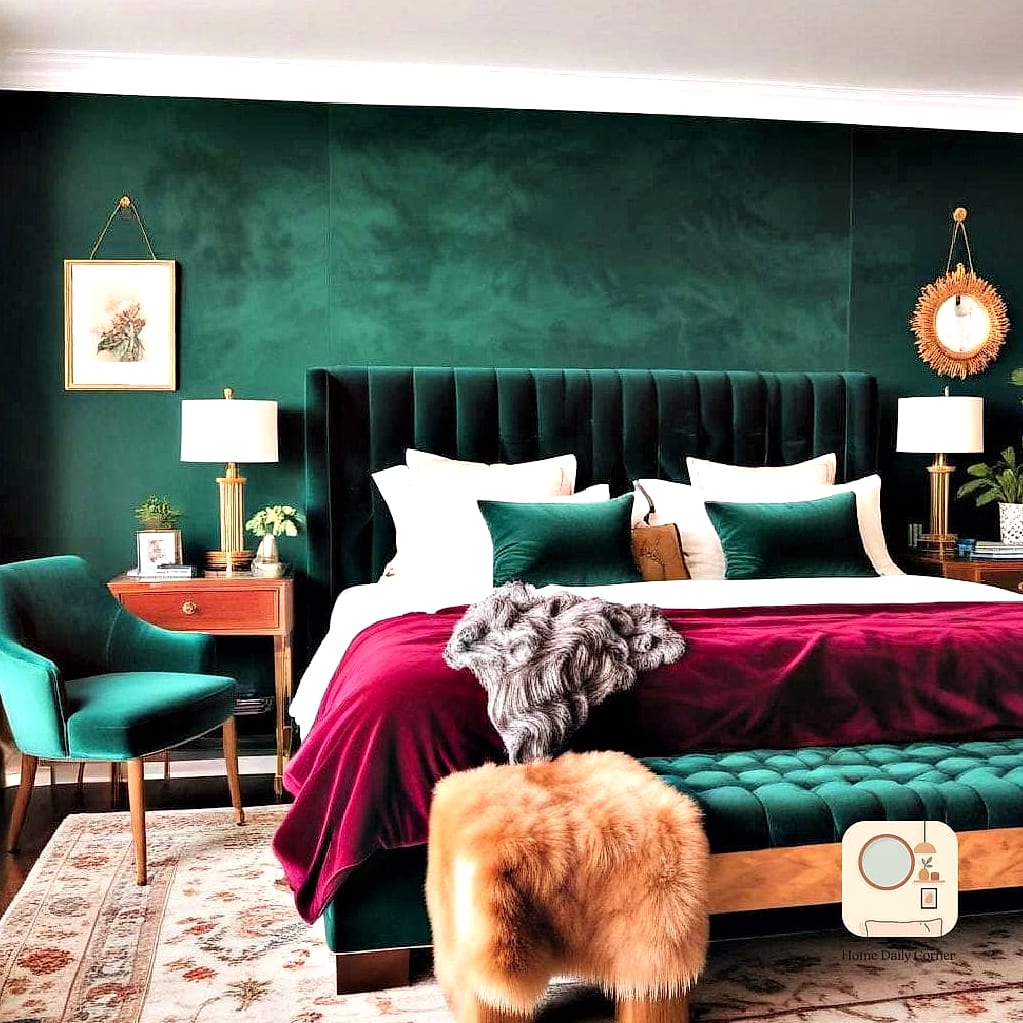
If sunburst wood isn’t your speed, a velvet headboard in emerald, mustard, or deep burgundy delivers that same 70s glamour with a softer touch. Velvet has a way of making a room feel instantly more luxurious.
Channel-tufted or scalloped shapes read as especially era-appropriate. These headboards work well as the anchor piece in an otherwise neutral room, letting one bold element carry the whole design.
Velvet does show dust and pet hair more than other fabrics, so a fabric-safe lint roller or a soft brush attachment on your vacuum will keep it looking sharp.
Statement Wallpaper with Bold Botanical or Geometric Print
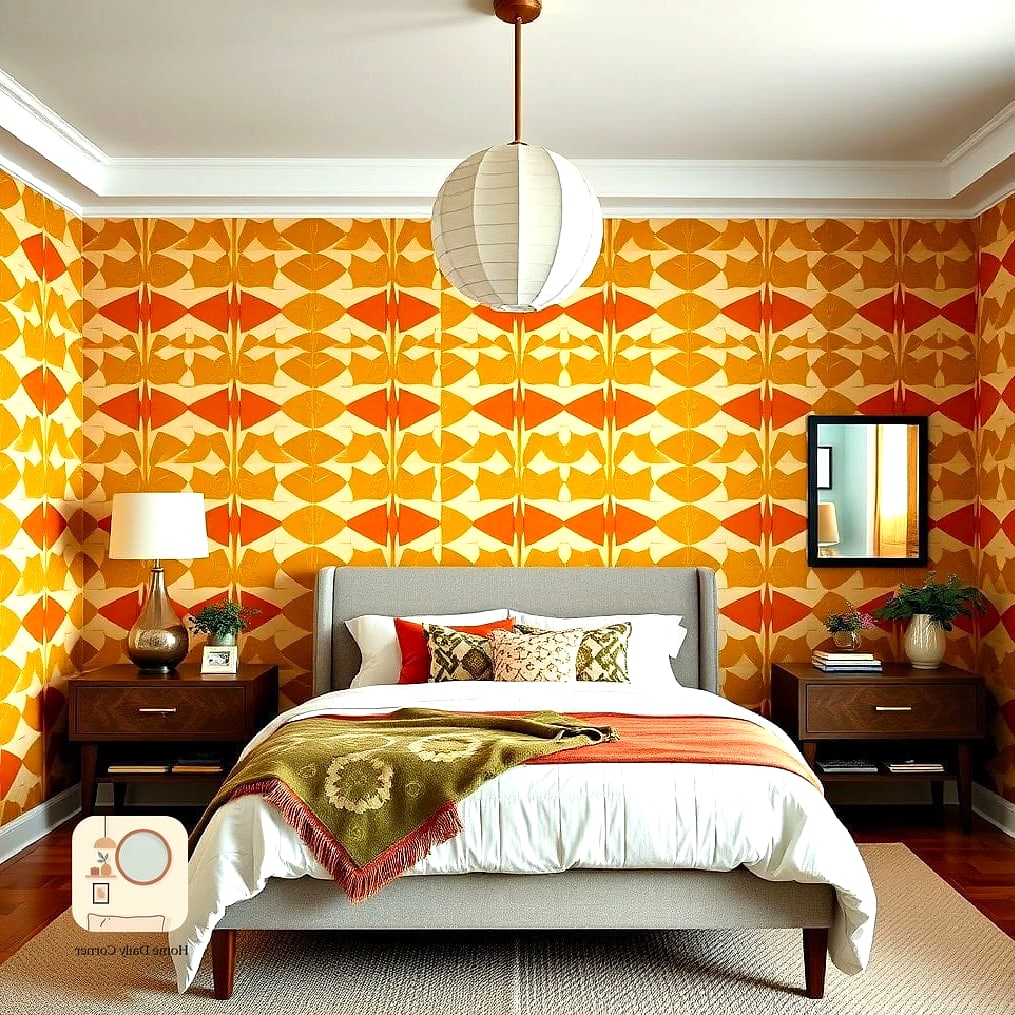
70s wallpaper didn’t hold back, and that’s exactly what makes it so fun to revisit. Think oversized florals, psychedelic swirls, or bold geometric shapes in warm, saturated colors.
If wallpapering the entire room feels risky, try it on just the wall behind the headboard. This gives you all the personality without the commitment, and it’s an easy fix later if your taste shifts.
Peel-and-stick wallpaper has gotten remarkably good in recent years, making this a renter-friendly way to test the look before going with a traditional pasted version.
Warm Wood Paneling on the Walls
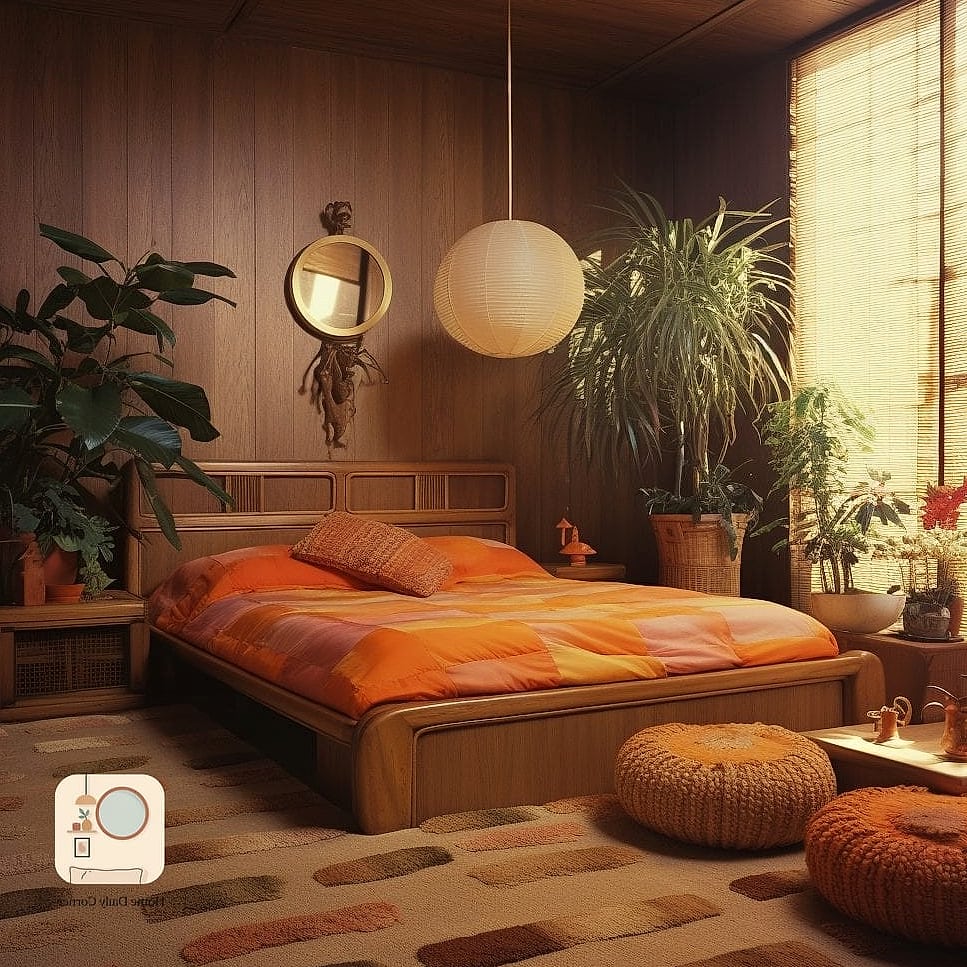
Wood paneling gets unfairly associated with dated basements, but done right, it’s one of the coziest things you can add to a bedroom. Vertical shiplap-style paneling in a warm walnut or cedar tone adds instant texture and depth.
This look works particularly well in bedrooms that feel a little cold or sterile, since wood naturally warms up a space both visually and acoustically. Consider paneling just one accent wall behind the bed rather than the whole room, which keeps things from feeling like a cabin.
A light coat of natural oil or wax every year or two keeps the wood looking rich instead of dry.
Platform Bed with Low Profile Wood Frame
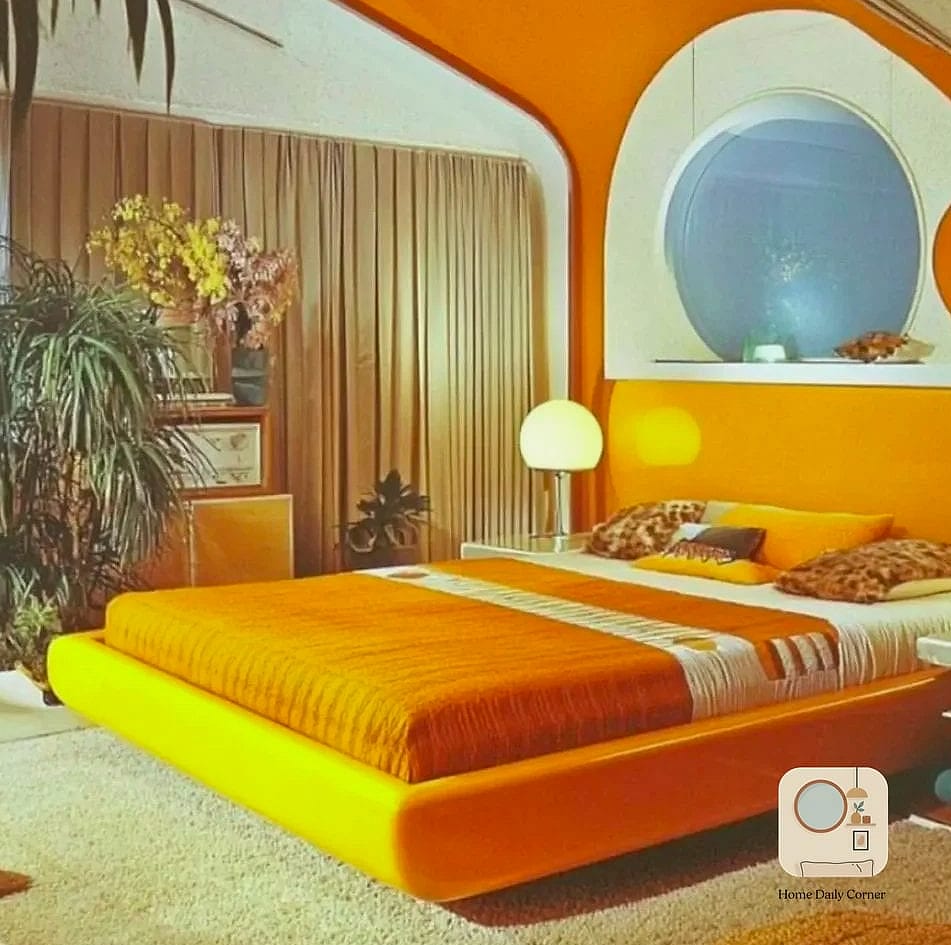
70s bedrooms leaned heavily into low, grounded furniture, and platform beds were everywhere. A wood platform frame with clean lines gives the room a calm, mid-century-adjacent feel while still nodding to that decade’s love of natural materials.
This style tends to work best in bedrooms with higher ceilings, since the low profile can make a room with limited vertical space feel a bit squat. Pair it with a low nightstand on either side to keep the proportions consistent throughout the room.
Solid wood frames are a worthwhile investment if you can swing it, since they hold up far better over the years than particleboard versions.
Macrame Wall Hanging Above the Bed
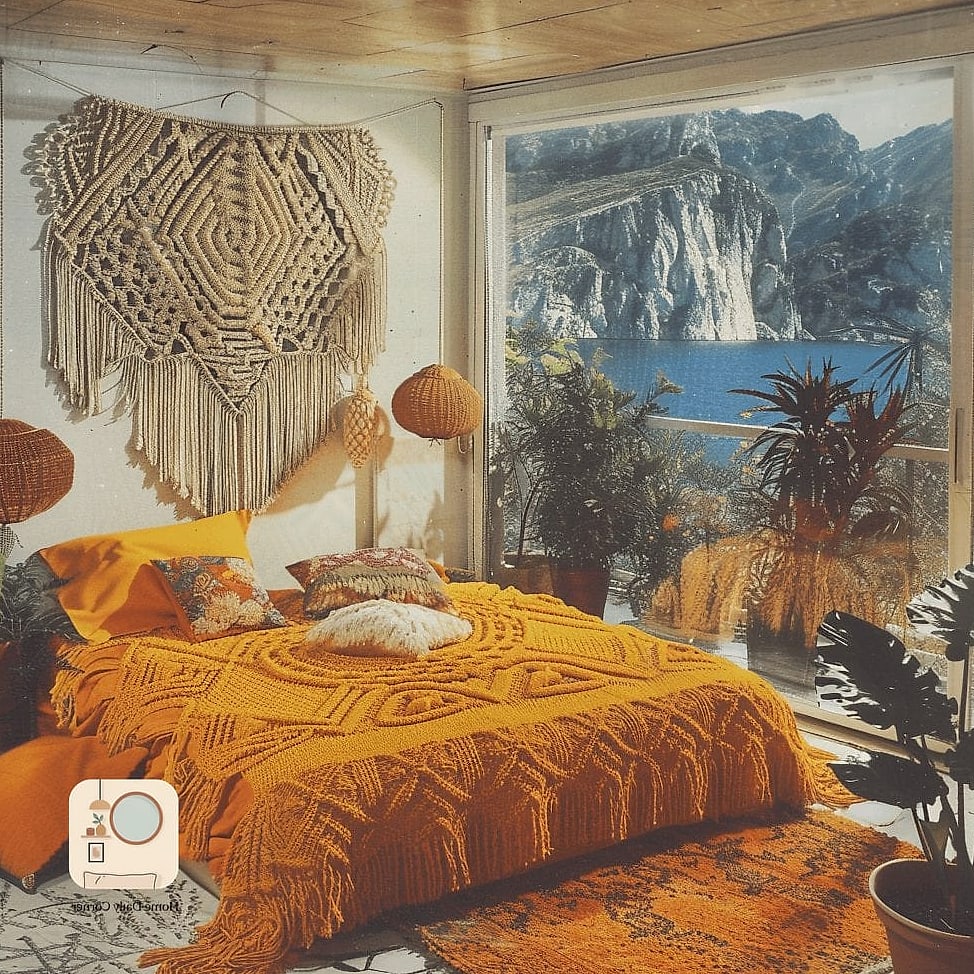
A large macrame piece is one of the easiest ways to add texture and that unmistakable 70s bohemian feel without touching paint or furniture. It’s soft, sculptural, and works in almost any color scheme since most macrame comes in natural cream or off-white cotton.
This is a great option for renters or anyone who likes to change things up seasonally, since it’s lightweight and easy to swap out. Hang it slightly higher than you’d expect above the headboard so it doesn’t compete visually with your pillows.
Give it a gentle shake outside every so often to keep dust from building up in the knots.
Mixed Metal Lighting with Warm Bulbs
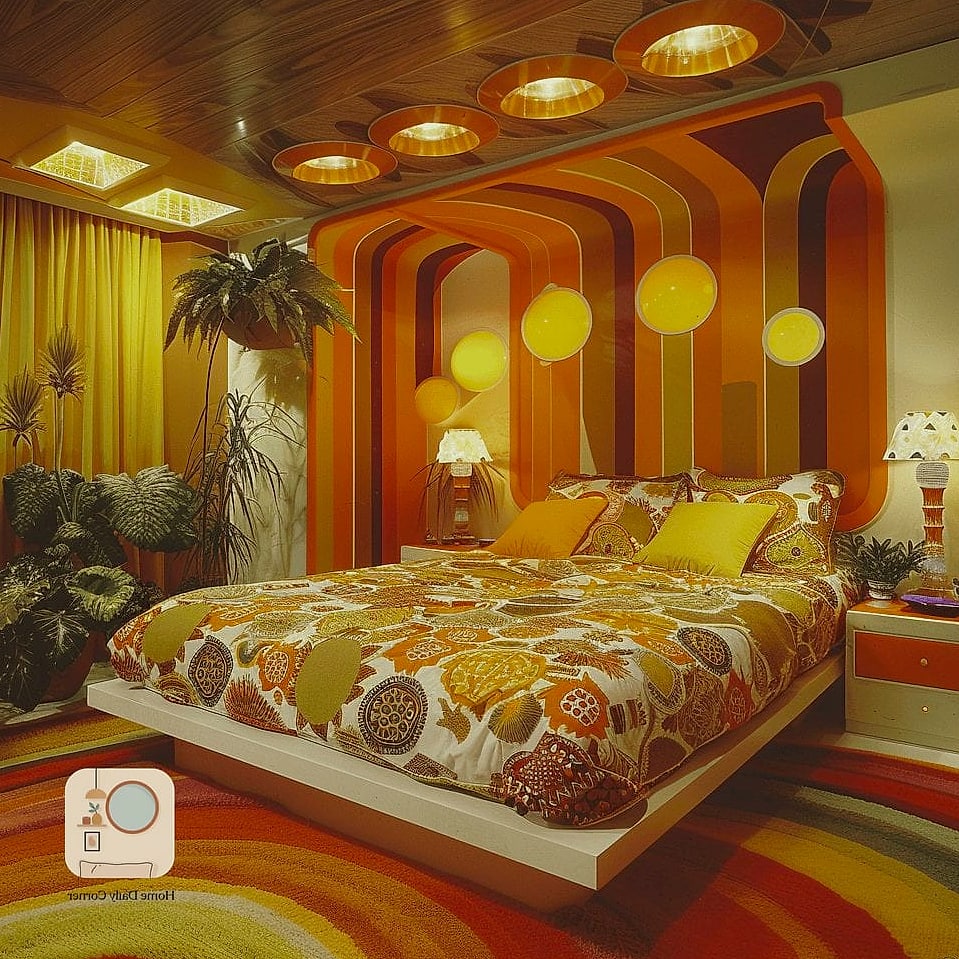
Brass and bronze fixtures were everywhere in 70s interiors, and they’re having a real moment again. A brass pendant light, a pair of mismatched brass sconces, or a floor lamp with a woven shade all add that warm, golden-hour glow.
Layered lighting matters a lot here. Instead of relying on one overhead fixture, mix in a table lamp and a floor lamp so the room has multiple sources of soft, warm light.
Stick with warm white bulbs (around 2700K) rather than daylight bulbs, since cooler light tends to fight against the earthy 70s palette instead of complementing it.
Built-In Wood Shelving and Storage
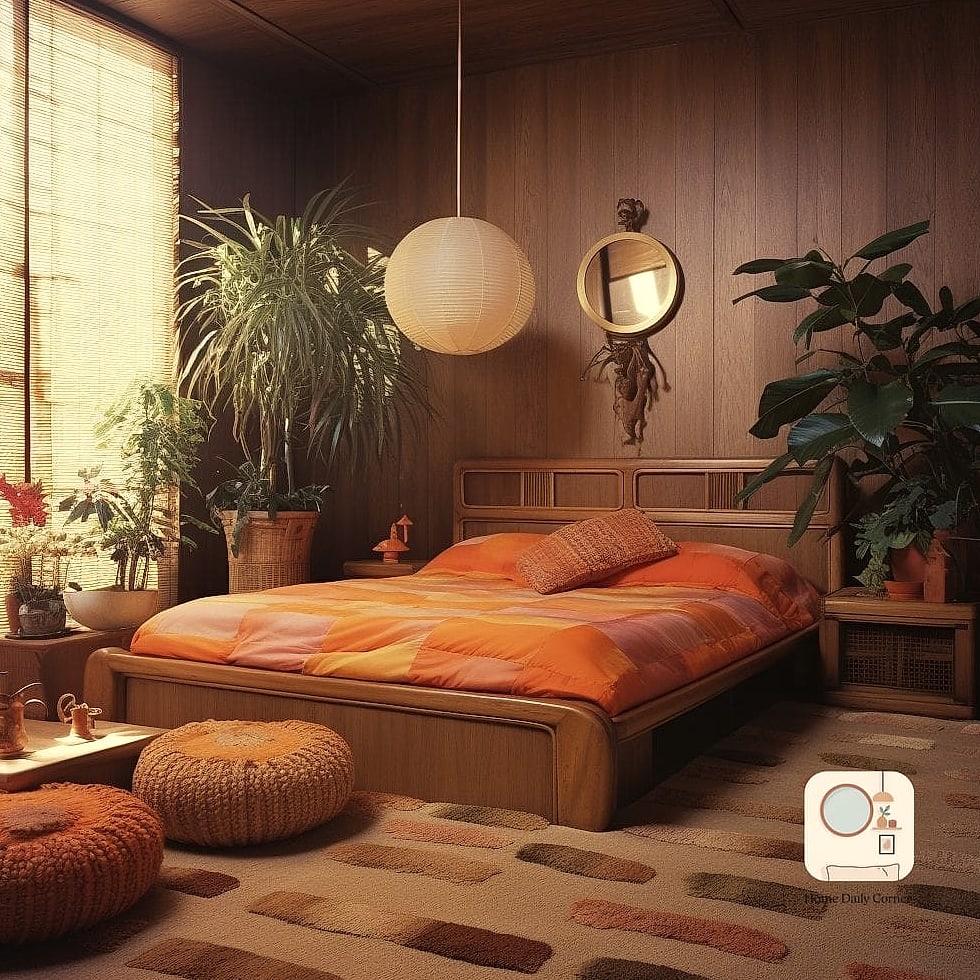
Built-ins were a genuinely smart move in 70s design, and they’re still one of the best ways to add function without cluttering a room. Floating wood shelves, built-in nightstands, or a full wall unit all keep storage streamlined and intentional.
This is especially useful in smaller bedrooms where floor space is limited. A built-in unit around the bed can double as nightstands, bookshelves, and display space all in one, which cuts down on the number of separate furniture pieces you need.
If built-ins aren’t in the budget, a modular shelving system in a warm wood finish gets you a similar look for a fraction of the cost.
Corduroy and Textured Fabric Bedding
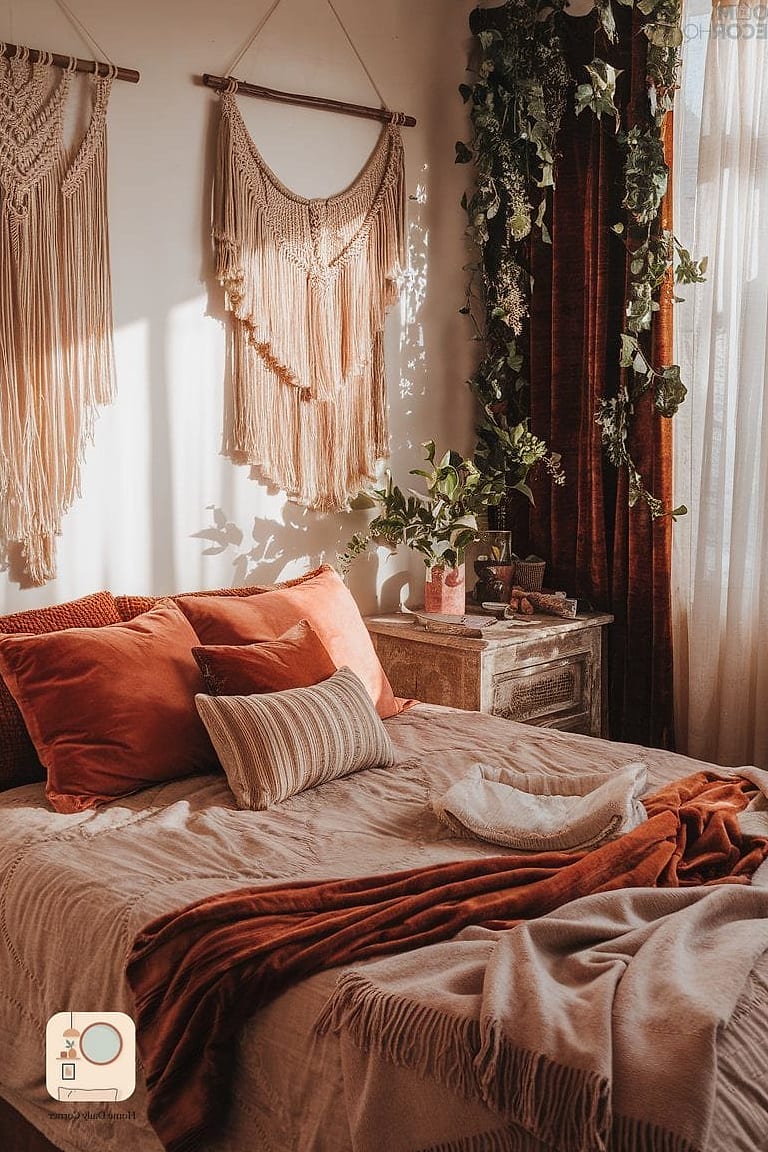
Corduroy has quietly become one of the most popular fabrics in home decor again, and it fits right into a 70s-inspired bedroom. A corduroy duvet cover or throw pillows in mustard, olive, or burnt orange add tactile warmth that flat cotton bedding just can’t match.
Mixing textures matters more than matching colors perfectly here. Pair corduroy with a chunky knit throw and a smooth linen sheet set for a layered look that still feels intentional.
Corduroy can be a little more finicky to wash since the ribs can trap lint, so a gentle cycle and skipping the dryer sheet will help it hold its texture longer.
Sunken or Lowered Lounge Nook
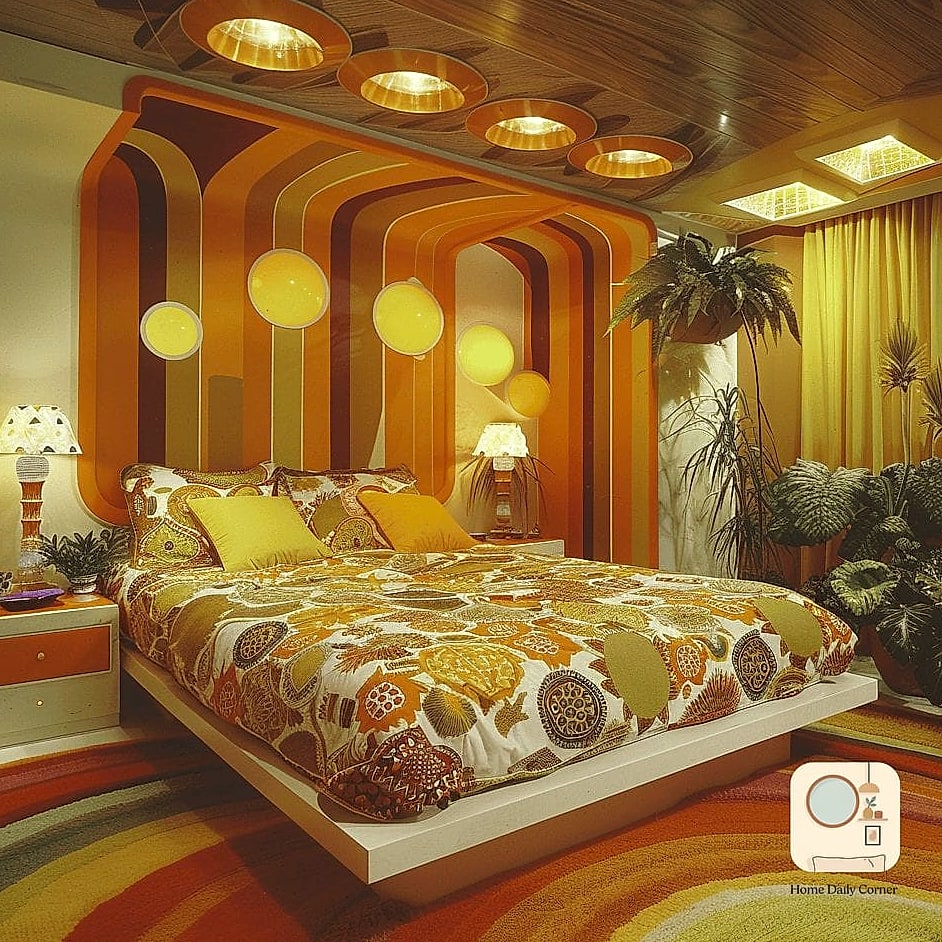
Not every bedroom can pull off an actual sunken conversation pit, but you can borrow the spirit of it with a lowered lounge area near a window. Think a low platform with floor cushions, a small side table, and maybe a floor lamp.
This works especially well in larger primary bedrooms that have awkward extra square footage that isn’t quite big enough for a full seating area. It gives you a cozy reading nook without needing a separate armchair setup.
Floor cushions are also just genuinely budget-friendly compared to buying an additional piece of upholstered furniture.
Bold Striped or Ombre Accent Wall
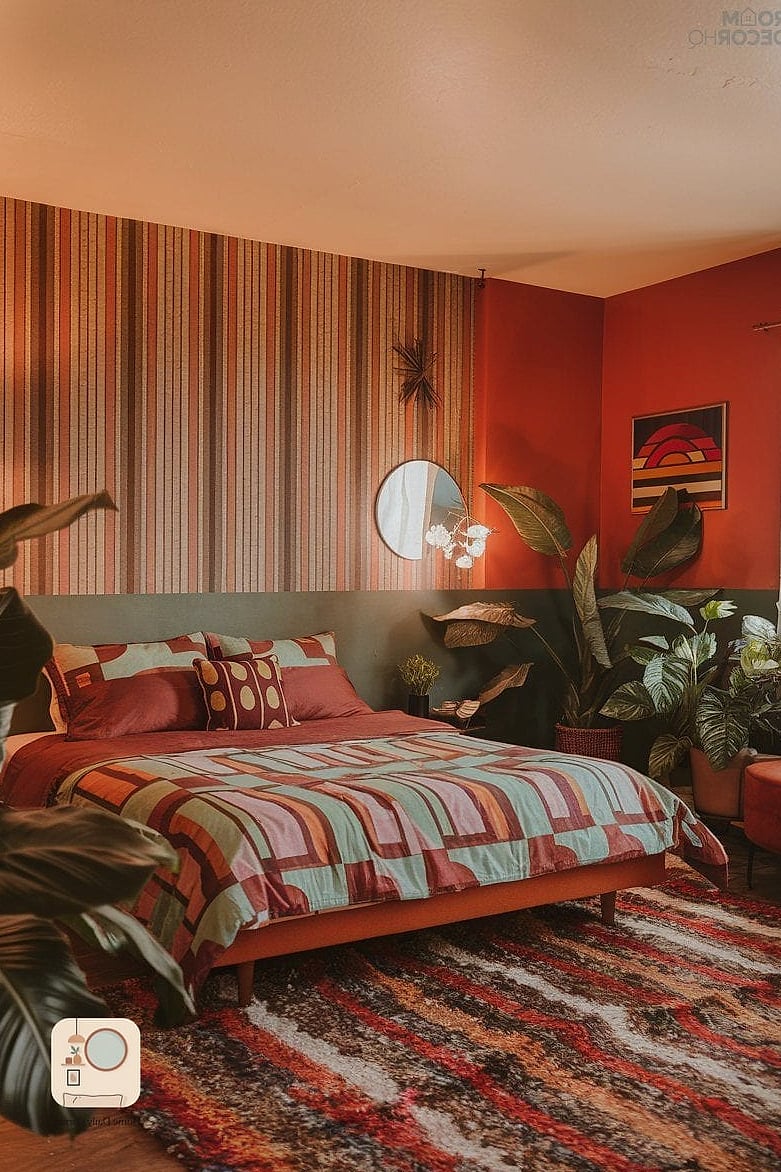
Beyond wallpaper, hand-painted stripes or a soft ombre gradient were common ways 70s homeowners added color without covering every wall. Horizontal stripes in warm tones like terracotta, cream, and olive give a room rhythm and visual interest.
This is one of the more budget-friendly ideas on this list since it just requires paint, painter’s tape, and a free weekend. It’s also fully reversible, which makes it a solid option if you’re renting or just not sure about full commitment yet.
For anyone nervous about painting freehand, there are printable stripe templates and painter’s tape guides that make this a pretty approachable DIY project even for beginners.
Vintage-Inspired Gallery Wall with Warm Frames
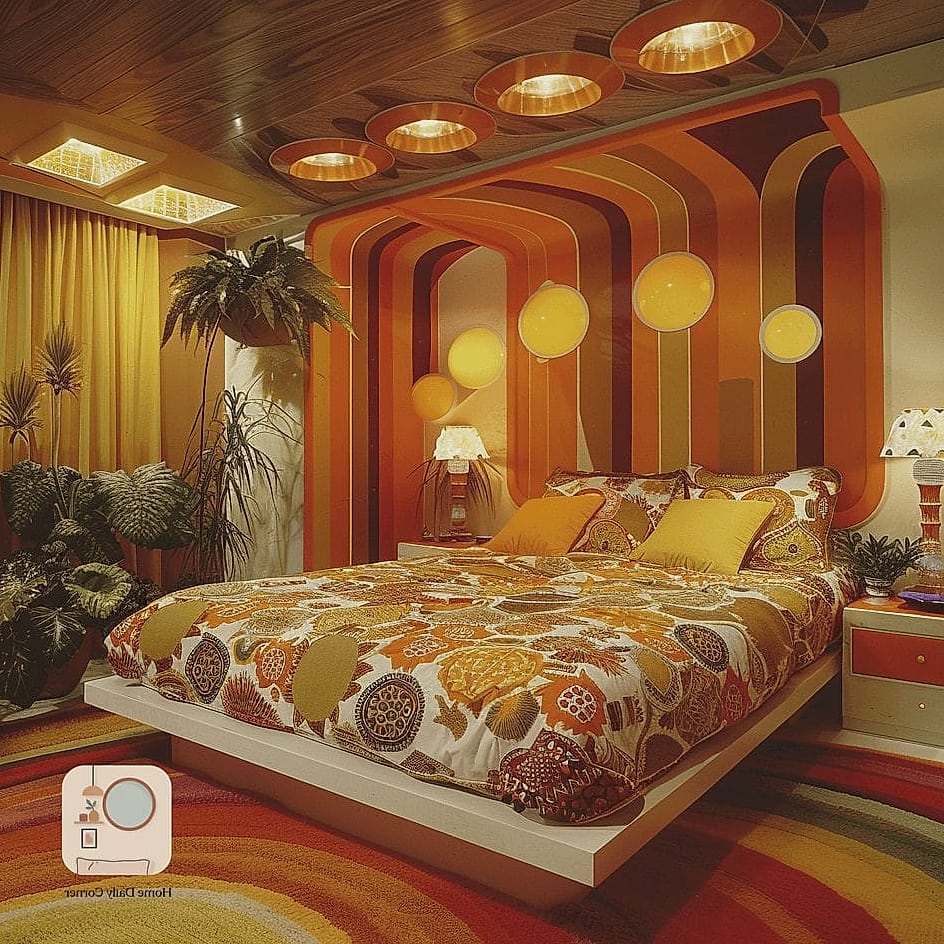
70s bedrooms often had an eclectic mix of art, mirrors, and photos in warm wood or brass frames. Recreating this look with a curated gallery wall adds personality and makes a room feel collected over time rather than decorated all at once.
Mixing frame shapes and sizes actually works better here than a uniform grid, since it echoes that more relaxed, personal 70s approach to displaying art. Look for thrifted frames in walnut or brass tones to keep costs down while still nailing the aesthetic.
Rotate a piece or two seasonally to keep the wall feeling fresh instead of static.
Bringing 70s design into a bedroom really comes down to leaning into warmth, texture, and a little bit of boldness. You don’t need to recreate a full period room to get the feel right. Even picking two or three of these ideas, like a rattan nightstand and a terracotta accent wall, can shift a space from generic to genuinely inviting. The best part is that most of these elements are pretty forgiving, so you can mix and match until it feels like your own version of the look rather than a strict throwback.