18 Master Bedrooms Decor Cozy Relaxing Ideas That Work in Any Size Home
- Layered Bedding in Warm Neutrals
- A Reading Nook in the Corner
- Warm Wood Tones on Furniture
- Layered Lighting Instead of One Overhead Fixture
- A Statement Headboard
- Blackout Curtains That Still Look Soft
- A Calming, Muted Color Palette
- Rugs That Add Softness Underfoot
- Greenery That Doesn’t Require a Green Thumb
- Textured Throw Pillows in Varying Sizes
- A Dedicated Space for Screens to Charge (Away From the Bed)
- Soft, Rounded Furniture Shapes
- A Gallery Wall Above the Bed
- Woven and Natural Fiber Accents
- Hidden Storage That Reduces Visual Clutter
- A Weighted or Textured Throw at the Foot of the Bed
- Scent as Part of the Decor
- A Simplified, Curated Nightstand
18 Master Bedrooms Decor Cozy Relaxing Ideas That Work in Any Size Home
Your bedroom should feel like the one room in the house where you can finally exhale. Not another space to organize, not another surface to style for guests—just yours. Whether you’re working with a sprawling primary suite or a cozy 10×10 box of a room, these ideas are all about creating that soft, calm, “I don’t want to leave this bed” feeling. Let’s get into it.
Layered Bedding in Warm Neutrals
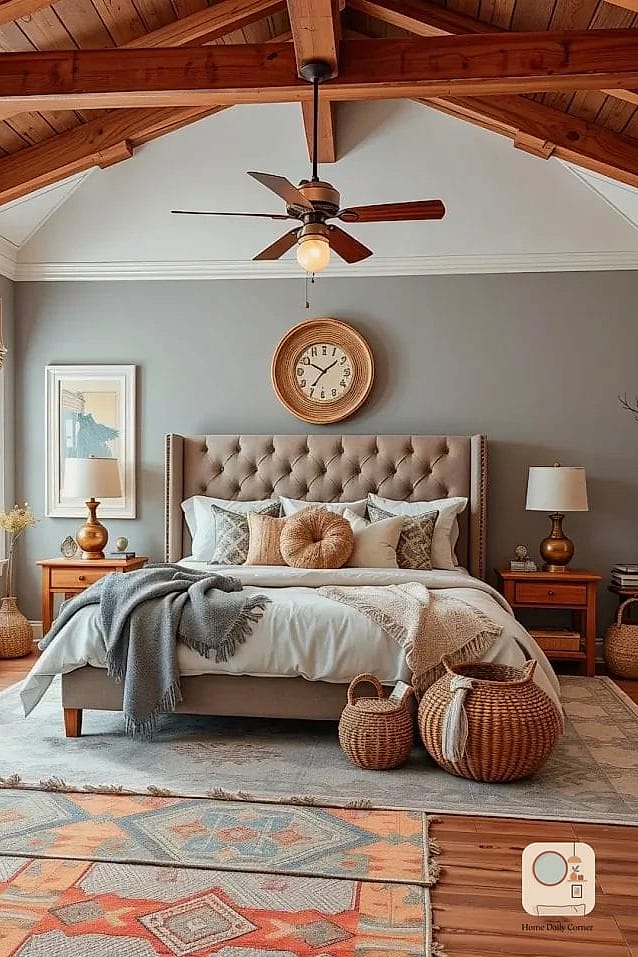
There’s a reason hotel beds feel so good to sink into, and it’s almost always the layers. Start with a quality duvet, add a lightweight quilt or coverlet folded at the foot, then toss in a few pillows in varying textures.
Stick to a warm neutral palette—think oatmeal, taupe, cream, soft grays—so nothing feels visually loud. This look works in a tiny apartment bedroom just as well as a huge primary suite, and it’s genuinely one of the easiest upgrades on this list. Linen or cotton percale sheets add breathability, while a chunky knit throw brings in texture without extra color.
A Reading Nook in the Corner
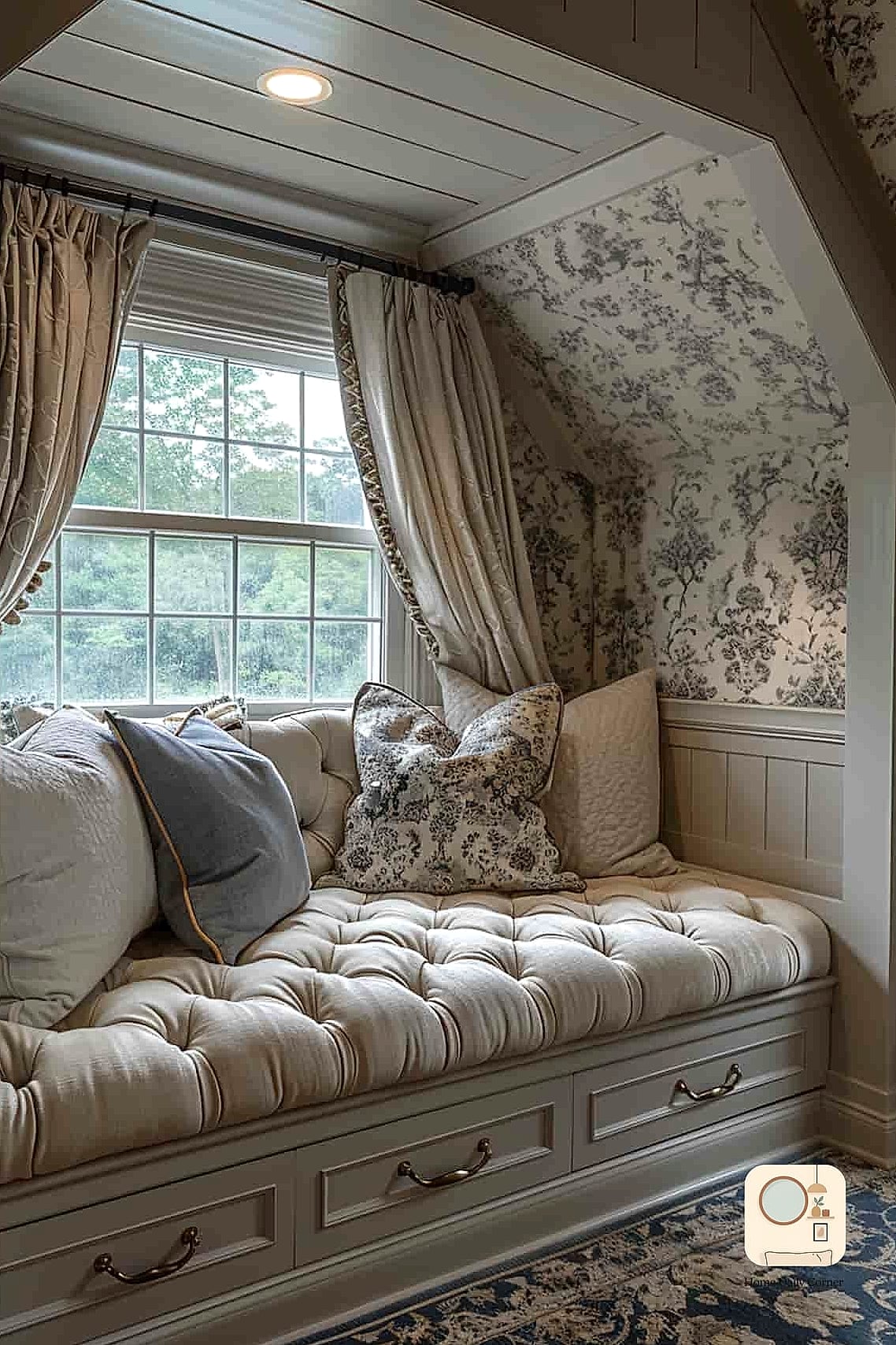
If you’ve got even a small unused corner, this is worth carving out. A single accent chair, a small side table, and a floor lamp is really all it takes.
Add a soft throw blanket and a little basket for books or magazines nearby. This idea works especially well in larger bedrooms with awkward corners that never quite know what to do with themselves, but I’ve also seen it done beautifully in a narrow gap beside a dresser. It gives you a reason to actually sit in your bedroom instead of just sleeping in it.
Warm Wood Tones on Furniture
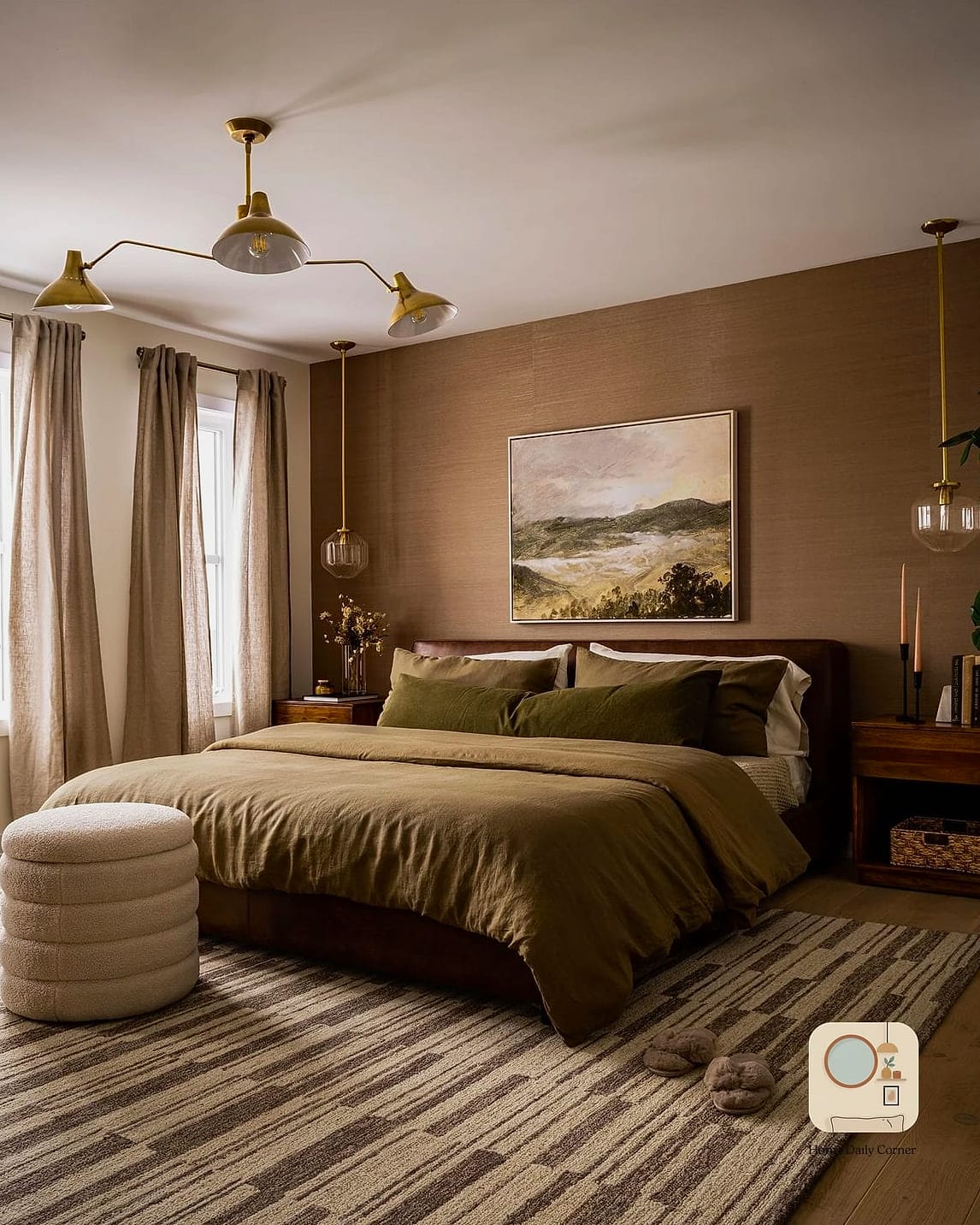
Swapping out cold, mismatched furniture for pieces in warm wood tones instantly makes a room feel more grounded and intentional. Think honey oak, walnut, or reclaimed wood finishes.
You don’t need to replace everything at once—start with a nightstand or headboard and build from there. Warm wood pairs beautifully with brushed brass or matte black hardware, and it photographs well too if you’re into sharing your space online. This is a slower, more budget-conscious way to redecorate since you can pick pieces up over time at thrift stores or estate sales.
Layered Lighting Instead of One Overhead Fixture
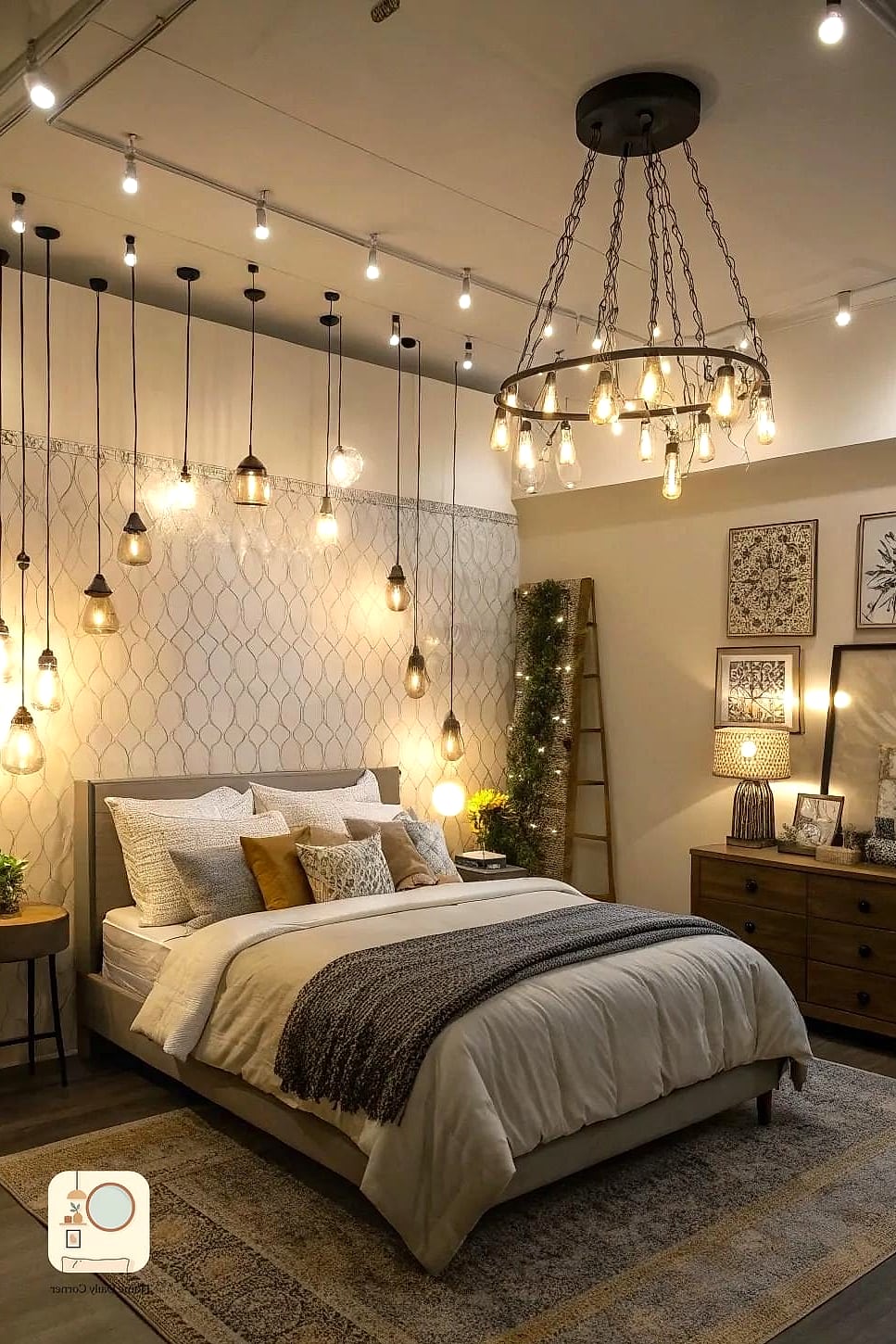
Overhead lighting alone tends to make bedrooms feel clinical rather than cozy. Layered lighting means combining a few sources: a dimmable overhead fixture, bedside lamps, and maybe a small plug-in sconce or floor lamp in a corner.
This works in any size room because you’re not adding bulk, just softening the light itself. Warm-toned bulbs (look for 2700K on the packaging) make a huge difference here. Dimmer switches are a small investment that pays off every single night.
A Statement Headboard
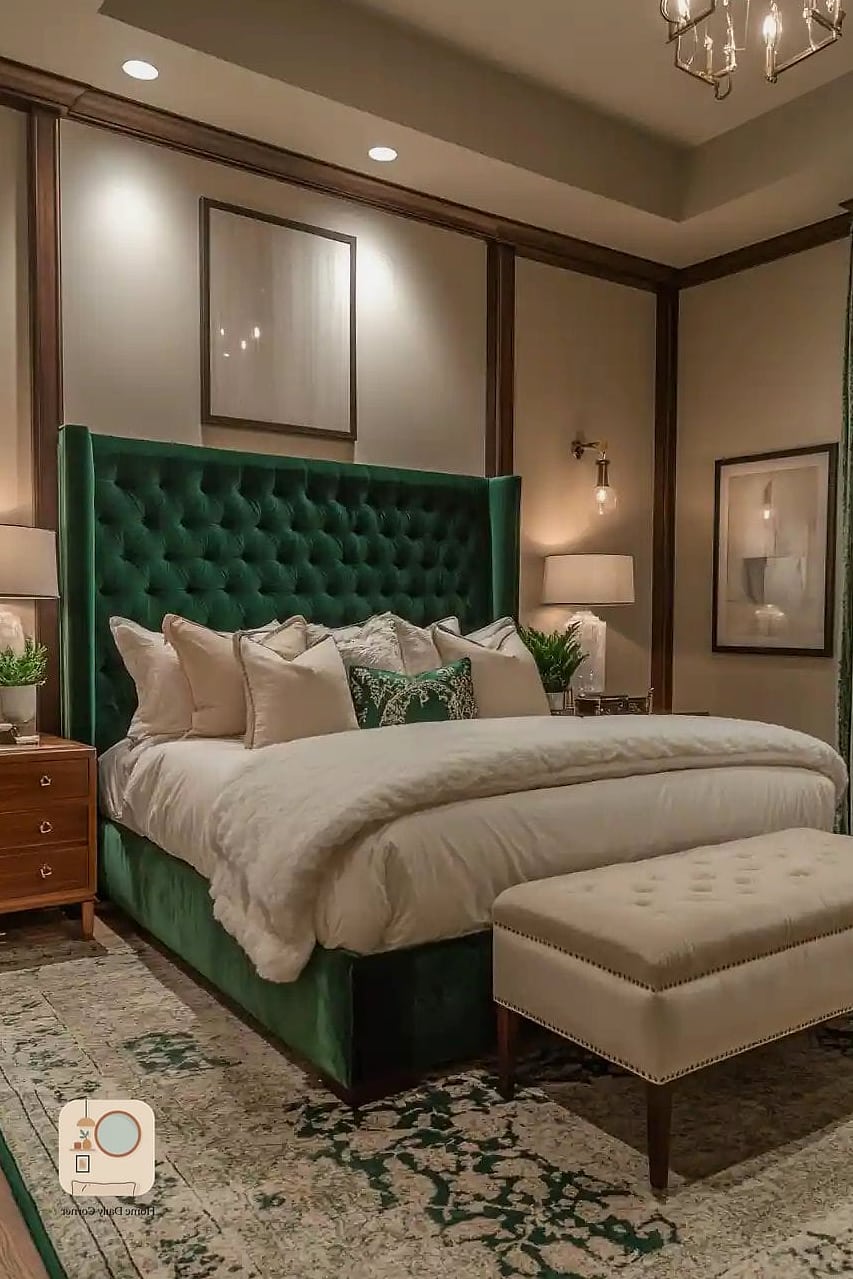
A headboard does more visual heavy lifting than almost any other single piece in the room. Upholstered headboards in linen or velvet add instant softness, while a wood or rattan headboard leans more natural and textured.
Small bedrooms benefit from this because it draws the eye up and gives the room a focal point without eating into floor space. If you’re renting or on a budget, there are plenty of DIY headboard tutorials using plywood and foam that look surprisingly high-end.
Blackout Curtains That Still Look Soft
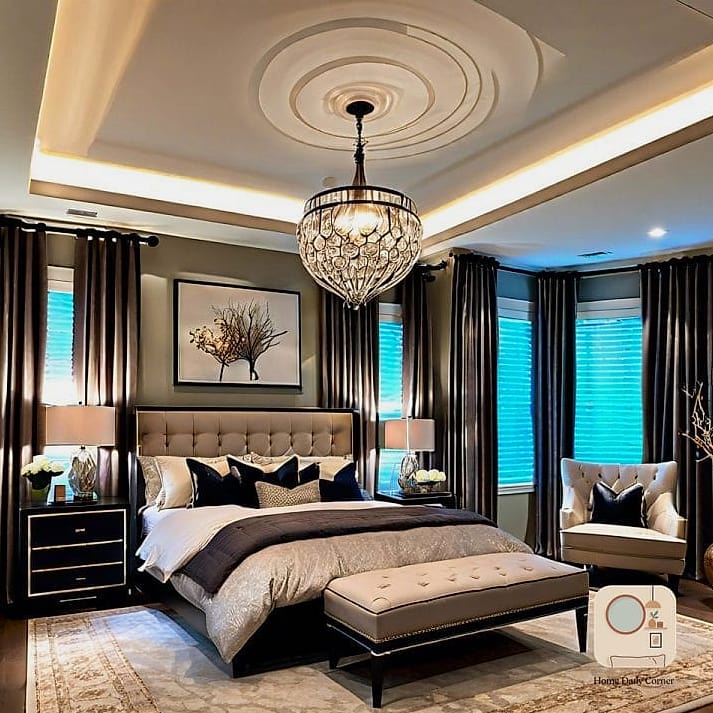
Function and coziness don’t have to be at odds. Blackout curtains in a linen-look fabric block light for better sleep while still looking soft and layered rather than heavy and dated.
Hang them high and wide—a few inches above the window frame and extending past the sides—to make the window (and the room) feel larger. This trick works in small bedrooms especially well since it tricks the eye into perceiving more height and width than you actually have.
A Calming, Muted Color Palette
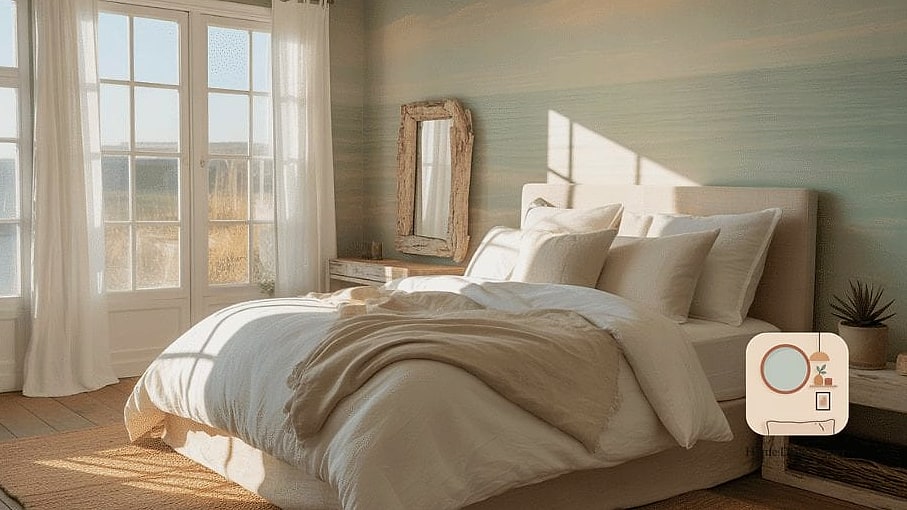
If your walls are currently a bold or busy color, consider shifting toward muted, dusty tones—sage green, soft clay, warm greige, or dusty blue. These colors read as calming rather than stimulating, which matters a lot in a room meant for rest.
You don’t have to repaint if that’s not in the cards right now. Bedding, curtains, and a few accent pillows in these tones can shift the whole feel of the room. This is one of those changes that’s subtle in photos but huge in person.
Rugs That Add Softness Underfoot
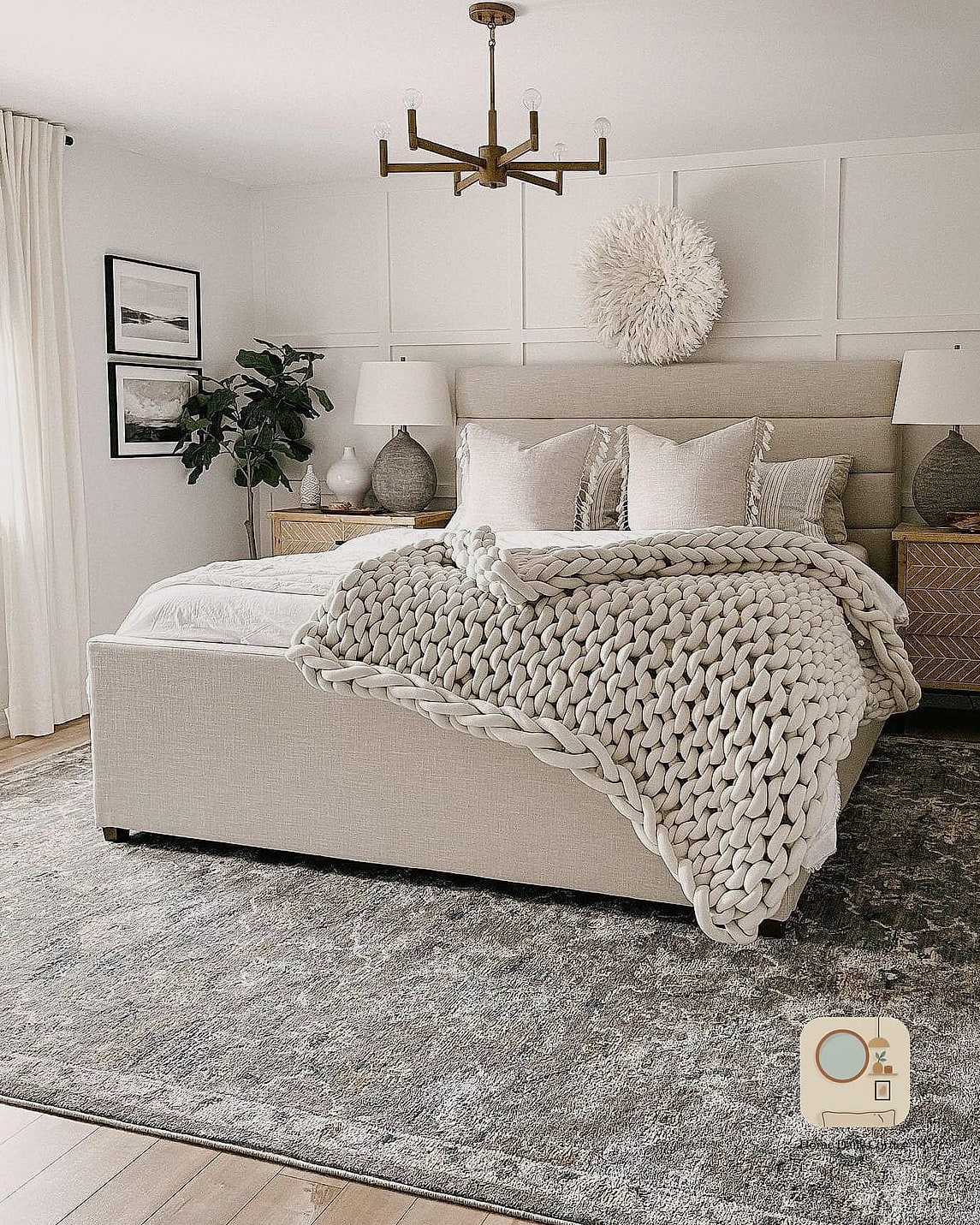
Hardwood or laminate floors look great but can feel cold, literally and visually. A large area rug under the bed, extending out on both sides, adds warmth and grounds the furniture arrangement.
In smaller rooms, a rug that’s too small will actually make the space feel more cramped, so size up if you can. Wool and wool-blend rugs feel amazing underfoot and tend to hide vacuum lines and dust better than lower pile options, which is a nice bonus if you’ve got pets.
Greenery That Doesn’t Require a Green Thumb
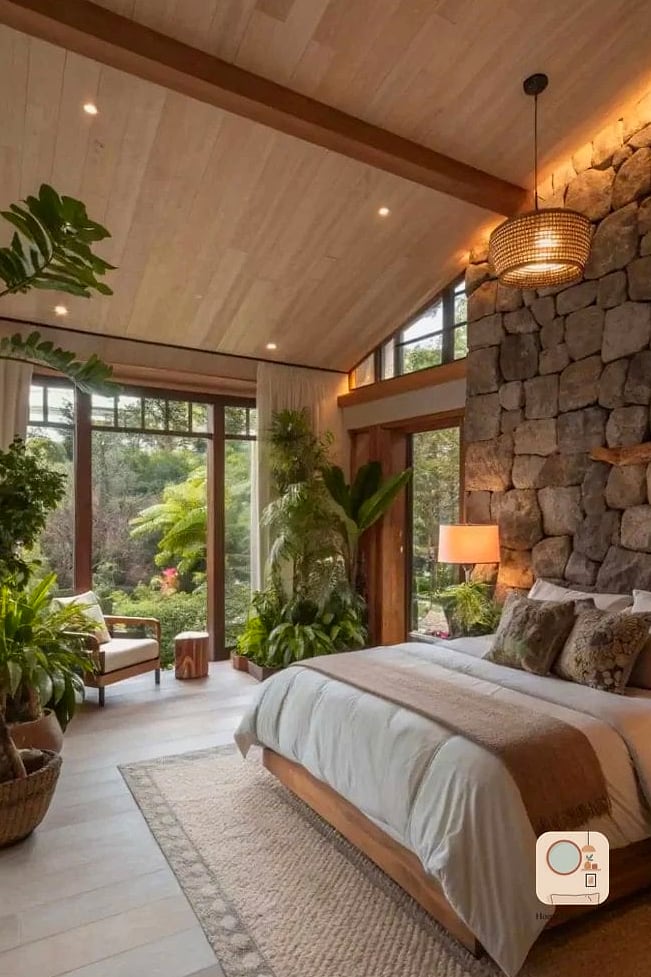
Plants bring life into a bedroom in a way almost nothing else does. If you don’t trust yourself to keep something alive (no judgment, I’ve killed my fair share), snake plants and pothos are nearly impossible to mess up.
A single large plant in a corner has more visual impact than several small scattered ones, especially in a smaller room where clutter reads faster. Faux plants have also come a long way if you want the look without the responsibility.
Textured Throw Pillows in Varying Sizes
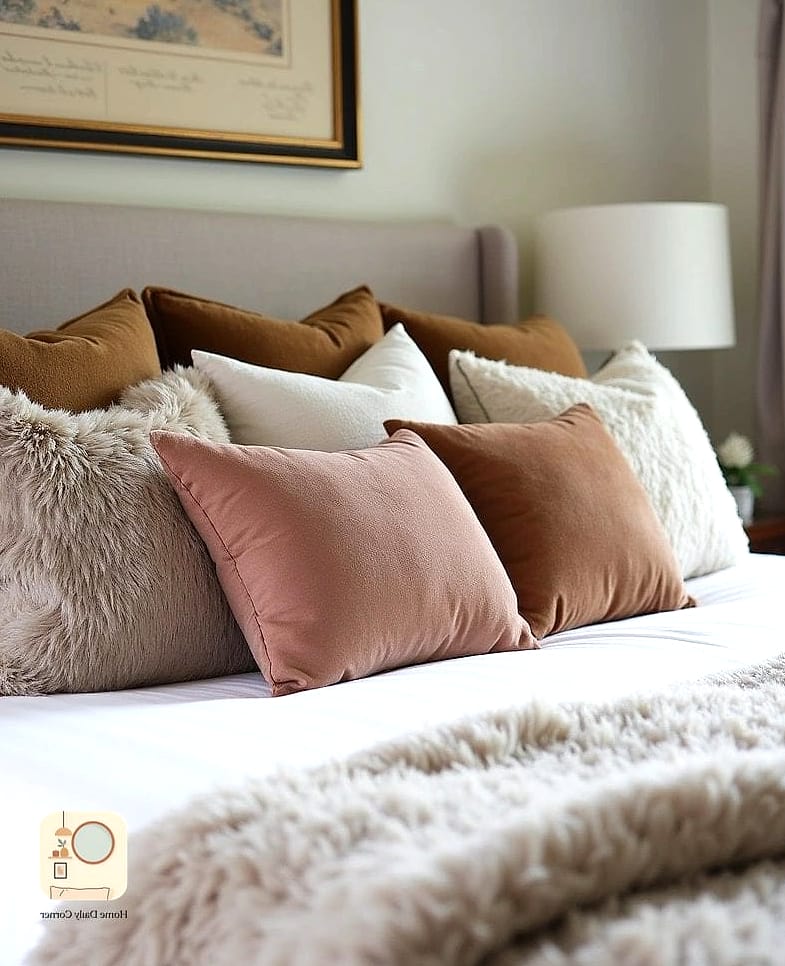
This one sounds almost too simple, but mixing pillow sizes and textures—a boucle pillow, a linen lumbar pillow, a knit one—creates that layered, collected-over-time look that feels cozy rather than staged.
Stick to two or three coordinating colors so it doesn’t look chaotic. This is a genuinely budget-friendly refresh since you can swap pillow covers seasonally without buying new pillows every time you want a change.
A Dedicated Space for Screens to Charge (Away From the Bed)
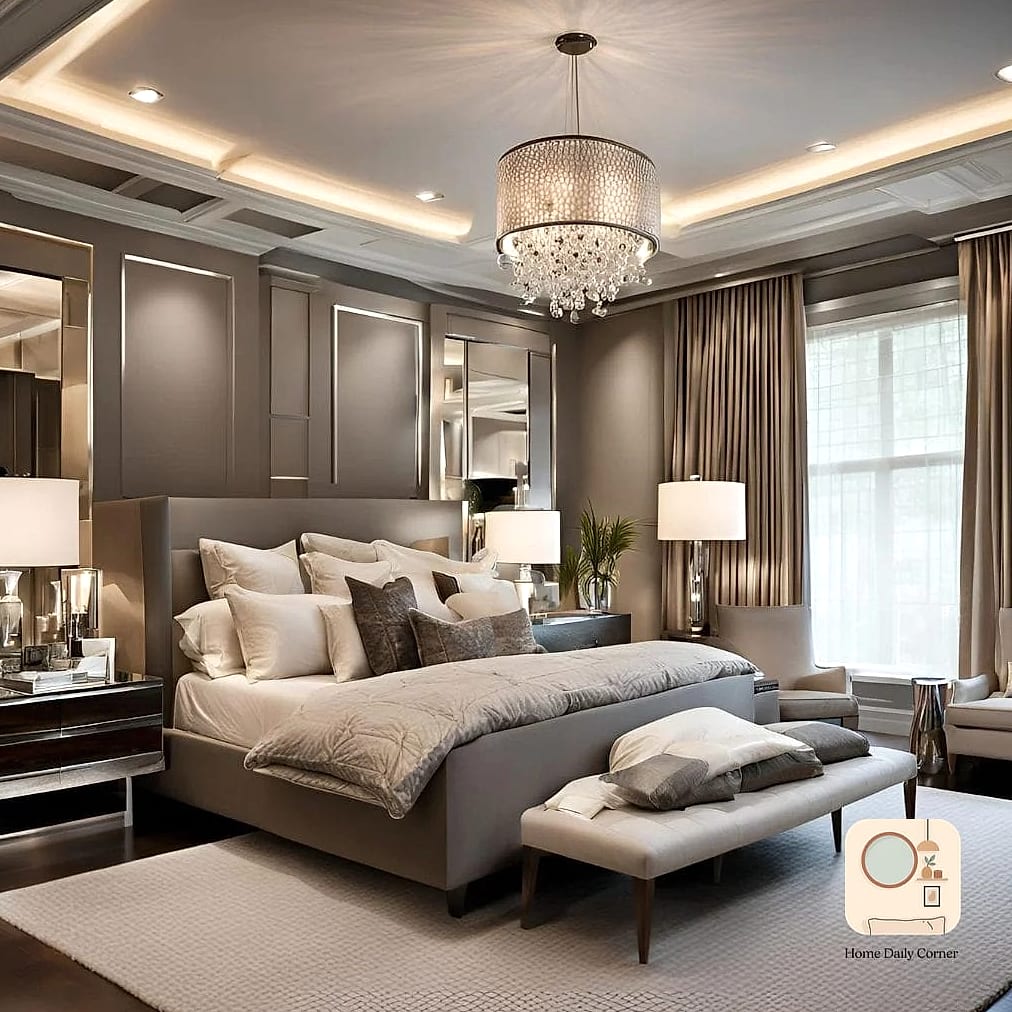
Hear me out on this one. Setting up a small charging station on a dresser or shelf across the room, rather than on your nightstand, changes your whole relationship with the space before bed.
It doesn’t need to be elaborate—a small tray, a charging cable, maybe a little basket to drop your phone in. This works in any size bedroom and genuinely helps the room feel more like a retreat and less like an extension of your workday.
Soft, Rounded Furniture Shapes
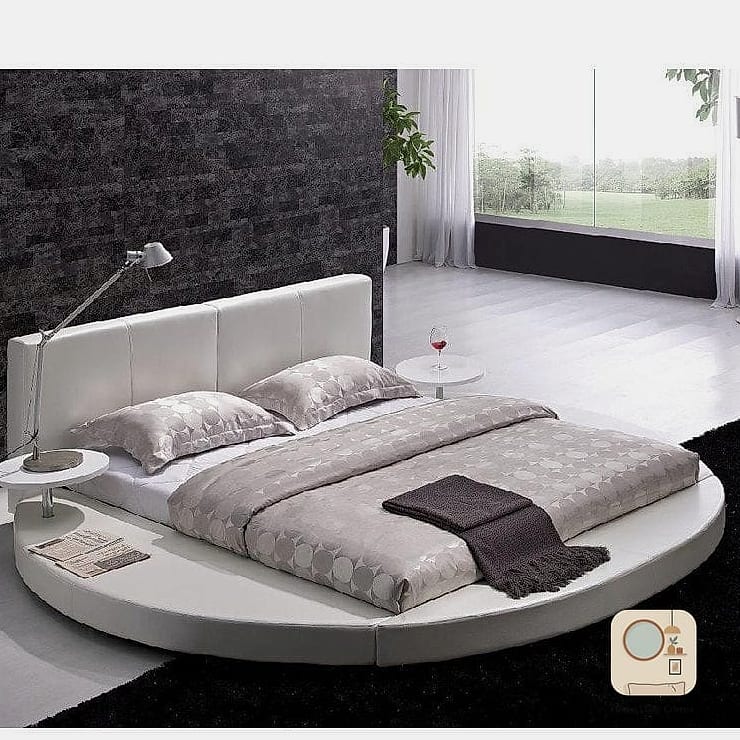
Sharp angles and hard edges tend to feel more formal and less relaxing. Where you can, opt for nightstands, mirrors, or chairs with rounded edges or curved silhouettes.
This doesn’t mean everything needs to be round, just a piece or two to soften the overall look. In small bedrooms, rounded furniture also has a practical benefit of being easier to navigate around without stubbing your toe at 2am.
A Gallery Wall Above the Bed
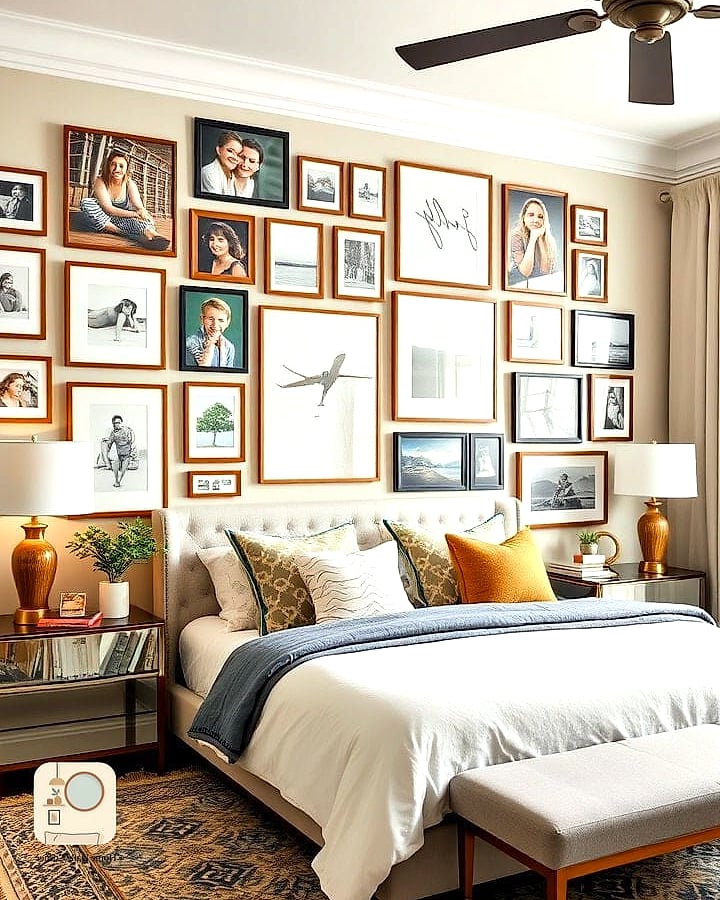
Instead of one large piece of art, consider a small collection of framed prints, photos, or even pressed botanicals arranged above the headboard. Keep the frames in a consistent color (black, wood, or brass) so the mix feels curated rather than random.
This works particularly well in bedrooms with high ceilings that can feel a little empty and echoey above the bed. It’s also an easy way to personalize a rental without painting or major changes.
Woven and Natural Fiber Accents
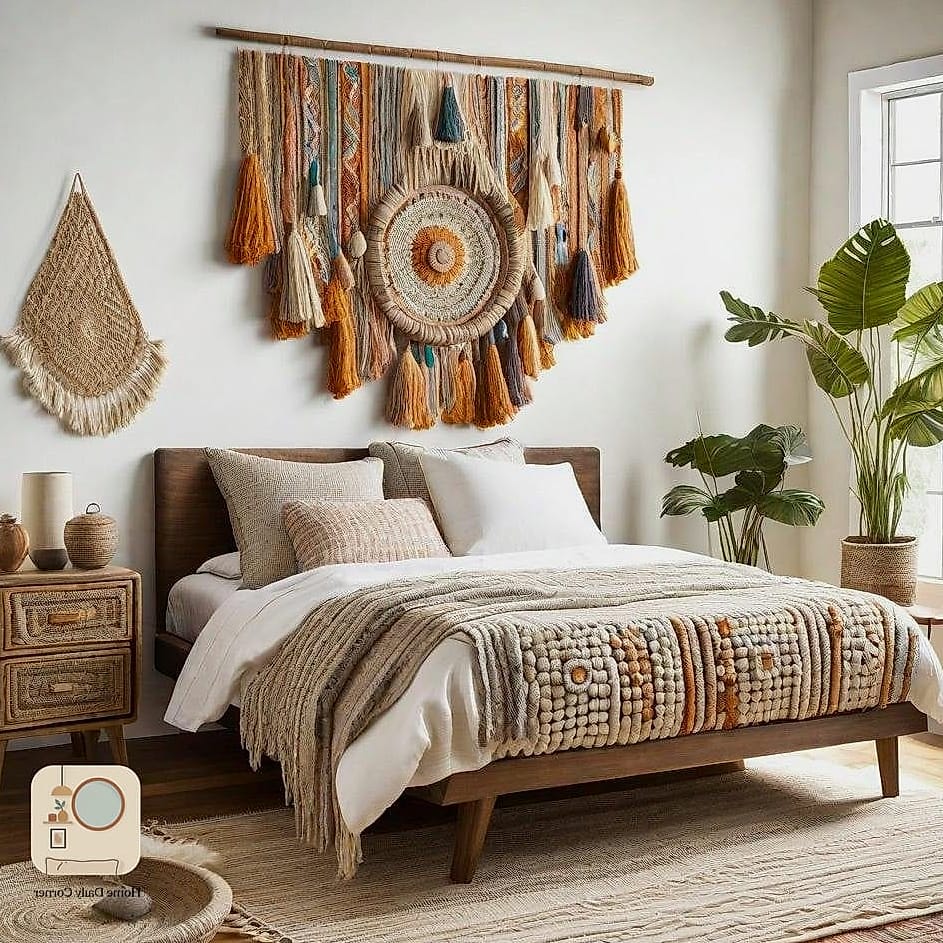
Rattan, jute, wicker, and seagrass bring in texture and warmth without adding visual weight. A woven bench at the foot of the bed, a jute rug, or rattan pendant light all lean into this natural, relaxed feel.
These materials work especially well in bedrooms that already have a lot of wood tones, adding variety without introducing new colors. They’re also fairly forgiving and low-maintenance, which is always a plus in a bedroom.
Hidden Storage That Reduces Visual Clutter
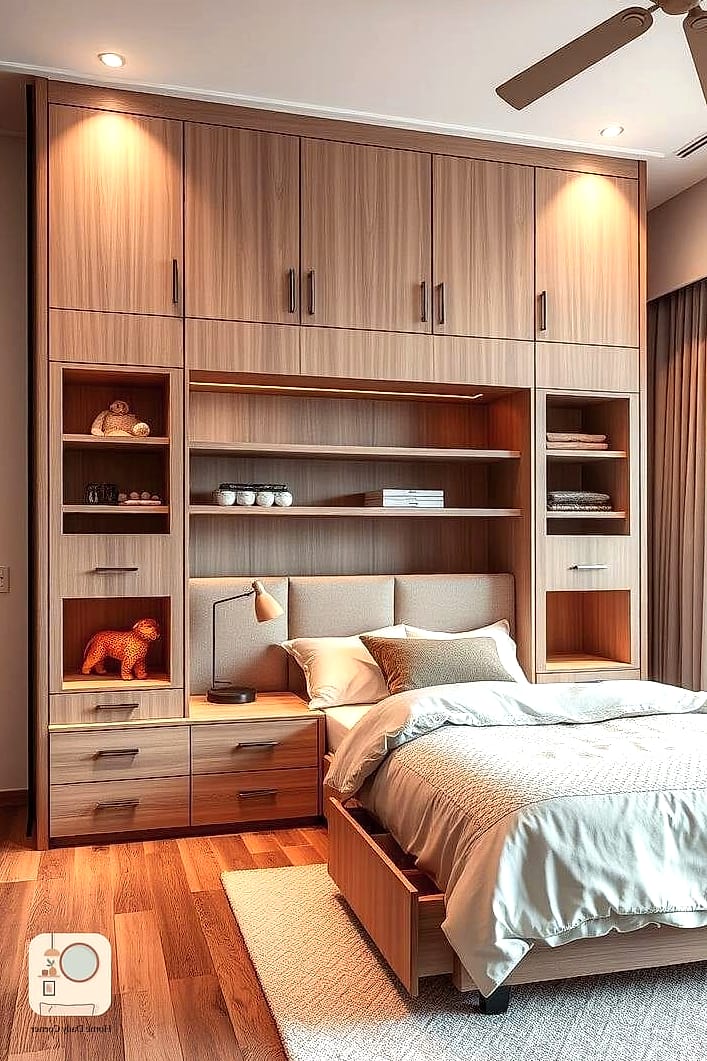
Clutter is one of the biggest enemies of a calm bedroom, and honestly, most of us have more stuff than storage. Under-bed storage bins, a storage ottoman, or a dresser with deep drawers all help tuck things away.
In smaller bedrooms this matters even more since visible clutter reads as chaos faster in a tight space. Baskets on closet shelves or a hidden hamper inside a closet can handle the smaller stuff that tends to pile up on chairs and floors.
A Weighted or Textured Throw at the Foot of the Bed

Draping a chunky knit throw or a weighted blanket across the foot of the bed adds a lived-in, cozy layer that photographs beautifully and feels even better in person. It also gives you an easy grab-and-go option for chilly nights without pulling apart your whole bedding setup.
This is a small detail but it’s one of those things that makes a bed look intentionally styled rather than just made. Works in every size and style of bedroom, honestly.
Scent as Part of the Decor
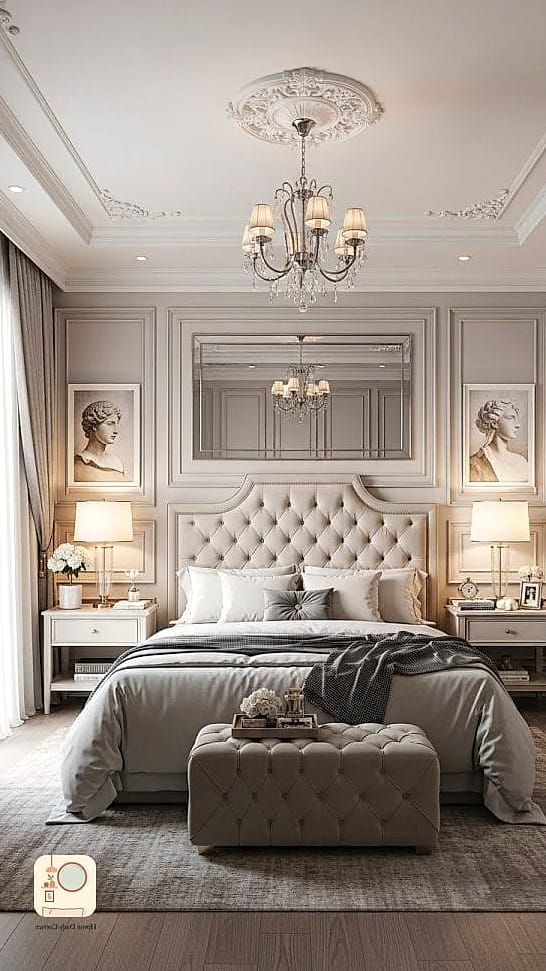
This one’s easy to overlook, but scent plays a huge role in how relaxing a space feels. A candle, reed diffuser, or small essential oil diffuser on your dresser or nightstand adds an atmospheric layer that decor alone can’t provide.
Warm, woodsy, or slightly floral scents tend to read as calming rather than overpowering. If you’ve got pets or sensitivities in the house, a lower-intensity diffuser or unscented candle with just a warm glow still adds to the mood.
A Simplified, Curated Nightstand

Last but definitely not least: what’s actually on your nightstand matters more than people think. A lamp, a small stack of books, a candle, and maybe a small dish for jewelry is plenty. Anything beyond that starts to feel cluttered rather than curated.
This is a five-minute fix that makes a real difference every single night before you turn off the light. It’s also the first thing you see in the morning, so keeping it simple sets a calmer tone for the whole day.
Bringing even a handful of these ideas into your space can shift how your bedroom feels day to day. You don’t need a full renovation or a big budget to get there—start with one or two changes, live with them for a bit, and layer in more over time. That’s really how the best, coziest bedrooms come together anyway.