
21 Warm Bedroom Ideas to Steal From Interior Designers
- Start With a Warm Neutral Wall Color
- Layer in Natural Wood Tones
- Add a Chunky Knit Throw Blanket
- Swap in Warm-Toned Bedding
- Install Layered Lighting Instead of One Overhead Fixture
- Bring in a Woven Jute or Wool Area Rug
- Use Warm Metal Accents Like Brass or Bronze
- Add a Textured Headboard
- Hang Curtains in Warm, Heavy Fabrics
- Incorporate Woven Baskets for Storage
- Add Warm-Toned Wall Art or Framed Textiles
- Use a Canopy or Draped Fabric Above the Bed
- Add Dimmer Switches to Existing Lighting
- Bring in Live or Faux Greenery
- Choose a Wool or Sherpa Accent Chair
- Add a Wood or Rattan Ceiling Fan
- Use Warm-Toned Candles or Diffusers
- Mix in Vintage or Antique Furniture Pieces
- Add a Woven Wall Hanging Above the Bed
- Use a Warm Wood or Cork Ceiling Treatment
- Layer Multiple Throw Pillows in Varying Textures
21 Warm Bedroom Ideas to Steal From Interior Designers
There’s a difference between a bedroom that looks nice in photos and one that actually feels good to walk into at 9pm after a long day. Warmth is that difference. It’s not about a specific color palette (though that helps) — it’s about layered textures, soft light, and details that make a room feel lived-in rather than staged.
I pulled together 21 warm bedroom ideas that designers actually use, not just trend-chasing tricks that look good for a season and then feel dated. Some are quick weekend projects, others are bigger investments, but all of them add real coziness without turning your room into a dark cave.
Start With a Warm Neutral Wall Color
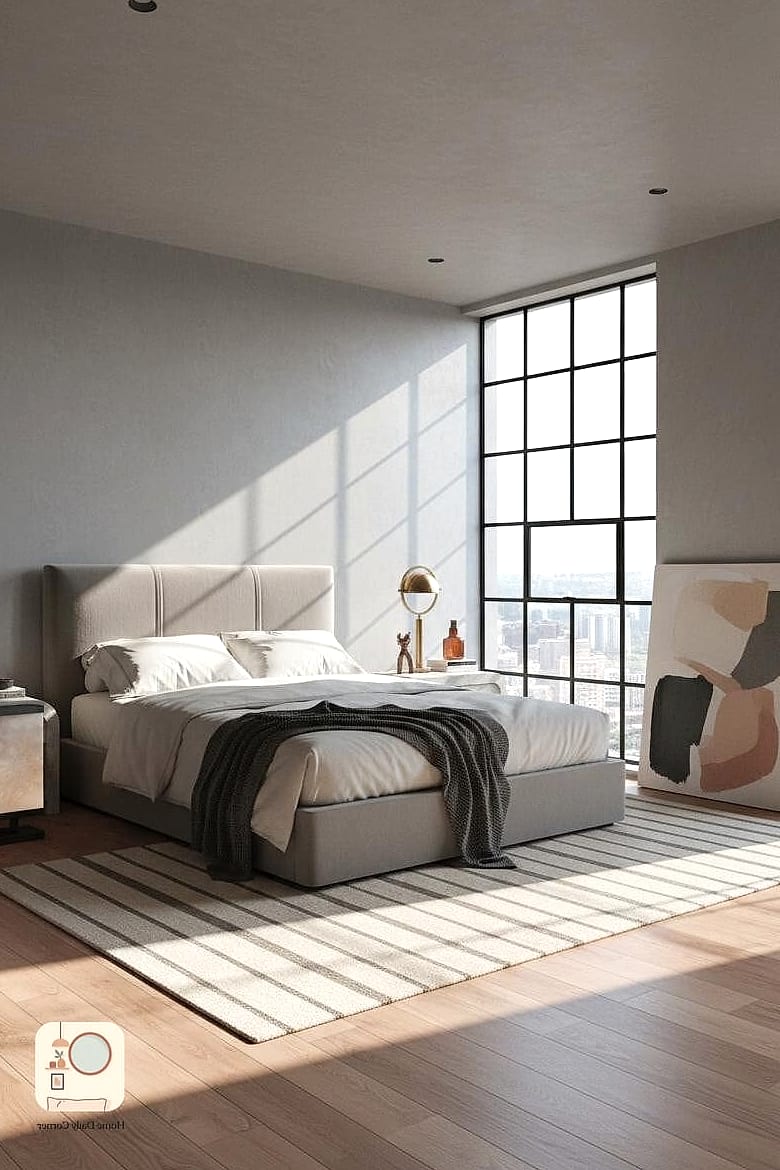
Forget stark white walls — they read cold and clinical, especially under artificial light. Warm neutrals like terracotta-tinted beige, soft clay, or a muted caramel instantly change the temperature of a room.
These colors work in bedrooms of any size because they don’t compete with furniture or bedding. Designers love them because they photograph beautifully in both daylight and lamp light, which is exactly when you’re actually using your bedroom.
If you’re renting, look for peel-and-stick wallpaper in similar warm tones. It’s fully reversible and gives you the same visual effect without touching the lease agreement.
Layer in Natural Wood Tones
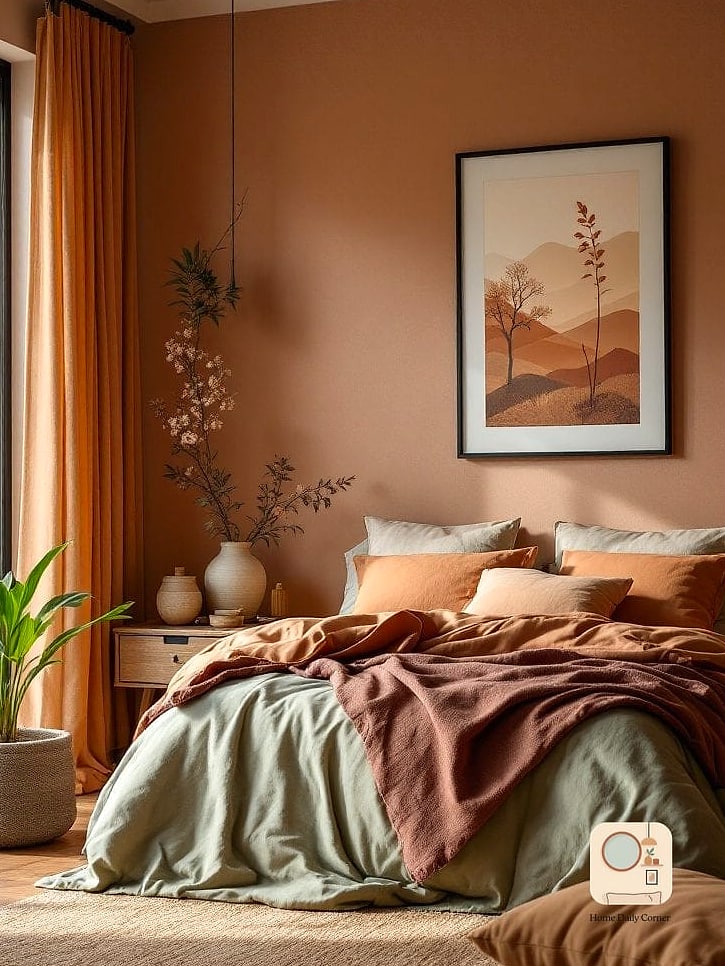
Nothing says “warm bedroom” quite like real or faux wood grain. A wood bed frame, nightstands, or even a wood-slat headboard brings in warmth without adding visual clutter.
Mixing wood tones is actually encouraged now — a walnut dresser next to an oak bed frame looks intentional rather than mismatched, as long as the undertones are similar. This is a detail a lot of homeowners get nervous about, but it’s genuinely more forgiving than people think.
Budget-friendly option: wood veneer furniture from big box stores. Splurge option: solid wood pieces that’ll outlast a couple of moves.
Add a Chunky Knit Throw Blanket
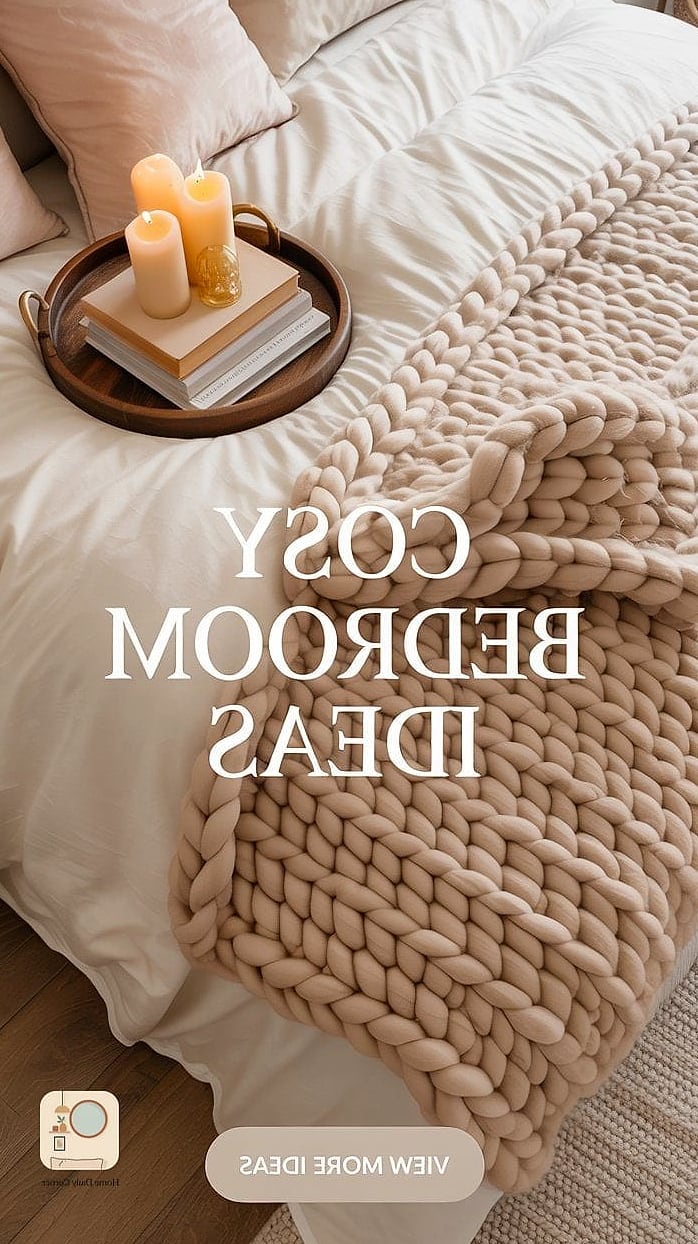
This one is almost too simple, but it works every time. A chunky knit throw draped across the foot of the bed adds texture and visual weight that a flat comforter alone can’t achieve.
Stick to warm tones — rust, cream, oatmeal, or terracotta — rather than cool grays or icy blues. The tactile element matters here too; you want something that looks as soft as it feels.
This is also one of the cheapest updates on this list, which makes it a great starting point if you’re easing into a bedroom refresh.
Swap in Warm-Toned Bedding
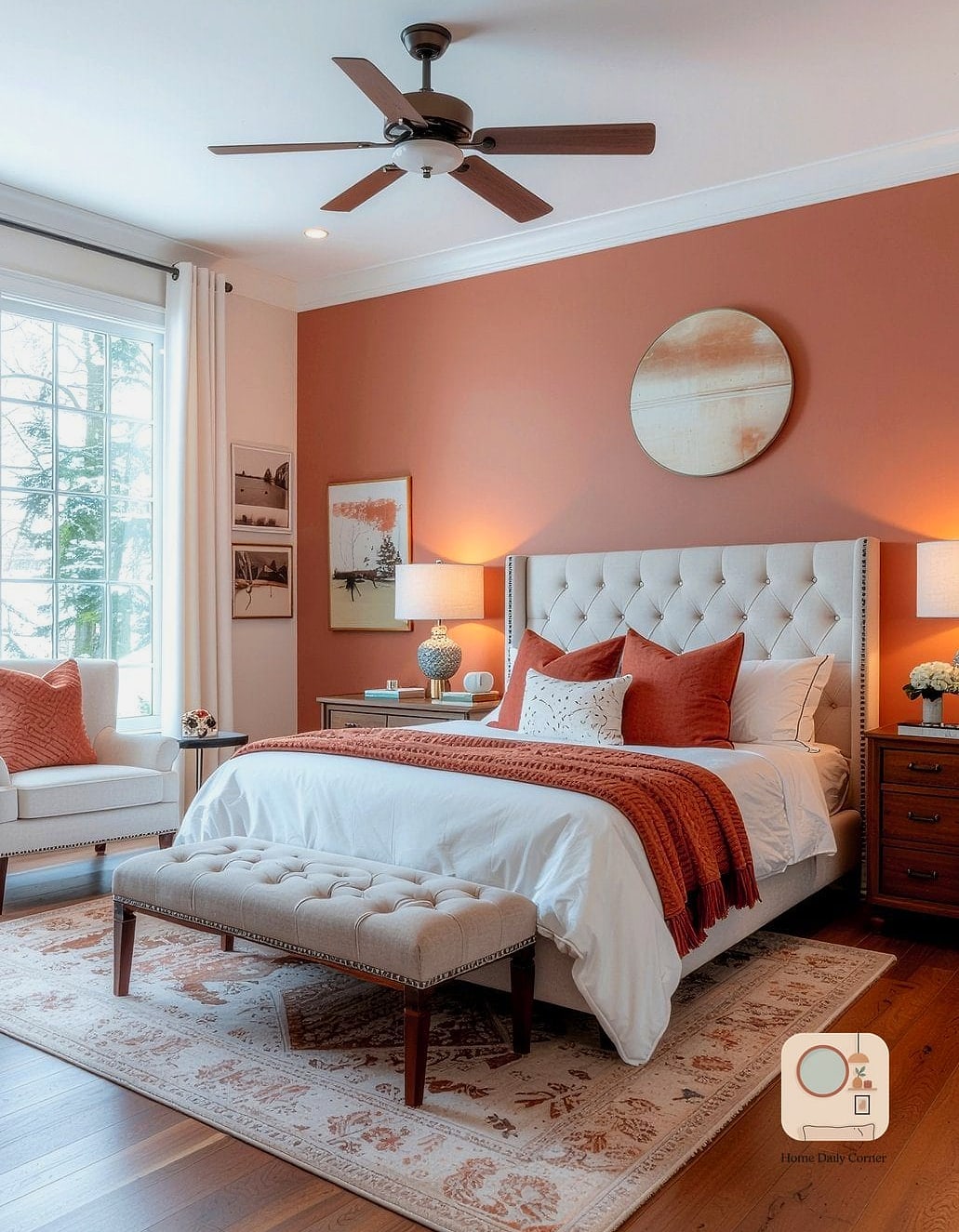
Crisp white sheets are classic, but if warmth is the goal, consider layering in warmer hues — think dusty rose, terracotta, or soft ochre pillowcases mixed with neutral linens.
Linen bedding specifically has a slightly rumpled, lived-in texture that reads as cozy rather than sterile. It’s also breathable and gets softer with every wash, which is a nice bonus for anyone who tends to run warm at night.
Mixing patterns is fine as long as the color family stays consistent — that’s usually what keeps a bed looking curated instead of chaotic.
Install Layered Lighting Instead of One Overhead Fixture

A single overhead light is the fastest way to make a bedroom feel like a hotel conference room. Designers almost always layer lighting instead: a dimmable overhead fixture, a bedside lamp, and maybe a floor lamp in the corner.
Warm bulbs (look for 2700K on the packaging) make an enormous difference here. Cool white bulbs cast a blue-ish tint that fights against every other warm element in the room.
This is a project you can tackle in an afternoon, and it’s one of those upgrades that instantly makes a bedroom feel more intentional without a full redesign.
Bring in a Woven Jute or Wool Area Rug
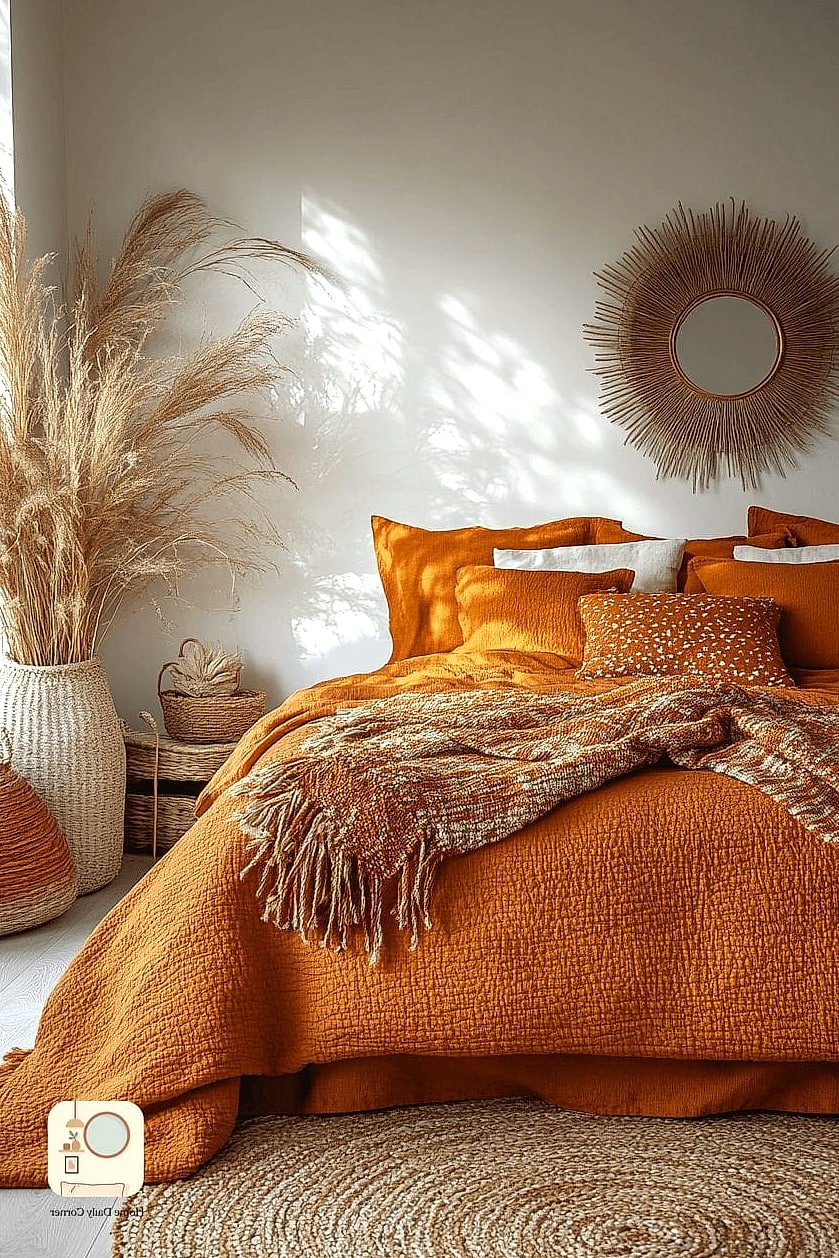
Cold floors, especially hardwood or tile, can make an entire room feel less inviting no matter what else you do. A woven jute or wool rug under the bed adds warmth both visually and literally underfoot.
Jute has a natural, earthy texture that pairs well with wood furniture, while wool rugs tend to feel plusher and work well in colder climates. Either option softens hard edges in the room and gives your feet something nice to land on first thing in the morning.
For renters or anyone worried about maintenance, a low-pile wool blend is more forgiving with vacuuming and spills than a high-pile jute rug.
Use Warm Metal Accents Like Brass or Bronze
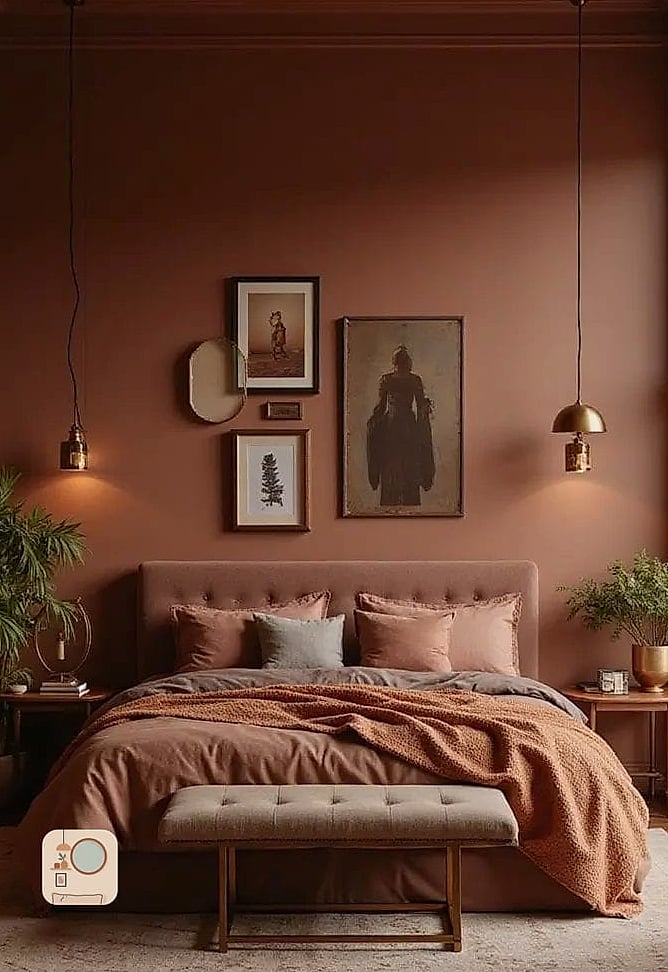
Chrome and brushed nickel hardware tend to feel cooler and more modern, while brass, bronze, and warm gold tones add richness. Swapping out drawer pulls, lamp bases, or curtain rods is a low-effort way to shift the whole feel of a room.
This works especially well in bedrooms that already lean traditional or transitional, since warm metals tend to feel more classic than sleek matte black.
It’s also a project you can do gradually — one lamp this month, hardware next month — without it feeling disjointed.
Add a Textured Headboard
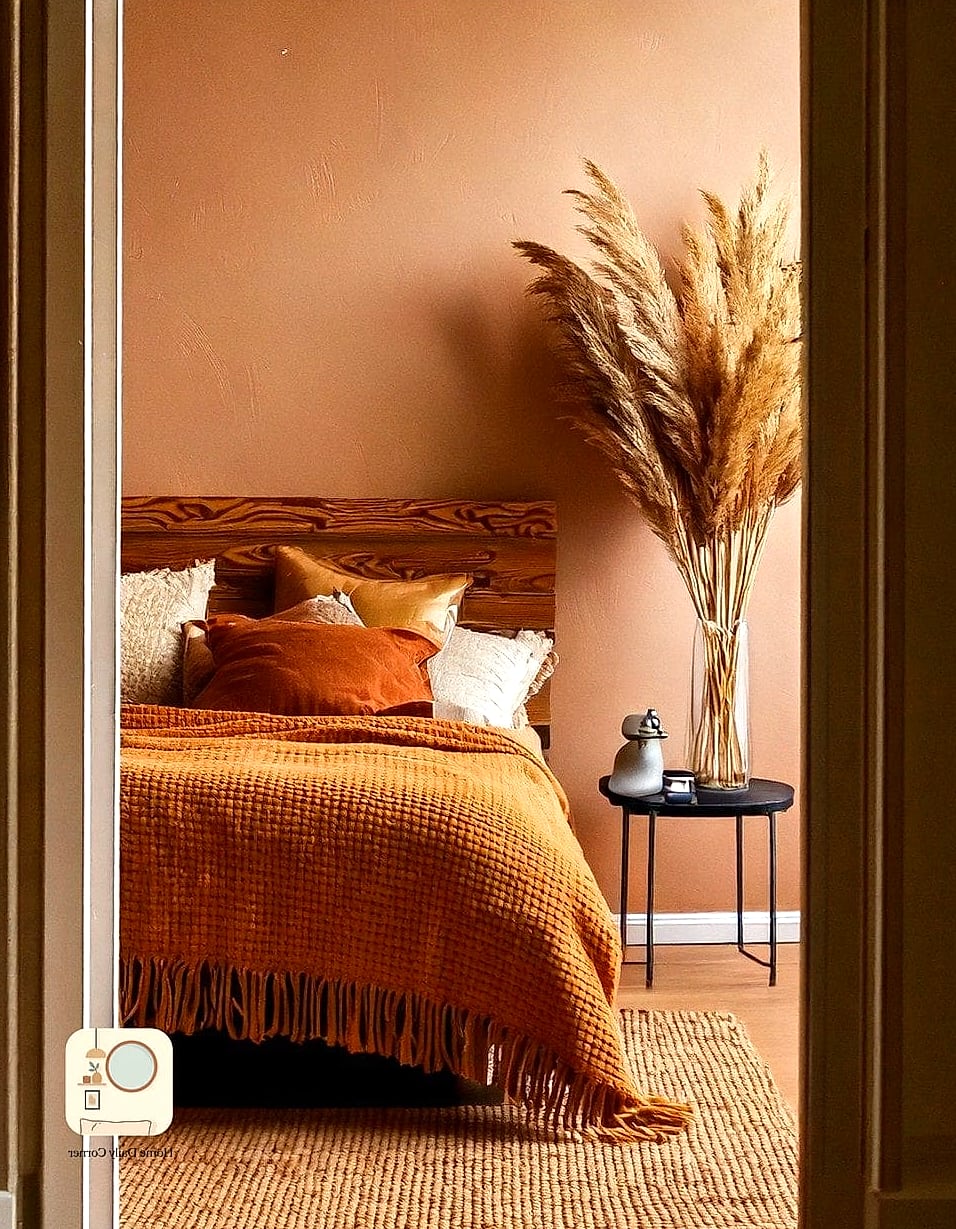
A headboard does a lot of visual heavy lifting in a bedroom, so choosing one with texture — think channel-tufted velvet, woven rattan, or boucle fabric — adds warmth without needing extra decor.
Rattan headboards in particular have made a strong comeback because they bring in natural material without feeling heavy, which works well in smaller bedrooms where you don’t want a bulky upholstered piece.
If you already have a headboard you like, consider a slipcover in a warm fabric instead of replacing the whole piece.
Hang Curtains in Warm, Heavy Fabrics
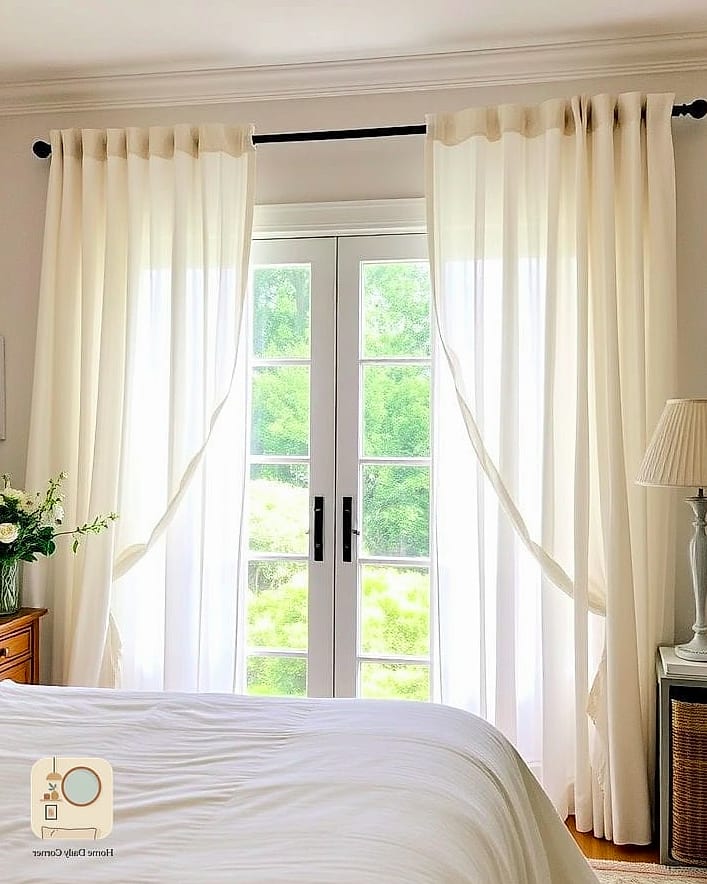
Thin, sheer curtains let in light beautifully, but they don’t do much for warmth or coziness. Swapping in heavier curtains — velvet, linen blends, or textured cotton — in warm tones adds both insulation and visual softness.
Designers often hang curtains higher and wider than the window frame itself, which makes the room feel taller and more finished at the same time. It’s a small trick that makes a real difference in photos and in person.
If you want warmth without darkness, look for a warm-toned linen that still lets some natural light filter through during the day.
Incorporate Woven Baskets for Storage
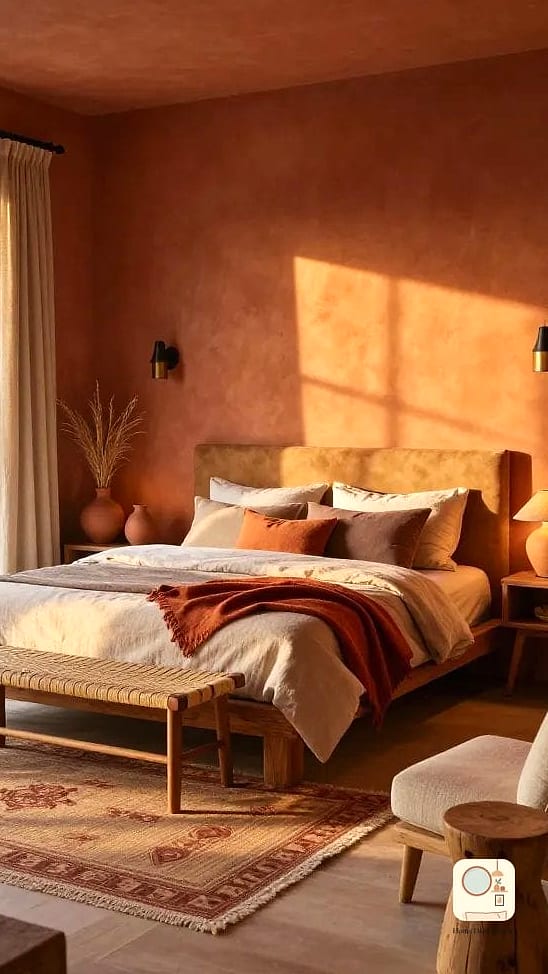
Baskets aren’t just practical — a few well-placed woven baskets add texture and warmth while also handling extra blankets, throw pillows, or laundry. They’re a favorite among organizers because they hide clutter without looking like storage bins.
Look for baskets in natural fibers like seagrass or rattan rather than plastic or fabric versions, since the texture is really what sells the warm, earthy look.
This is a genuinely practical addition too — anyone with a small bedroom knows extra storage is never a bad thing.
Add Warm-Toned Wall Art or Framed Textiles
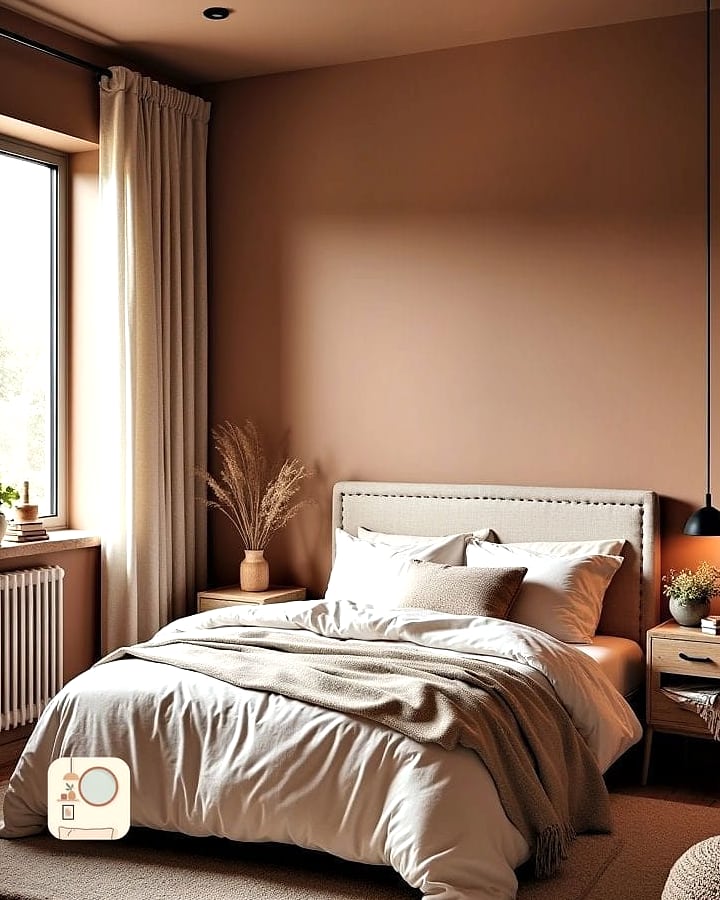
Cool-toned abstract art can sometimes clash with an otherwise warm room. Swapping in pieces with earthy color palettes — rust, ochre, warm greens — ties the whole space together.
Framed textiles, like a small woven tapestry or vintage-inspired fabric, add texture in a way that flat prints can’t. This is an easy way to add personality to a bedroom without committing to anything permanent.
Thrift stores and vintage shops are genuinely great sources here — warm-toned art tends to show up often and rarely costs much.
Use a Canopy or Draped Fabric Above the Bed
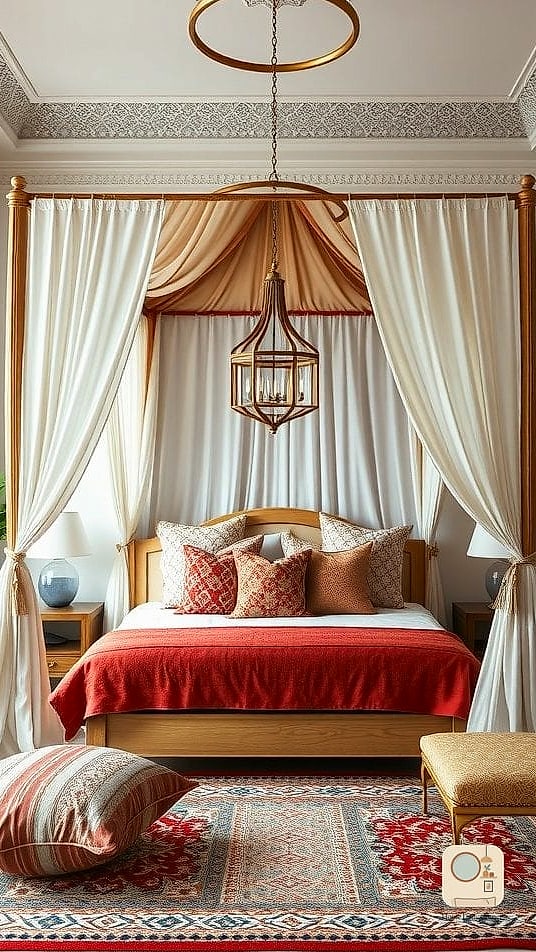
This sounds more dramatic than it actually is to execute. A simple fabric drape mounted above the headboard, or a lightweight canopy frame, adds softness and a sense of intimacy to the whole room.
Warm, sheer fabrics work best here — they diffuse light beautifully and don’t feel heavy or overwhelming, even in smaller bedrooms.
This idea tends to photograph really well, but it also just feels nice in person, especially in bedrooms with high ceilings that can otherwise feel a little empty overhead.
Add Dimmer Switches to Existing Lighting
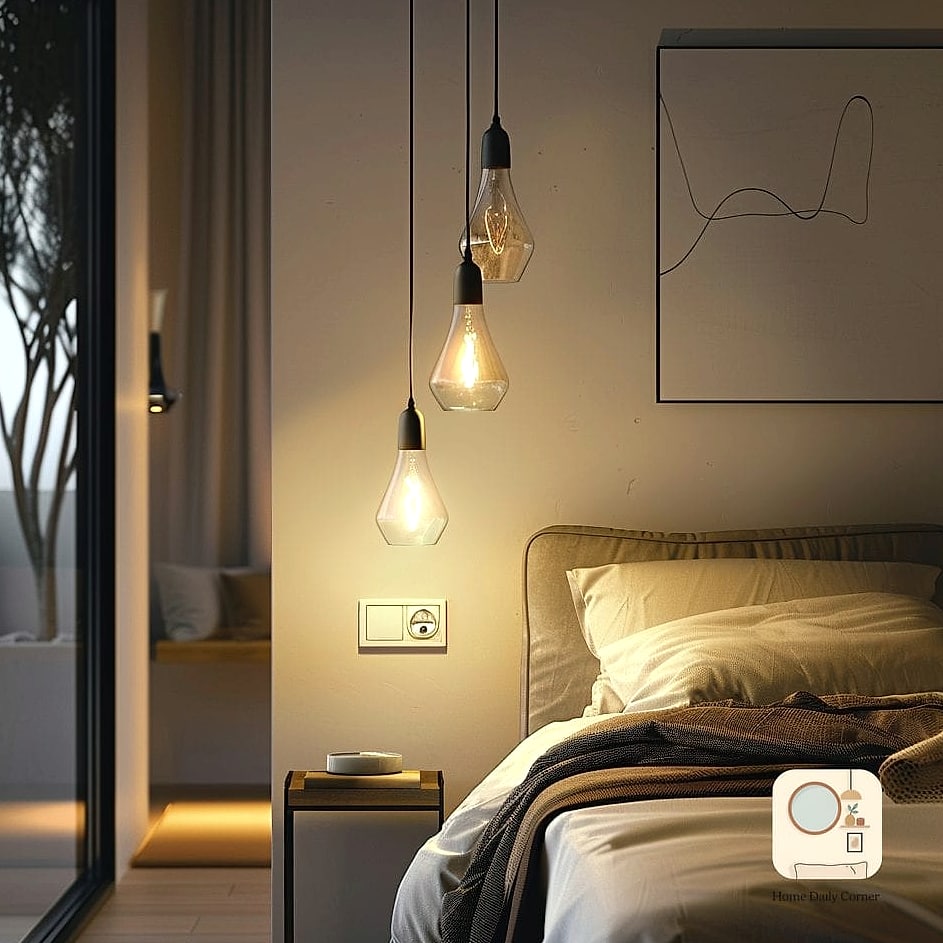
If rewiring or replacing fixtures isn’t in the budget, a simple plug-in dimmer or dimmer switch install goes a long way. Warm light dimmed low in the evening changes the entire mood of a bedroom.
This is one of the more affordable upgrades on this list and one that a lot of homeowners overlook simply because it’s not as visually exciting as new furniture. But the impact on how a room actually feels at night is hard to overstate.
Bring in Live or Faux Greenery
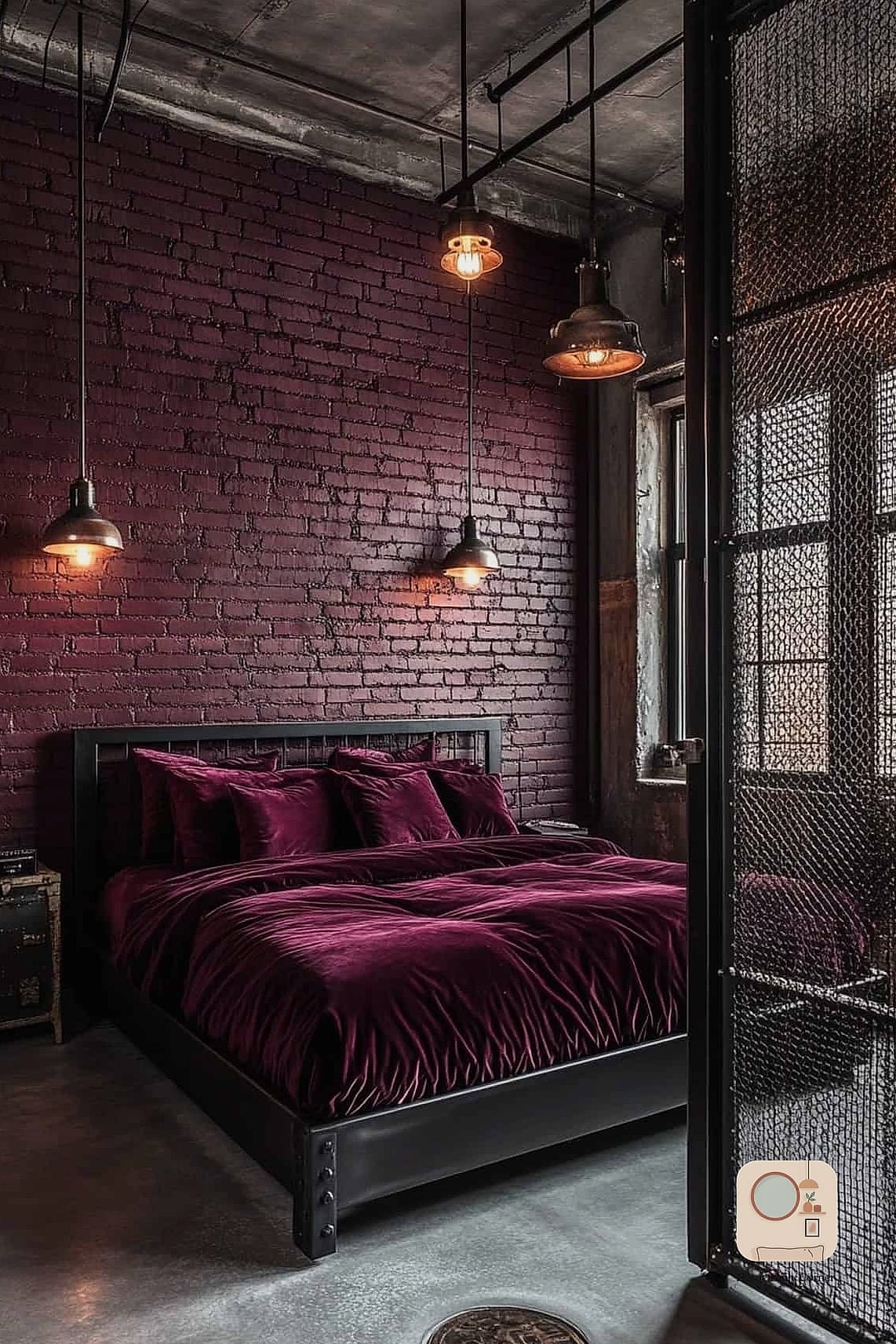
Plants add life and softness to a bedroom, and certain varieties — like a trailing pothos or a fiddle leaf fig — bring warmth through both color and shape. Even a few sprigs in a small vase on a nightstand can soften a room’s overall feel.
For anyone without a green thumb, high-quality faux greenery has come a long way and can achieve a similar effect with zero maintenance.
Terracotta planters specifically lean into the warm aesthetic better than ceramic white pots, so it’s worth considering the container as much as the plant itself.
Choose a Wool or Sherpa Accent Chair
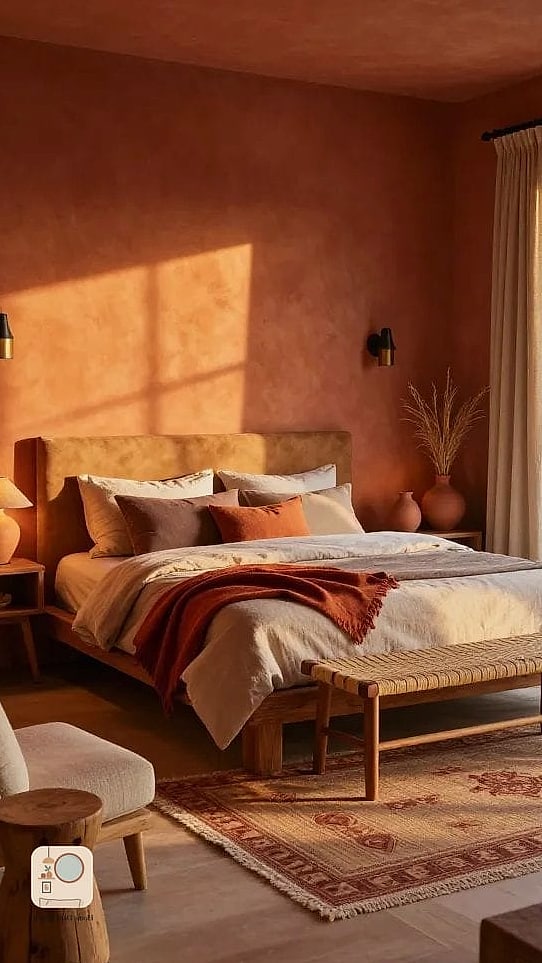
If your bedroom has room for a reading nook or small seating area, a wool or sherpa-upholstered accent chair adds both warmth and function. It’s a spot to sit while getting dressed or unwind with a book before bed.
Designers often place these near a window to take advantage of natural light during the day, then pair them with a small floor lamp for evening use.
This is more of an investment piece, but it’s one that gets used daily rather than sitting purely for decoration.
Add a Wood or Rattan Ceiling Fan
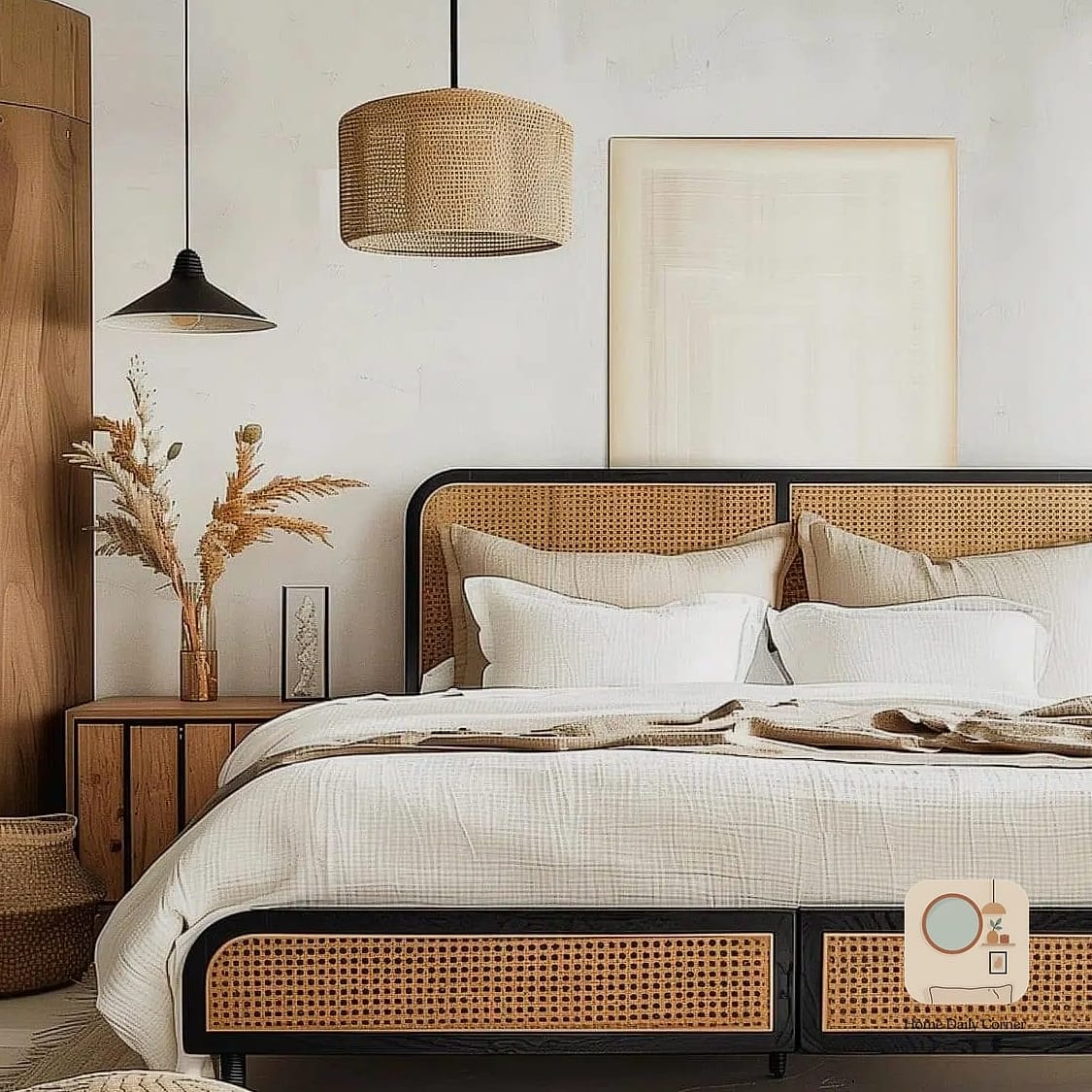
An overlooked detail, but ceiling fans with wood or rattan blades read completely differently than standard white plastic ones. They add a subtle organic texture overhead that ties into the rest of a warm bedroom design.
This works especially well in warmer climates where a fan is a necessity anyway — might as well make it one that contributes to the room’s overall look instead of standing out.
Use Warm-Toned Candles or Diffusers
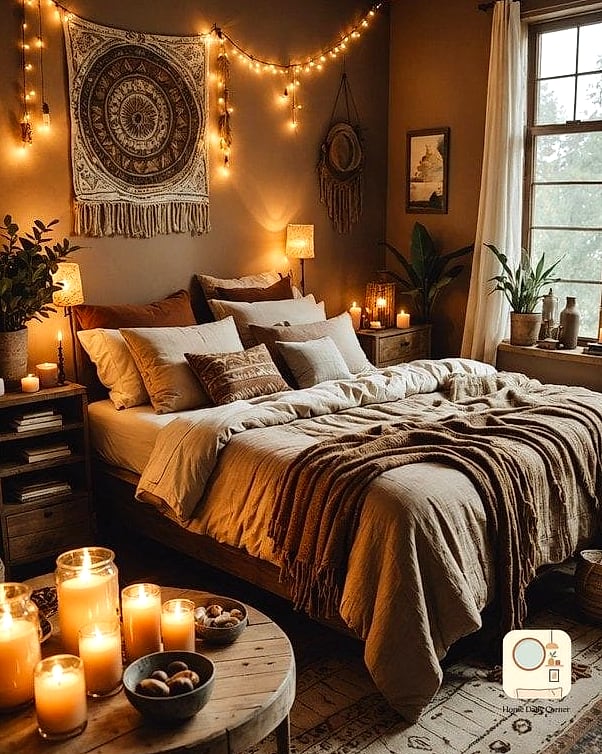
Scent is part of atmosphere, and warm scents — sandalwood, amber, vanilla, cedar — reinforce the cozy feeling you’re building visually. A few candles on a dresser or nightstand also add warm, flickering light in the evening.
If open flames aren’t practical, a diffuser with a warm-toned base achieves a similar aesthetic while handling the scent side separately.
This is a small, inexpensive detail, but it’s often what people notice first when they walk into a room, even if they can’t quite name why it feels inviting.
Mix in Vintage or Antique Furniture Pieces
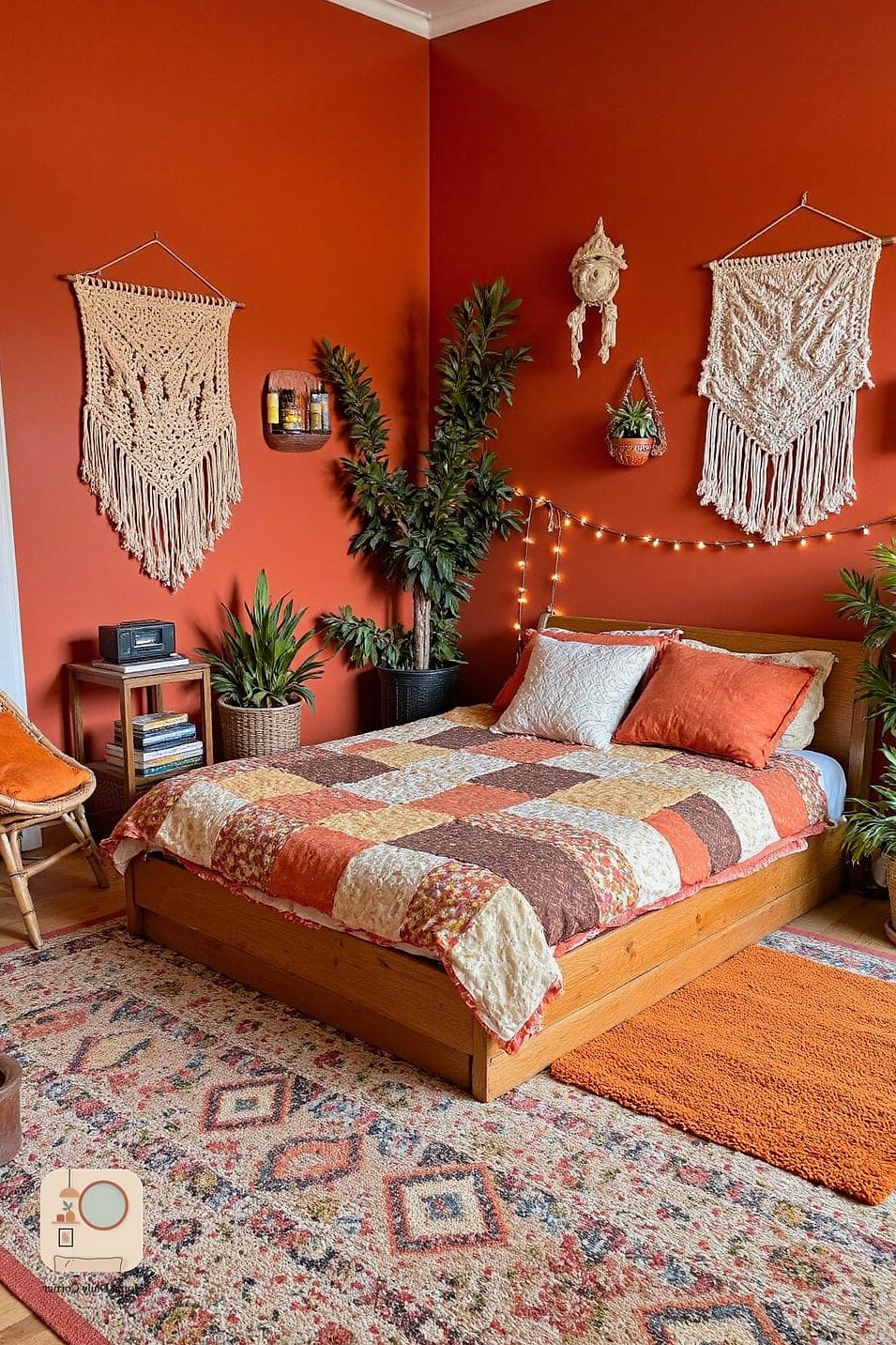
A single vintage piece — an old wood dresser, a weathered nightstand, an antique mirror — adds warmth and character that brand-new furniture sometimes lacks. The slight imperfections and patina actually contribute to the cozy feeling.
You don’t need to fully commit to an antique bedroom; even one piece mixed with modern furniture creates a nice contrast and keeps the room from feeling too matchy.
Estate sales and secondhand marketplaces are worth checking regularly if you’re building this look gradually.
Add a Woven Wall Hanging Above the Bed
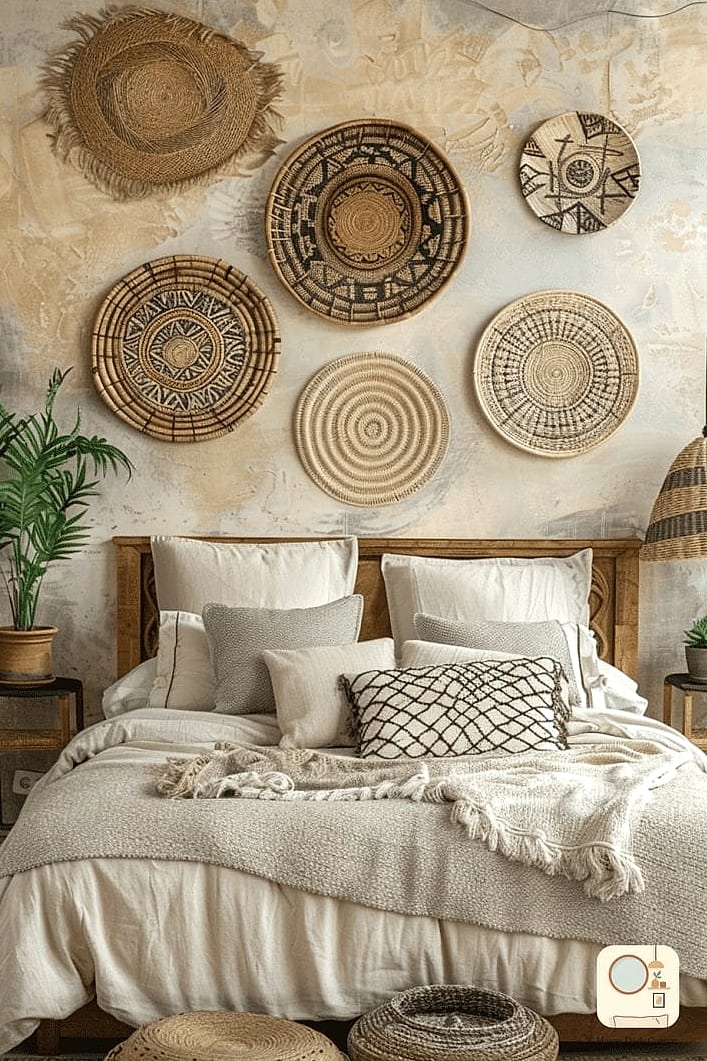
Instead of traditional framed art, a large woven wall hanging or macrame piece above the headboard adds texture, warmth, and a handmade quality that flat art can’t replicate.
This works particularly well in bedrooms with minimal existing decor, since it becomes a natural focal point without needing much else around it.
Neutral or warm-toned fibers — cream, rust, taupe — blend best with the overall warm bedroom aesthetic this list is built around.
Use a Warm Wood or Cork Ceiling Treatment
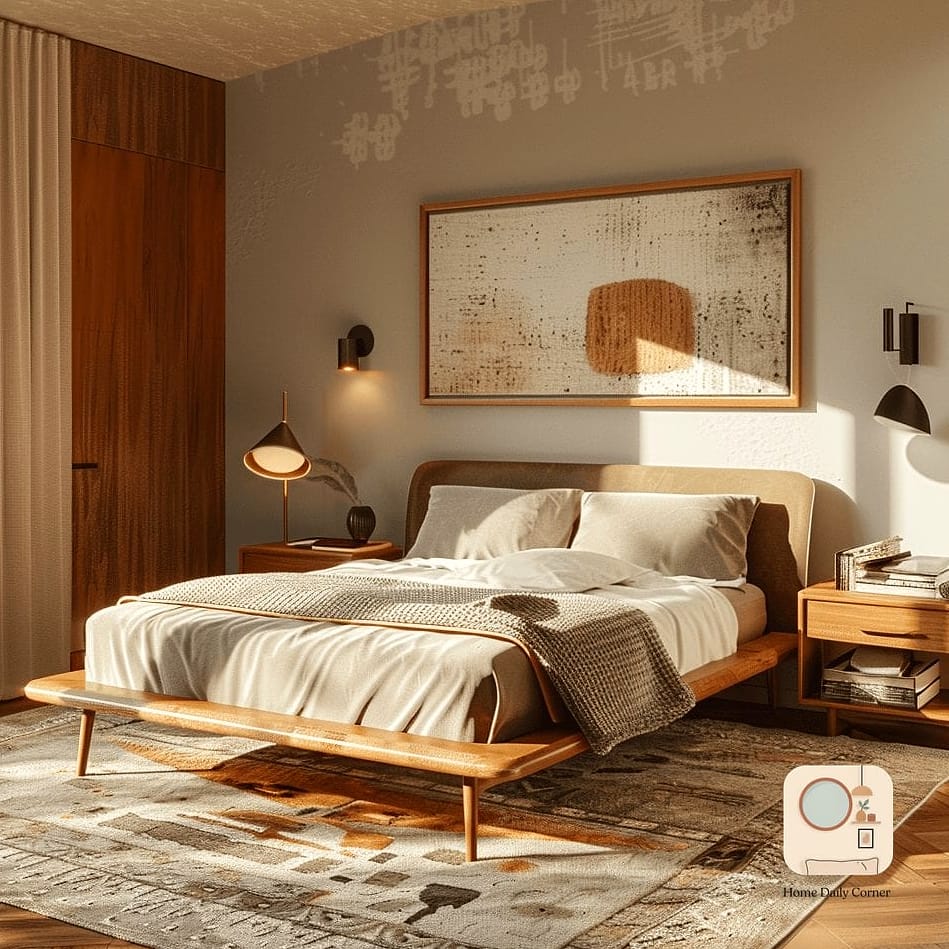
For a bigger project, adding wood slats or cork panels to a ceiling or accent wall brings warmth in an unexpected place most bedrooms overlook entirely. It’s a bolder move, but one that designers use to make a room feel distinctly more custom.
This isn’t a weekend project, and it does require a bit more planning and budget than most items on this list, but the payoff in terms of overall coziness is significant.
If a full ceiling feels like too much, even a small accent wall behind the headboard achieves a similar warm, textured effect.
Layer Multiple Throw Pillows in Varying Textures
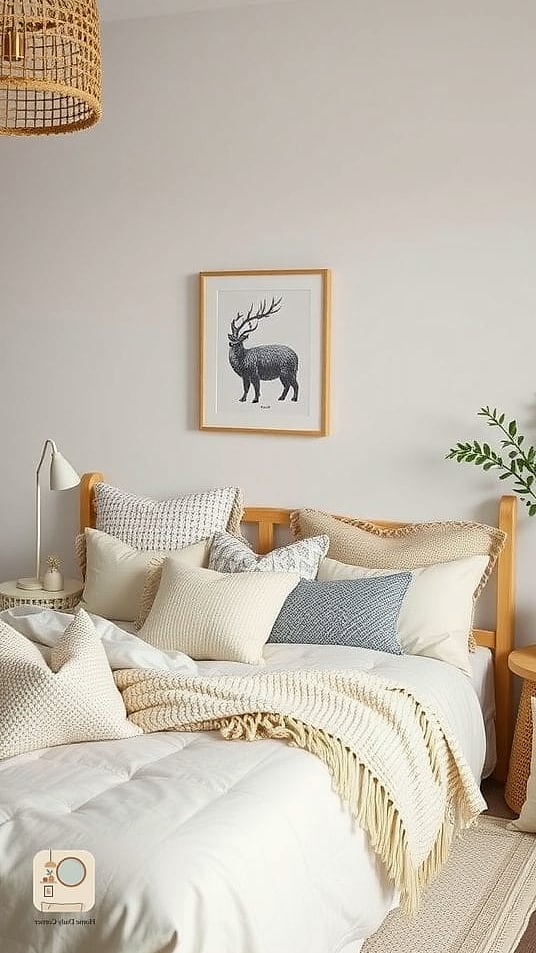
Finally, don’t underestimate what a well-styled pile of pillows can do. Mixing textures — velvet, boucle, linen, knit — in warm, complementary tones adds depth to a bed without much effort or expense.
The trick designers use is varying sizes and textures rather than matching everything perfectly. A slightly imperfect, layered look actually reads as more intentional and cozy than a rigid, symmetrical arrangement.
This is an easy seasonal swap too — you can rotate pillow covers as your color preferences shift without touching anything else in the room.
Putting even five or six of these ideas together can shift a bedroom from “fine” to genuinely warm and inviting. Start with lighting and textiles if you’re on a budget, then work toward furniture and bigger structural changes as time and money allow. The goal isn’t perfection — it’s a room that feels good to be in, every single day.